

Today we are going to discuss about VANRY. Let's know about solving problems instead of speed wars. Let's get started.
For years, the crypto world obsessed over one problem: the blockchain trilemma. How do we build a network that is fast, secure, and decentralized all at the same time? Developers spent countless hours and billions of dollars trying to solve this puzzle. The good news? We solved it. The infrastructure is here. The bad news? We are still asking the same old questions instead of moving forward.
Let me explain why the real bottleneck in crypto is no longer technology, and how Vanar Chain and its $VANRY token are building for the future that most projects are completely missing.
What We Already Solved:
The technical challenges that seemed impossible five years ago are now solved problems. We have the infrastructure. We have the tools. Let me break down what is already working in the blockchain space today.
Scalability is Solved:
Modular blockchains broke the speed barrier. Layer 2 solutions process thousands of transactions per second. Chains like Vanar can handle massive throughput without breaking a sweat. The days of waiting 10 minutes for a transaction to confirm are over. We have rollups, sidechains, and sharding solutions that make blockchains faster than most traditional payment systems.
Security is Proven:
Major blockchains have been running for years without critical failures. Consensus mechanisms like Proof of Stake are battle-tested and energy efficient. We know how to build secure networks that can resist attacks. The math works. The cryptography is solid. Security is no longer an experiment, it is a solved engineering problem.
Decentralization is Real:
Validator diversity across the globe ensures no single entity controls major networks. Thousands of independent nodes participate in consensus. We achieved true decentralization without sacrificing performance. The dream of a network owned by everyone and controlled by no one is already reality on many chains.
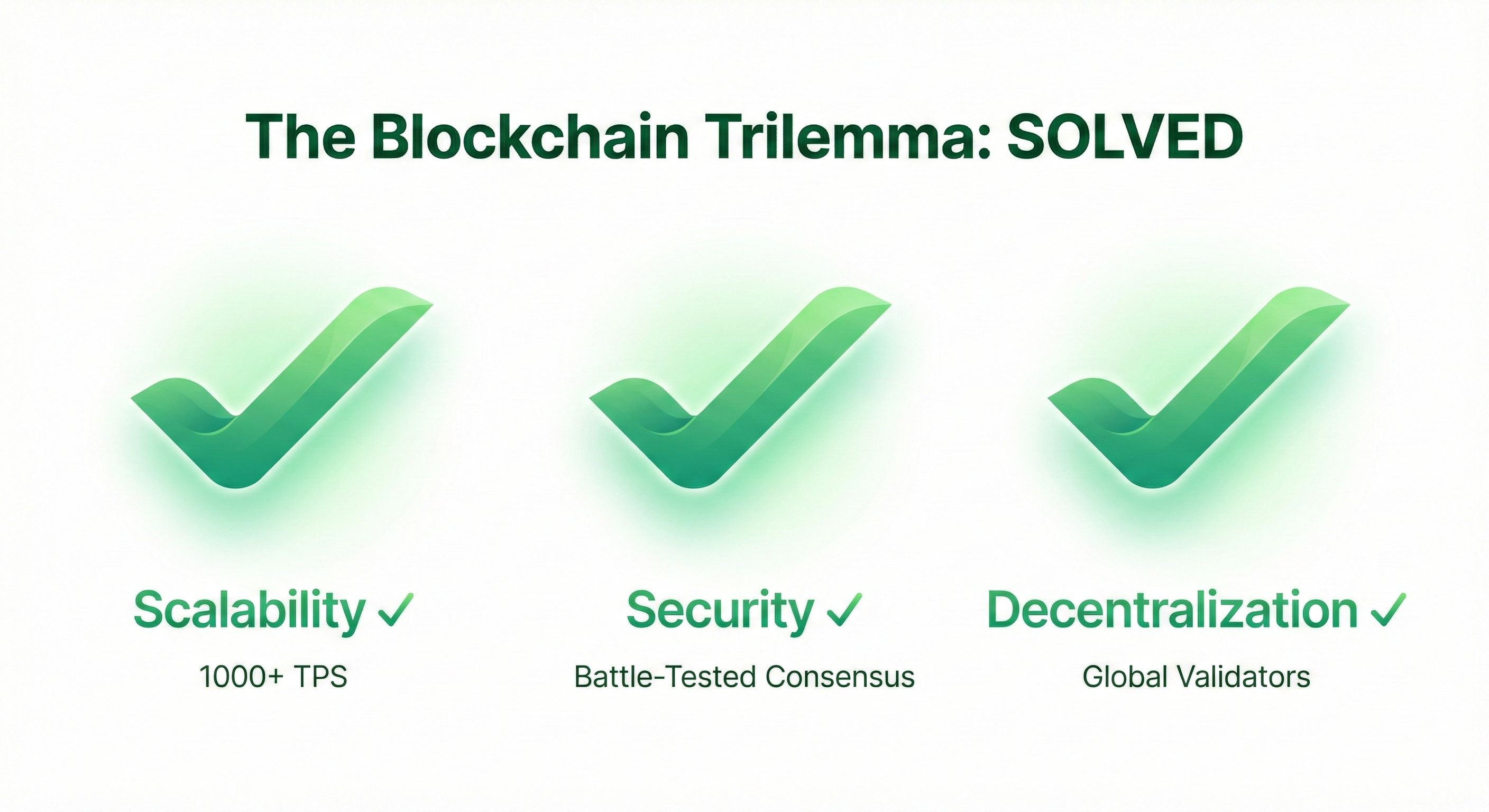
So if we solved the hard technical problems, why is crypto still not reaching mass adoption? Because we keep building solutions to problems that no longer exist.
What is Still Missing:
The real bottleneck is not in the blockchain infrastructure anymore. It is in the **application layer**. We built amazing highways but forgot to create destinations worth driving to. Here is what the industry is still missing.
Real Application Innovation:
Most new projects are just copying what already exists. Another DEX. Another lending protocol. Another NFT marketplace. We keep rebuilding the same applications on slightly faster chains. This is like building a Ferrari and using it only to go to the grocery store. The infrastructure can do so much more, but we lack imagination in how to use it.
Genuine Real-World Utility:
Crypto promised to change the world, but most applications serve only crypto users. We talk to ourselves in an echo chamber. Where are the applications that normal people actually need? Where are the use cases that solve real problems for businesses and consumers who do not care about decentralization philosophy?
Infrastructure for AI-Powered Applications:
Artificial intelligence is transforming every industry. AI agents can make decisions, interact with users, and manage complex tasks. But current blockchains were not designed with AI in mind. They were built for human users making manual transactions. The next generation of applications will combine AI and blockchain, but most chains are not ready for this reality.
Why New Layer 1s Keep Failing:
Every month, a new Layer 1 blockchain launches with big promises. They claim to be faster, cheaper, or more decentralized than existing chains. And every month, most of them fail to gain any real adoption. Why? Because they are competing on solved problems.
Launching a chain that does 10,000 transactions per second instead of 5,000 does not matter when existing chains are already fast enough. Reducing fees from 1 cent to 0.5 cents does not attract users when fees are already nearly free. These improvements are marginal optimizations of infrastructure that already works well enough. Users and developers do not switch chains for 10% better performance. They switch when a chain enables something completely new that was impossible before.
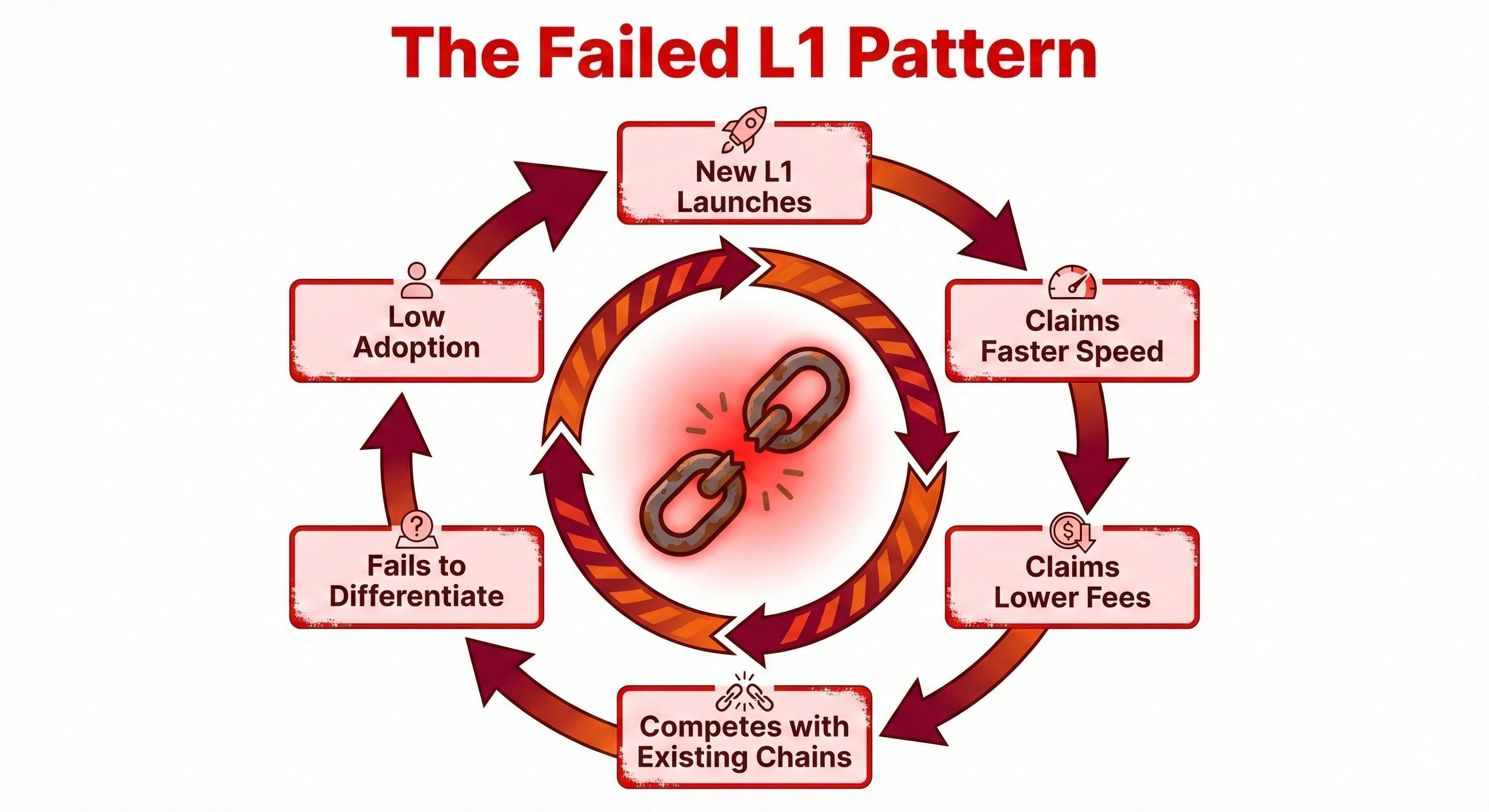
The graveyard of blockchain projects is full of technically impressive chains that nobody uses because they did not offer anything truly different. Speed and price are no longer differentiators when the baseline is already good enough.
Vanar's Different Approach:
This is where Vanar Chain breaks from the pack. Instead of competing in the crowded infrastructure space with incremental improvements, Vanar is building for the next paradigm of blockchain applications. The focus is not on doing the old things slightly better, but on enabling completely new use cases.
Building for AI Agents:
Vanar Chain is designed from the ground up to support AI-powered decentralized applications. Imagine AI agents that can own wallets, make autonomous decisions, participate in markets, and interact with smart contracts without human intervention. This is not science fiction, this technology exists today. But most blockchains were not built to handle AI agents as first-class users. Vanar creates the infrastructure where AI and blockchain work together seamlessly. This opens entirely new categories of applications that were impossible on traditional chains.
Entertainment and Gaming Economies:
Gaming is a multi-billion dollar industry, but game economies are broken. Players spend money and time building value in games, but they do not truly own anything. Game companies can shut down servers and all that value disappears. Vanar focuses on building real ownership economies for gaming and entertainment. Players can truly own their items, trade them freely, and even earn real income from their gaming activities. This is not just adding NFTs to existing games, it is rethinking how digital entertainment economies should work.
Brand Tokenization:
Major brands want to enter Web3 but current infrastructure does not serve their needs. Brands need compliance, scalability, and user experiences that match what their customers expect. Vanar enables major brands to tokenize loyalty programs, create branded digital assets, and build communities in ways that existing chains make too difficult or risky. This bridges the gap between Web2 brands and Web3 technology.
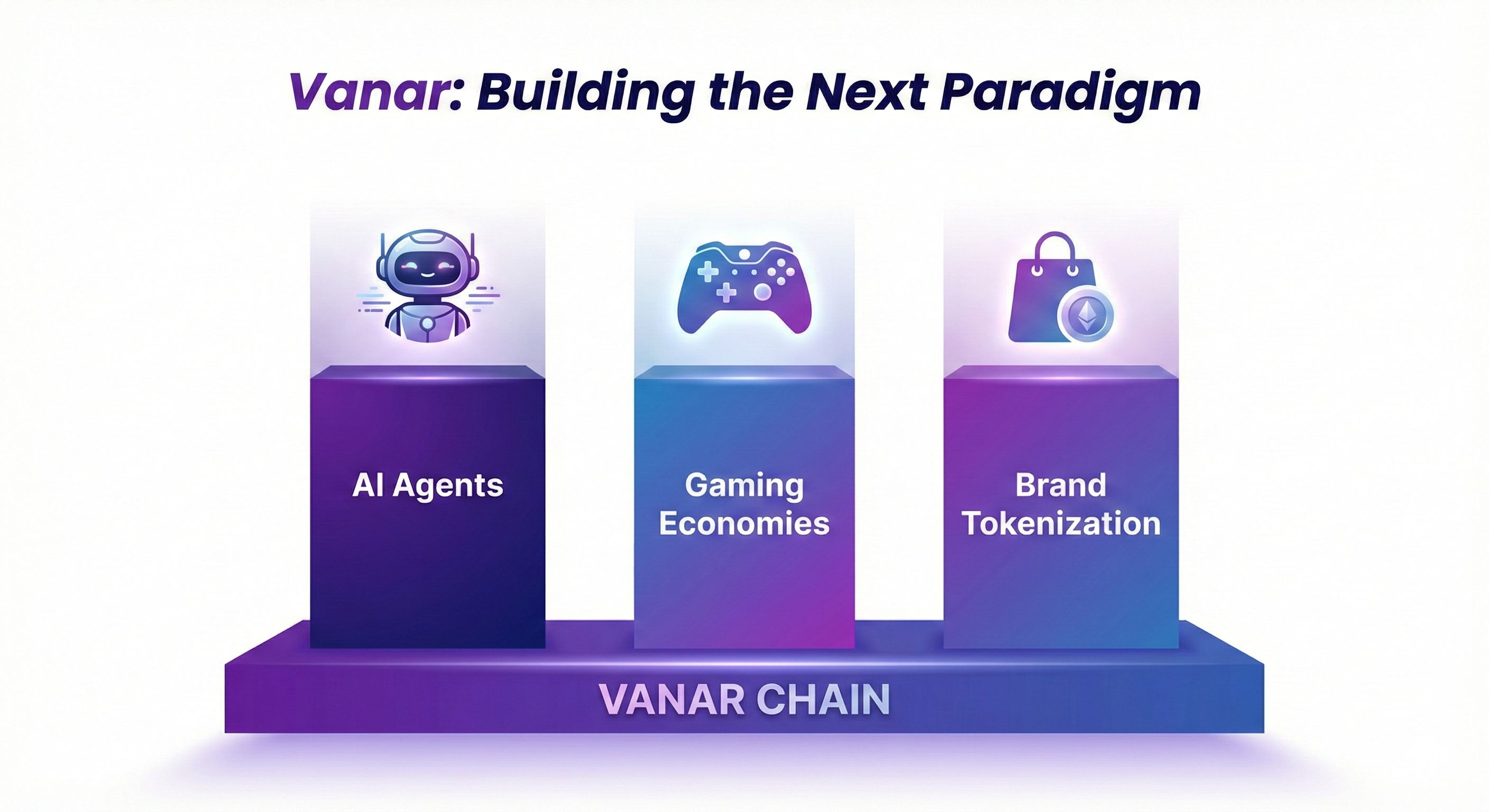
These are not marginal improvements. These are entirely new markets that existing chains are not designed to serve. This is how you create real differentiation.
The $VANRY Token Role:
The $VANRY token powers this entire ecosystem. It is not just a governance token or a payment method. It is the economic engine that makes these new use cases possible. AI agents use VANRY to pay for computational resources and smart contract interactions. Gaming economies settle in VANRY for cross-game item trading. Brands use VANRY for tokenized loyalty programs and customer rewards. The token gains value not from speculation but from actual utility in applications that could not exist elsewhere.
The Real Opportunity:
The infrastructure war is over. The trilemma is solved. The next decade of crypto will not be won by chains that are 10% faster or 20% cheaper. It will be won by chains that enable applications we have not even imagined yet. Vanar is positioning itself not as a better version of existing chains, but as the foundation for entirely new categories of blockchain applications. That is the difference between incremental improvement and paradigm shift.
When infrastructure stops being the bottleneck, the winners are those who build the applications that the infrastructure finally makes possible. Vanar understands this. Most projects do not.
If you have any questions or feedback please let me know in the comments.
Disclaimer: This post is for informational purposes only. It is not financial or investment advice. Cryptocurrencies are volatile and risky. Always do your own research (DYOR) before making any decisions.