

The entertainment industry has always been at the forefront of technological adoption, from radio to television to streaming platforms. Yet blockchain technology has struggled to gain meaningful traction in entertainment beyond speculative NFT projects and celebrity token launches. Vanar Chain approaches this challenge differently, building specialized infrastructure designed specifically for entertainment companies, brands, and content creators who want blockchain capabilities without the typical friction that comes with decentralized systems. Understanding Vanar’s trajectory requires examining not just its technology but the strategic decisions that shaped its unique position in the blockchain landscape.
Origins in a Vision for Accessible Blockchain
Vanar didn’t start with developers who wanted to build yet another general-purpose blockchain competing directly with Ethereum or Solana. The project emerged from conversations among technology professionals and entertainment industry veterans who recognized a fundamental mismatch between what blockchain offered and what entertainment companies actually needed. Existing blockchains were either too expensive, too complex, or too slow for applications involving millions of mainstream users who had never owned cryptocurrency.
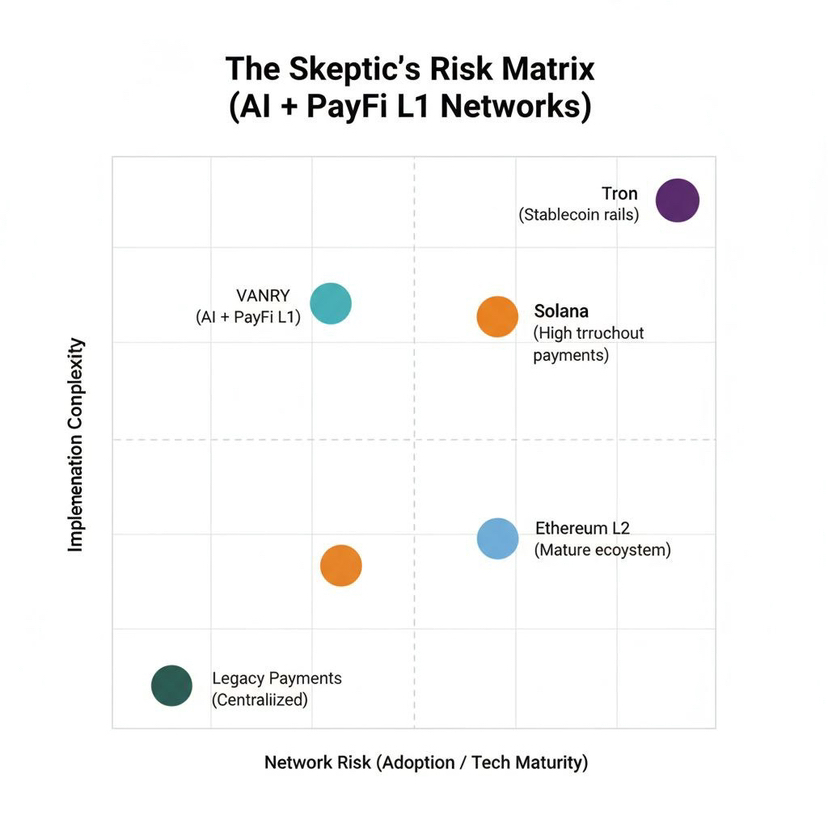
The founding vision centered on creating infrastructure where major brands could deploy blockchain features without requiring their customers to navigate crypto wallets, gas fees, or seed phrases. This meant abstracting away the complexity that defines most blockchain interactions while preserving the transparency and ownership benefits that make blockchain valuable. It’s a challenging balance because the very features that make blockchain powerful, like self-custody and permissionless access, create friction for mainstream users accustomed to Web2 convenience.
They recognized early that entertainment and brand applications had different requirements than DeFi protocols. A gaming company launching digital collectibles needs infrastructure that can handle sudden traffic spikes when millions of fans try to claim items simultaneously. A music platform distributing royalties needs predictable costs rather than gas fees that fluctuate wildly based on network congestion. A sports franchise creating fan engagement programs needs systems that work seamlessly whether users understand blockchain or not.
This understanding shaped every architectural decision. Vanar wasn’t designed to be the fastest blockchain or the most decentralized or the cheapest in abstract terms. It was engineered to solve specific problems that entertainment companies and brands face when trying to implement blockchain technology. The metrics that mattered were user experience, transaction predictability, and integration simplicity rather than just throughput numbers or decentralization scores.
Technical Architecture Built for Scale
Vanar operates as a Layer 1 blockchain using a proof-of-stake consensus mechanism, but its technical design reflects lessons learned from years of blockchain evolution. The network can process thousands of transactions per second with finality in seconds rather than minutes, performance characteristics essential for consumer-facing applications. When a user claims a digital collectible or participates in a brand activation, they expect instant confirmation, not the uncertainty of waiting for multiple block confirmations.
The chain architecture incorporates several innovations aimed at reducing costs and increasing predictability. Transaction fees remain low and stable regardless of network activity, eliminating the gas fee volatility that plagues many blockchains during periods of high demand. This stability matters enormously for brands planning campaigns with fixed budgets who cannot accept unpredictable costs that might make their initiatives economically unviable.
Vanar implements what they call gasless transactions for end users, where brands can sponsor transaction costs on behalf of their customers. This feature removes one of the biggest barriers to mainstream adoption. If you’re a sports fan claiming a commemorative NFT after your team wins a championship, you shouldn’t need to own cryptocurrency or understand gas fees. The team pays the transaction cost, and you receive your digital item without friction. This approach mirrors how traditional applications work while preserving blockchain’s transparency and ownership benefits.
The virtual machine running on Vanar maintains compatibility with Ethereum tooling, allowing developers to deploy Solidity smart contracts without major modifications. This compatibility decision recognizes that most blockchain developers have Ethereum experience and don’t want to learn entirely new programming environments. Projects can port existing contracts to Vanar with minimal changes, reducing the technical barriers to building on the platform.
Behind these user-facing features sits infrastructure for handling massive scale. The network architecture incorporates sharding concepts that allow parallel processing of transactions, preventing bottlenecks when multiple popular applications experience simultaneous usage spikes. Storage solutions optimize for the media-heavy NFTs common in entertainment applications, where images, videos, and interactive content create larger data requirements than typical DeFi transactions.
The Entertainment Industry Partnership Strategy
Vanar’s differentiation comes less from revolutionary technology and more from strategic positioning and partnership development within the entertainment industry. The team recognized that blockchain adoption in entertainment wouldn’t happen through grassroots developer communities but through partnerships with established companies that already have massive audiences. Getting one major brand to build on your platform brings more mainstream users than a hundred small DeFi protocols.
Early partnerships focused on proving the concept with recognizable names willing to experiment. These initial collaborations involved limited-scale projects, testing whether Vanar’s infrastructure could handle real-world brand requirements. The learning from these early implementations shaped subsequent platform improvements, creating a feedback loop where actual usage drove development priorities rather than theoretical optimization.
As the ecosystem matured, larger partnerships followed. Entertainment companies began viewing Vanar as credible infrastructure for significant initiatives rather than just experimental side projects. These partnerships often involved multi-year commitments and substantial resources, indicating confidence in the platform’s long-term viability. The brands weren’t building on Vanar for speculative token exposure but because they believed the technology could enhance their core business operations.
Music industry applications emerged as a natural fit, with platforms exploring how blockchain could improve royalty distribution, fan engagement, and artist-fan relationships. Traditional music royalty systems are notoriously opaque and slow, with artists sometimes waiting months to receive payment for streams or sales. Blockchain offers transparency that benefits everyone in the value chain, but only if the infrastructure can handle the transaction volumes and complexity of music industry accounting.
Sports organizations discovered that Vanar could power digital collectible programs that felt native to their existing fan experiences. Fans could collect moments from games, trade items with other supporters, and participate in exclusive experiences without needing to understand blockchain technology. The teams maintained control over their brand presentation while giving fans genuine ownership of digital items rather than just licensing access that could be revoked.
Gaming companies explored Vanar for in-game economies and asset ownership, seeing potential for players to truly own their items and potentially trade them across games. This vision of interoperable gaming assets remains partially theoretical, but the technical foundation exists for games built on Vanar to recognize and incorporate items from other Vanar-based games. Whether this becomes common practice depends more on business relationships between game developers than on technical limitations.
Token Economics and Ecosystem Incentives
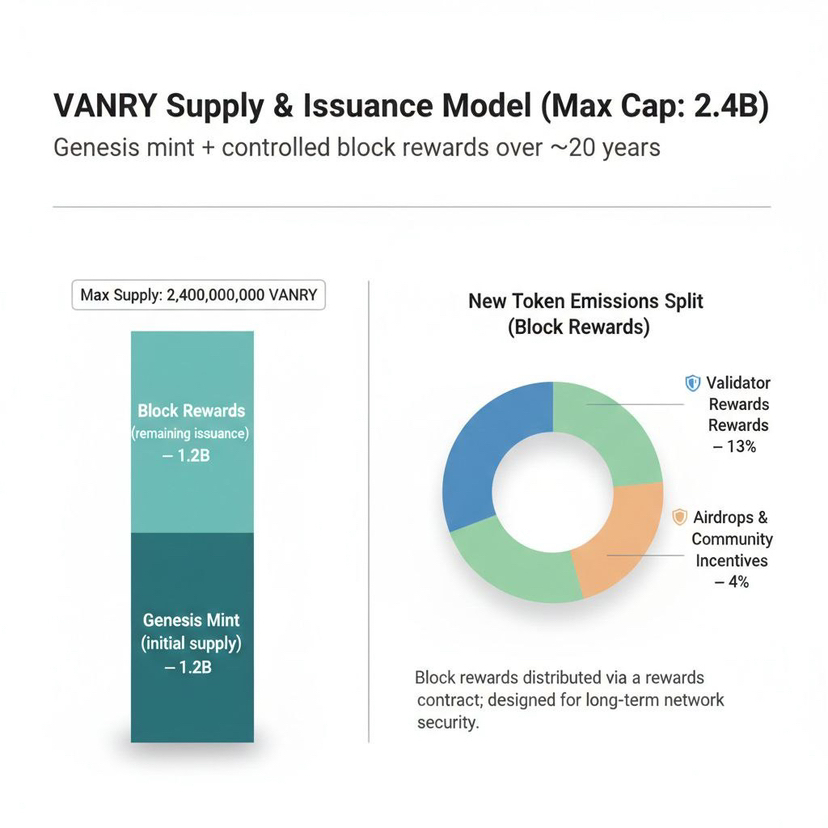
VANRY serves as the native token powering the Vanar ecosystem, fulfilling multiple functions that align incentives across different participant groups. Network validators stake VANRY to participate in consensus, earning rewards for securing the network and processing transactions. This staking mechanism creates baseline demand from those operating infrastructure while ensuring validators have economic stakes in the network’s continued security and reliability.
Brands and developers building on Vanar often need VANRY to pay for transaction costs, though the gasless transaction feature allows them to shield end users from this requirement. This creates a direct relationship between network usage and token demand, where successful applications drive token utility. The more brands deploy on Vanar and the more users interact with those applications, the more VANRY gets used for transaction settlement.
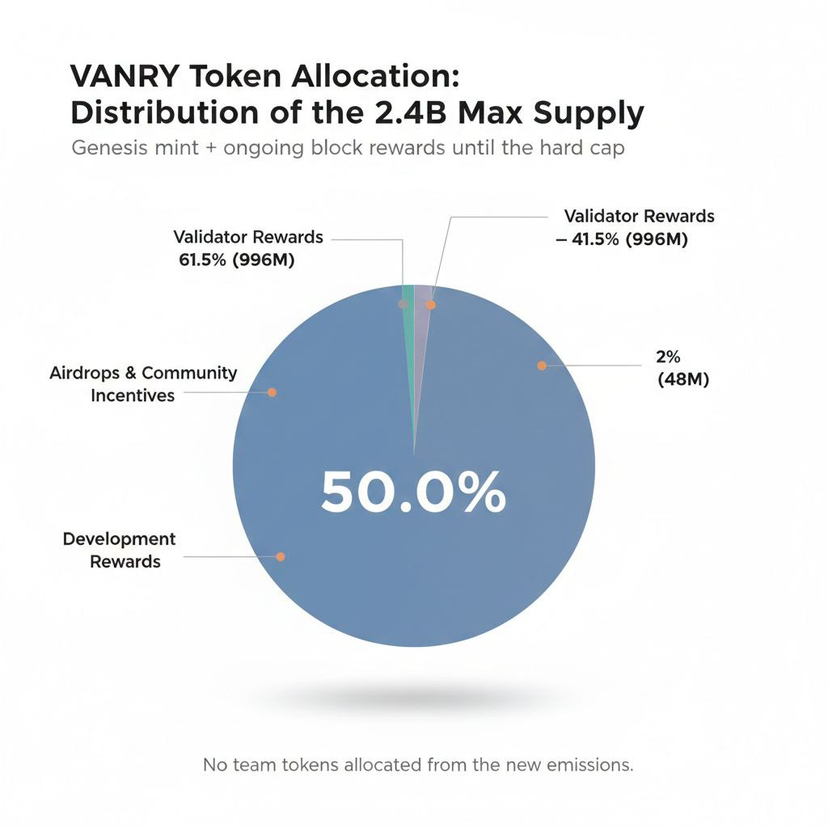
The token distribution balanced initial allocations to the development team, strategic partners, and community programs. Vesting schedules extend over several years, reducing supply pressure from early participants exiting positions. Community incentive programs reward users who participate in ecosystem activities, liquidity providers who ensure VANRY can be easily traded, and developers who build applications that expand the platform’s capabilities.
Governance rights accompany VANRY ownership, allowing token holders to vote on protocol parameters and upgrade proposals. This governance structure gives the community influence over the network’s evolution, though in practice most token holders don’t actively participate in governance. The mechanism exists for stakeholders who want involvement in decision-making processes that affect the protocol’s future direction.
Critics might argue that the token economics create circular logic where value depends on continued ecosystem growth rather than fundamental utility. Vanar faces this challenge like every blockchain project, with the team’s response being focus on driving genuine adoption through brand partnerships rather than relying purely on speculative interest. The bet is that if mainstream brands successfully deploy applications that millions of users interact with, the underlying token economics will follow naturally.
Overcoming Technical and Market Challenges
Building infrastructure for mainstream adoption means confronting challenges that purely crypto-native projects often avoid. User experience standards in Web2 applications are extraordinarily high, with consumers expecting instant responses, intuitive interfaces, and zero friction. Blockchain’s inherent complexity creates tension with these expectations, requiring careful abstraction without sacrificing the transparency and ownership benefits that make blockchain valuable.
Scalability pressures manifested as popular applications launched, revealing that even high-throughput blockchains face bottlenecks under certain conditions. When major brand activations attracted hundreds of thousands of simultaneous users, the network experienced congestion that required infrastructure upgrades and optimization. These incidents provided valuable stress testing that guided capacity planning and technical improvements, though they also demonstrated that scaling remains an ongoing challenge rather than a solved problem.
Security concerns required constant vigilance, with each smart contract integration point representing a potential vulnerability. The team implemented rigorous auditing processes for both core protocol code and applications building on the platform. While no major exploits occurred, the discovery of potential attack vectors in audits highlighted how complex blockchain security truly is. Every bridge mechanism, every token standard, every governance process creates surfaces that must be examined and hardened against increasingly sophisticated attackers.
The competitive landscape intensified as other projects targeted similar use cases. Flow positioned itself for mainstream applications with NBA Top Shot’s success demonstrating viable product-market fit. Immutable X focused specifically on gaming and NFTs with zero gas fees for users. Polygon attracted major brands through aggressive partnership development and ecosystem incentives. Vanar had to differentiate not just through technology but through the quality of partnerships and the success of deployed applications.
Regulatory uncertainty loomed over every entertainment industry partnership, with companies understandably cautious about technologies that might face legal challenges. Securities laws, consumer protection regulations, and industry-specific compliance requirements all intersected with blockchain implementations in ways that weren’t always clear. Vanar worked with legal experts and partner companies to navigate these complexities, but regulatory ambiguity remained a persistent challenge that could impact growth trajectories.
Developer Tools and Platform Accessibility
Attracting developers to build on Vanar required more than just technical capabilities. The platform needed comprehensive documentation, intuitive development tools, and support systems that made building feel straightforward rather than overwhelming. The team invested heavily in developer experience, recognizing that the best technology is worthless if developers can’t easily understand and implement it.
Software development kits provided libraries and frameworks in multiple programming languages, allowing developers to interact with Vanar using their preferred tools. These SDKs handled complex blockchain interactions behind simple function calls, letting developers focus on application logic rather than low-level protocol details. A developer creating a digital collectible campaign shouldn’t need to understand consensus mechanisms or cryptographic signing any more than a web developer needs to understand TCP/IP protocols.
Testing environments enabled developers to deploy and test applications without spending real tokens or risking production systems. These sandboxes mirrored the production network’s behavior while providing conveniences like instant block confirmation and unlimited test tokens. Developers could iterate rapidly, catching bugs and refining features before launching to actual users.
Educational resources targeted both experienced blockchain developers and those coming from traditional software backgrounds. Tutorial series walked through common implementation patterns, explaining not just how to write code but why certain architectural decisions made sense for different use cases. Case studies showcased successful applications, providing real examples that developers could learn from and adapt to their needs.
Grant programs provided funding for promising projects, offsetting the opportunity cost of building on a newer platform rather than established alternatives. These grants targeted applications that would expand Vanar’s ecosystem, particularly those bringing unique capabilities or targeting underserved use cases. The selection process evaluated both technical merit and strategic value, prioritizing projects likely to attract users and demonstrate Vanar’s capabilities.
The Broader Vision for Digital Ownership
Vanar’s long-term ambition extends beyond just providing infrastructure for entertainment companies. The team envisions a future where digital ownership becomes as natural and ubiquitous as owning physical items, where people accumulate digital collectibles, credentials, and assets that have meaning and value beyond any single platform. This vision requires infrastructure that makes blockchain ownership accessible to billions of people who will never think of themselves as cryptocurrency users.
They’re seeing digital identity emerge as a critical application area, where people might maintain verifiable credentials, achievement records, and reputation scores across multiple platforms without any single company controlling that information. A musician’s verified discography, a fan’s attendance history at live events, a gamer’s achievement records across multiple titles, all could exist as portable digital assets that individuals truly own rather than platforms merely hosting.
Brand loyalty programs represent another frontier where blockchain could fundamentally improve existing systems. Traditional loyalty points are siloed within single companies, expire arbitrarily, and offer limited flexibility. Blockchain-based loyalty systems could enable points that work across multiple brands, that can be traded or gifted, that have transparent value and clear ownership. If Vanar becomes infrastructure powering such systems, millions of mainstream users might interact with blockchain technology without ever knowing it.
The metaverse concept, despite its overuse in marketing materials, represents genuine opportunity if interpreted as persistent digital spaces where people spend time and accumulate possessions. Whether these take the form of immersive VR environments or simpler social spaces, they’ll need infrastructure for digital ownership that blockchain provides. Vanar positions itself as foundation infrastructure for these experiences, offering the performance and user experience required for mainstream virtual worlds.
Looking Forward to Sustainable Growth
The path ahead for Vanar depends on successfully executing partnerships and maintaining technical reliability as usage scales. Short-term success metrics focus on the number of brands deploying applications, the volume of users interacting with those applications, and the diversity of use cases being implemented. These indicators reveal whether the platform is achieving its goal of bringing blockchain to mainstream audiences through entertainment and brand applications.
Medium-term challenges involve deepening existing partnerships while expanding into new industry verticals. Entertainment provides a natural starting point, but the same infrastructure could serve retail, education, healthcare, and other sectors where digital engagement and ownership matter. Expanding beyond entertainment requires understanding different industry requirements and potentially adapting the platform to serve those needs without compromising existing functionality.
Long-term viability depends on whether the vision of ubiquitous digital ownership materializes and whether Vanar can maintain a leadership position if it does. Blockchain technology itself will continue evolving, with new approaches potentially offering superior performance or features. Vanar must adapt and improve continuously while avoiding disruptive changes that break existing applications. This balance between innovation and stability becomes more delicate as the ecosystem matures and more companies depend on the platform.
The regulatory environment will significantly impact Vanar’s trajectory, particularly for entertainment industry applications that intersect with securities laws, consumer protection regulations, and industry-specific compliance requirements. How governments worldwide approach blockchain regulation over the coming years could either accelerate adoption by providing clarity or constrain growth through restrictive requirements. Vanar’s approach of working within existing frameworks and partnering with compliant companies positions it well for various regulatory outcomes.
Competition will remain intense as multiple projects target similar opportunities with different technical approaches and partnership strategies. The blockchain industry will likely consolidate around a few dominant platforms while niche solutions serve specialized needs. Vanar’s position in this future hierarchy depends on execution quality, partnership success, and perhaps factors outside anyone’s direct control like market timing or viral adoption of particular applications.
Infrastructure That Disappears Into Experience
The ultimate measure of Vanar’s success won’t be transaction throughput or token price but whether millions of people use blockchain technology without knowing or caring that they’re doing so. When someone claims a digital collectible from their favorite sports team, attends a virtual concert, or participates in a brand’s loyalty program, they shouldn’t need to understand proof-of-stake consensus or smart contract execution. They should simply experience seamless, enjoyable interactions that happen to be powered by blockchain infrastructure working invisibly in the background.
This invisibility represents both the highest aspiration and the greatest challenge for blockchain technology in mainstream applications. The features that make blockchain powerful, like decentralization and self-custody, create complexity that conflicts with consumer expectations shaped by decades of Web2 convenience. Vanar’s approach of abstracting this complexity while preserving blockchain’s benefits offers one path forward, though success requires not just technical capability but sustained execution across countless implementation details.
Years from now, if Vanar achieves its vision, people might own extensive digital collections spanning multiple brands and platforms, participate in virtual experiences with genuine ownership of their contributions, and enjoy brand relationships enhanced by transparent loyalty systems, all without ever thinking about blockchain technology. That outcome would validate not just Vanar’s technical decisions but its fundamental thesis that blockchain adoption in entertainment requires infrastructure designed specifically for mainstream users rather than crypto enthusiasts. Whether that future materializes remains uncertain, but the work of building toward it continues regardless of market cycles or speculative trends. The quiet construction of reliable infrastructure that makes complex technology accessible defines meaningful progress in ways that dramatic promises and ambitious roadmaps never can.