
Most blockchains are built with developers in mind first and real people second. Vanar Chain flips that order. Instead of asking users to learn wallets, bridges, gas logic, and on-chain jargon, Vanar starts from a simple question: how would Web3 look if it was designed for gamers, brands, and everyday users from day one?
Vanar Chain is a Layer-1 blockchain built around adoption, not abstraction. It doesn’t try to compete on who has the most complex DeFi tools or the flashiest yield mechanics. Its focus is narrower and more practical: entertainment, gaming, digital identity, AI interaction, and branded digital experiences that feel familiar to non-crypto users.
That focus matters more than it sounds. Gaming, media, and entertainment already onboard billions of users without explaining how the backend works. Vanar’s philosophy is to let blockchain play the same invisible role—secure, programmable, and trust-minimized, but mostly unseen.
Why Vanar Exists in the First Place
Web3 has no shortage of infrastructure. What it lacks is translation. Most blockchains speak fluently to developers but poorly to consumers. Vanar exists to close that gap.
The team behind Vanar comes from gaming, entertainment, and brand ecosystems, not purely financial engineering. That background shows up in how the chain is designed. The network is EVM-compatible, but the emphasis isn’t on copying Ethereum’s culture. It’s on building an environment where products can scale to millions of users without friction.
Instead of forcing people to “learn crypto,” Vanar’s goal is to let people use applications that happen to run on crypto.
An Ecosystem That Already Exists, Not Just a Whitepaper
One of the most important differences between Vanar and many newer Layer-1s is that it didn’t start from zero usage. Its ecosystem grew out of live products.
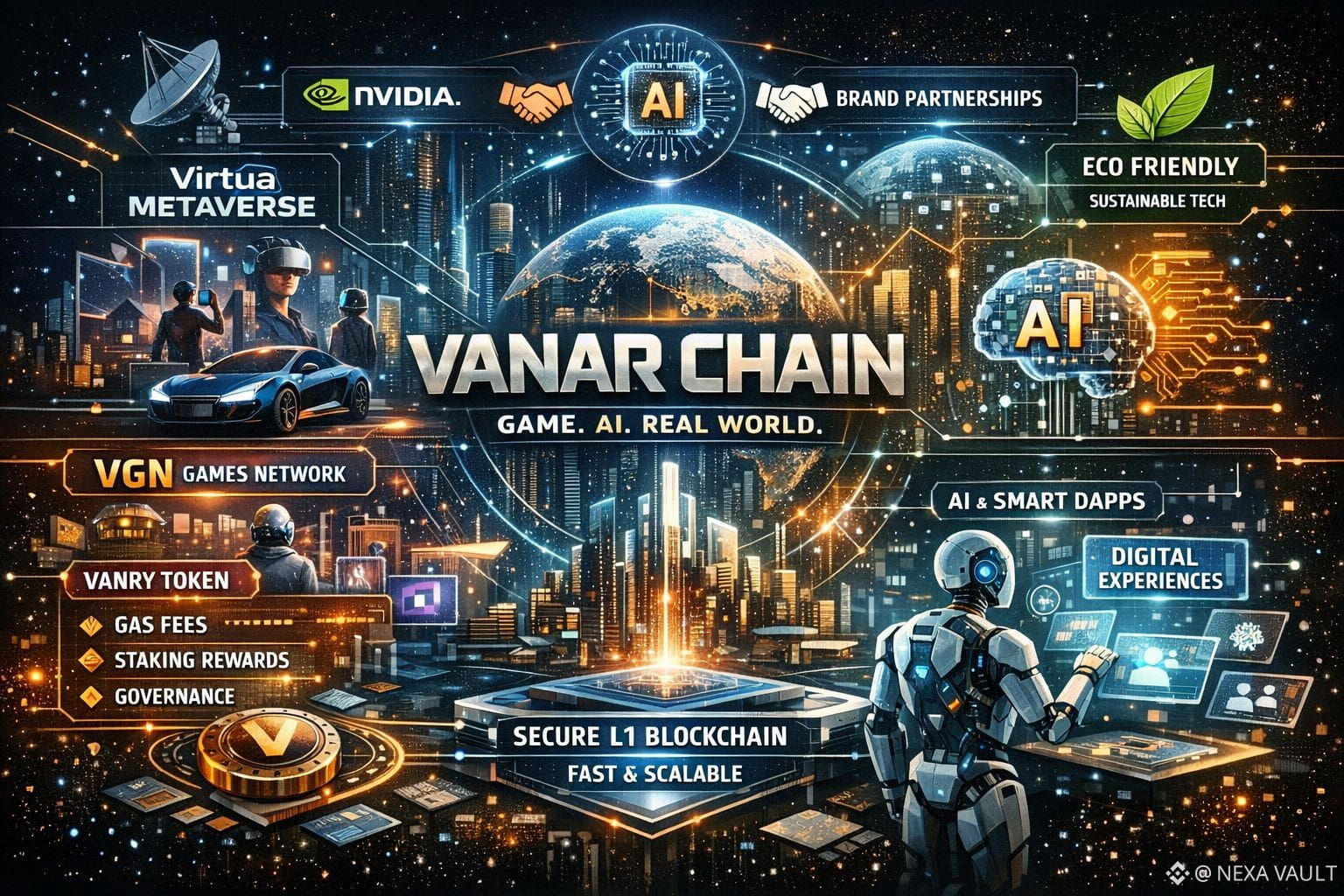
Virtua Metaverse is a working digital environment where users interact with virtual spaces, assets, and communities. It’s not a concept demo—it’s a real platform that has already attracted mainstream partnerships and users.
Alongside that is VGN Games Network, which focuses on onboarding games and players into blockchain-enabled economies without breaking the gameplay experience. Assets, ownership, and progression are handled in the background, not pushed into the player’s face.
This matters because it proves Vanar isn’t building infrastructure hoping someone uses it. The usage is already there, and the blockchain is evolving to support it more efficiently.
Where AI Fits Into the Picture
Vanar’s AI angle isn’t about buzzwords or chatbots slapped onto a blockchain. The goal is more structural. The network is positioning itself to support AI-driven applications where on-chain logic, identity, and verification matter.
Think of AI agents that interact with digital assets, branded environments that respond to user behavior, or intelligent systems that manage game economies without centralized control. In these scenarios, blockchain acts as the trust layer, while AI handles interaction and automation.
This combination makes sense in entertainment and gaming, where personalization and dynamic behavior are becoming the norm.
The Role of the VANRY Token
VANRY is not positioned as a speculative reward token. Its role is functional.
VANRY is used to pay for network activity, power applications inside the ecosystem, secure the chain through staking, and participate in governance decisions over time. As more applications run on Vanar—games, AI services, branded experiences—token demand ties directly to usage rather than narratives.
A large portion of the supply is already in circulation, which reduces long-term inflation pressure compared to ecosystems that constantly unlock new tokens onto the market.
Why Vanar Matters in the Bigger Picture
Most Layer-1 blockchains compete for the same audience: developers building financial tools for crypto-native users. Vanar is competing for a different future—the one where Web3 quietly integrates into industries people already use every day.
Gaming, digital collectibles, AI-driven experiences, and brand engagement don’t need users to understand blockchain mechanics. They need reliability, low friction, predictable costs, and scale. Vanar’s design choices consistently point in that direction.
If Web3 adoption actually reaches billions of users, it won’t look like today’s DeFi dashboards. It will look like games, platforms, and services that feel normal—just more open and programmable under the hood.
What’s Happening Now and What Comes Next
Activity around Vanar has remained steady rather than explosive, which aligns with its long-term approach. Development continues around AI tooling, ecosystem expansion, and deeper integration of existing products into the core chain.
The next phase appears focused on:
Expanding real applications rather than launching empty protocols
Strengthening AI-driven services that consume on-chain resources
Bringing more partners from gaming and entertainment into a live environment, not testnets
Instead of chasing headlines, Vanar is building density—more usage per product, more value per interaction.
Final Takeaway
Vanar Chain isn’t trying to reinvent crypto—it’s trying to make blockchain quietly useful, and that subtle shift may end up being its biggest advantage.