
There is a particular kind of fear that comes with money. Not the dramatic kind people talk about in movies, but the quiet, persistent fear of exposure—of being seen too clearly, of having your financial life laid bare to strangers, competitors, systems that never forget. It’s the fear a business owner feels when trade secrets could leak with a single transaction. The fear an institution feels when compliance demands transparency but transparency threatens survival. The fear ordinary people carry when every digital footprint feels permanent, searchable, weaponizable.
This is where the story of Dusk truly begins—not in code, not in whitepapers, but in that human tension between visibility and safety.
When Dusk was founded in 2018, the blockchain world was loud. Everything was about disruption, about tearing down old systems, about radical transparency as a kind of moral high ground. Public ledgers were celebrated as truth machines, even as they quietly ignored a fundamental reality: humans are not meant to live entirely in public. Neither are institutions. Neither are markets. Transparency without discretion does not create trust—it creates anxiety.
Dusk didn’t reject blockchain’s promise. It listened more closely to its consequences.
At its core, Dusk was built on a deeply human realization: privacy is not about hiding wrongdoing; it’s about protecting what is vulnerable. In traditional finance, confidentiality has always existed for a reason. Contracts are private. Strategies are guarded. Client information is sacred. Strip that away, and what you don’t get is fairness—you get fragility. What Dusk dared to imagine was a financial system that keeps those protections intact while still honoring the rule of law.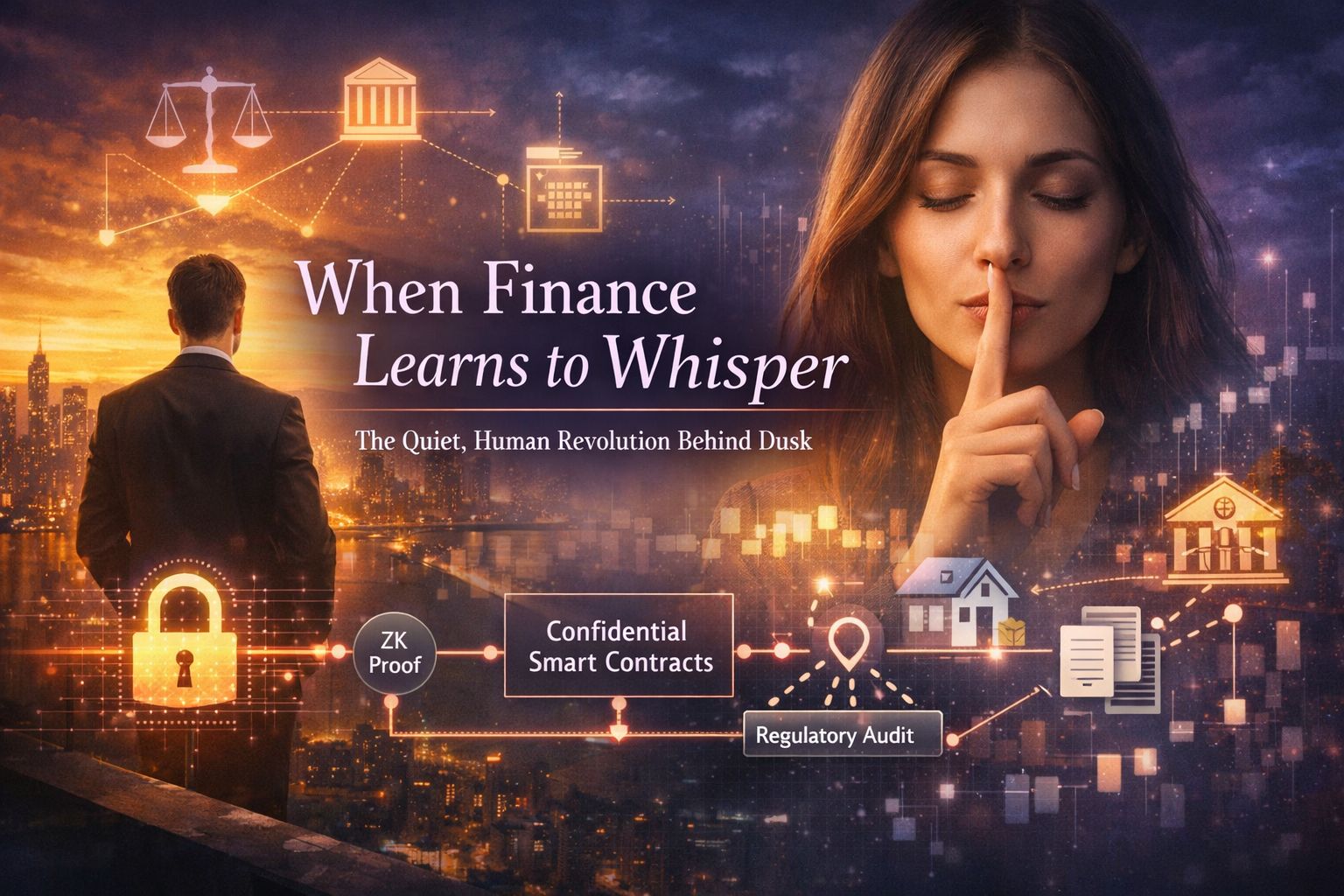
This is what makes Dusk feel different when you sit with it long enough. It doesn’t feel like a rebellion. It feels like reconciliation.
On Dusk, transactions don’t scream their details into the void. Smart contracts don’t expose their inner logic to anyone who happens to be watching. Balances, identities, asset positions—these things are treated as personal, contextual, deserving of care. And yet, this privacy is not absolute secrecy. It is selective honesty. Through cryptographic proofs, Dusk allows participants to prove compliance, ownership, and legitimacy without revealing the intimate details beneath. It’s the digital equivalent of saying, “Trust me—I can prove I’m playing by the rules, without handing you my diary.”
For institutions, this is not just convenient. It’s emotional relief.
Banks, asset managers, and regulated entities have long stood at the edge of blockchain, intrigued but cautious. Public chains asked them to choose between innovation and responsibility. Dusk refuses that ultimatum. It speaks their language—regulation, audits, accountability—while quietly removing the fear that adopting decentralized infrastructure means surrendering control over sensitive data. It tells them, you don’t have to expose everything to be honest.
And for individuals, even those who may never read a technical document, the impact is subtle but profound. It is the feeling of participating in a financial system that doesn’t treat exposure as a virtue. It is the reassurance that your financial life is not content. That your privacy is not collateral damage. That dignity still has a place in digital systems.
Perhaps the most emotional dimension of Dusk lies in its vision for real-world assets. These are not speculative tokens born from hype. These are pensions, bonds, equity, property—things that represent years of labor, security, inheritance, and hope. Moving them on-chain without privacy would be reckless. Dusk approaches this space with almost parental caution. It understands that when you tokenize real-world value, you are not just moving numbers—you are moving trust accumulated over generations.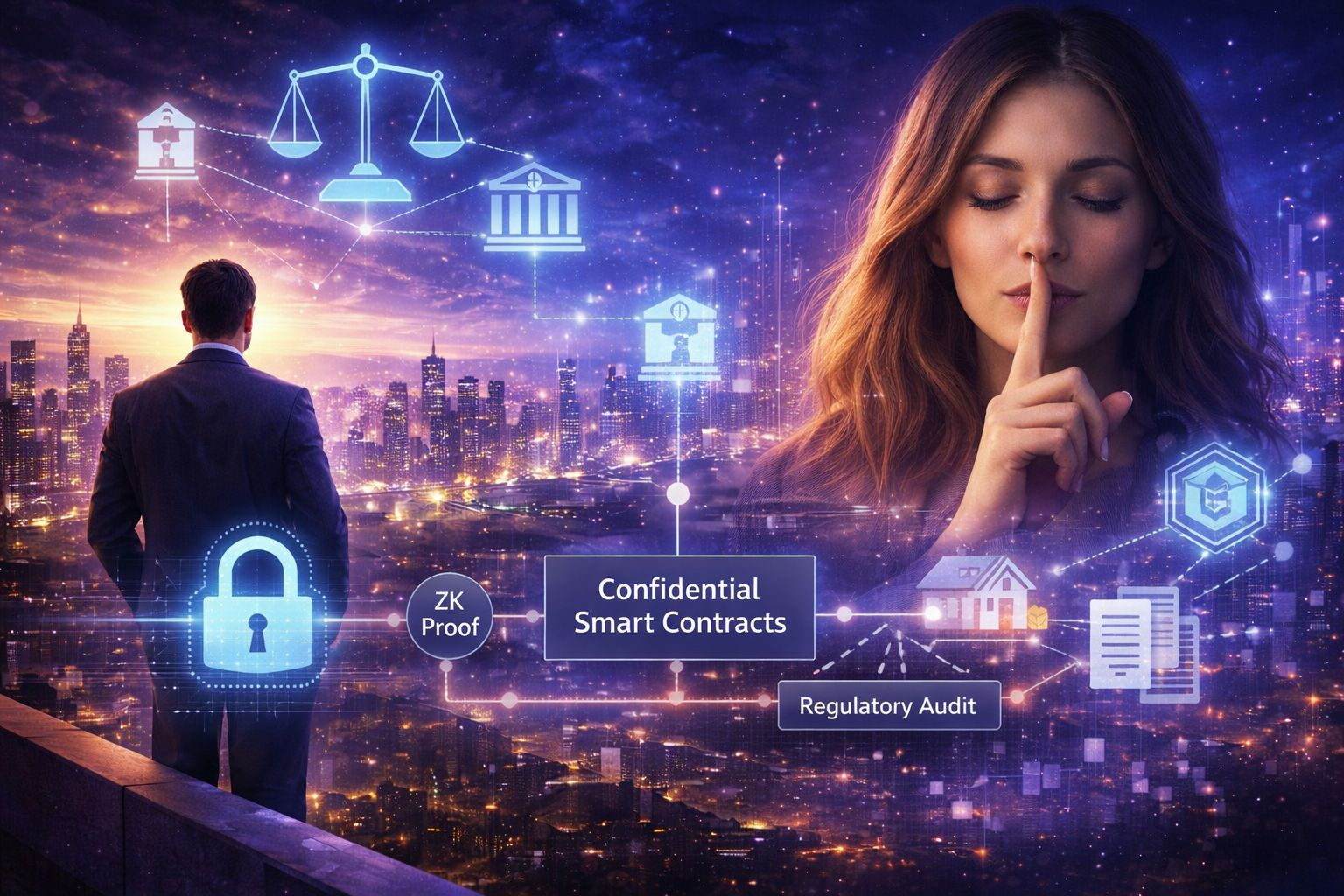
There is something deeply grounding about a blockchain that does not assume bad intentions. Dusk does not treat every user as a potential criminal needing constant exposure. Instead, it assumes that most people want to do the right thing and simply need systems that don’t punish them for it. This philosophy is woven into its modular architecture, its compliance-aware design, its insistence that auditability should be deliberate, not accidental.
Emotionally, Dusk feels like a response to a world that has grown tired of extremes. Tired of choosing between freedom and safety. Tired of systems that claim to empower while quietly extracting control. Tired of innovation that forgets the human cost. Dusk does not promise perfection. What it offers is restraint—and in an era obsessed with excess, restraint feels radical.
It is easy to overlook projects like this because they don’t shout. But history rarely remembers the loudest voices—it remembers the systems that endured. Dusk is building infrastructure for a future where blockchain is no longer a spectacle, but a trusted layer beneath everyday finance. Invisible when it works. Unobtrusive when it protects. Present when it matters.
In the end, Dusk is not about darkness. It’s about the soft light that allows you to see what’s necessary without blinding you. It’s about finance learning to whisper instead of shout. And in that whisper is a promise that technology can still respect the people it serves.
