If you’ve ever interacted with a blockchain network as a trader, builder, or institutional observer, you’ve likely noticed the tension between transparency and control. On one hand, public blockchains make everything visible: balances, transactions, contract code. On the other hand, the moment you try to handle sensitive financial information—whether it’s institutional trading positions, real-world asset holdings, or private contractual agreements—the openness becomes a liability. Users and builders alike face the friction of having to expose more than they should or to depend on off-chain solutions that feel brittle and opaque.
This is more than an inconvenience. It’s a structural problem that quietly shapes who can participate in crypto and how value flows across networks. Transparency, the very principle many of us value, introduces hidden dependencies. For institutions, it’s impossible to engage without exposing confidential strategies. For startups building tokenized financial products, the lack of privacy onchain forces compromises that can affect user trust or regulatory compliance. Even seasoned crypto participants rarely see the consequences until they surface in a failure: a leaked strategy, a compliance mishap, or a halted project because the underlying network couldn’t support selective visibility.
The structural friction is deceptively simple to describe: blockchains are inherently public, yet many financial applications require selective privacy. In practice, this creates an awkward reality. Imagine a hedge fund trying to tokenize a basket of equities onchain. Every transaction must remain confidential for competitive reasons, yet regulators and auditors need a way to verify that rules are being followed. Most networks force you to either make the data fully public breaking privacy or rely on complex off-chain proofs and intermediaries that create hidden trust assumptions. This is not just a theoretical problem; multiple pilot projects have stumbled precisely here. Projects tokenizing real-world assets often hit a wall when the infrastructure fails to support confidential settlements, requiring expensive workarounds or abandoning blockchain deployment entirely.
The reason the problem is often underestimated is that early successes in crypto give the illusion of universal applicability. DeFi applications with small, transparent markets can function without selective privacy. Exploratory tokenized experiments often look fine in isolation. Yet the moment stakes increase, and the network is asked to host regulated financial activity, the missing infrastructure becomes painfully visible. It is only when confidential data is accidentally exposed, or compliance audits fail, that the structural deficiency becomes undeniable.
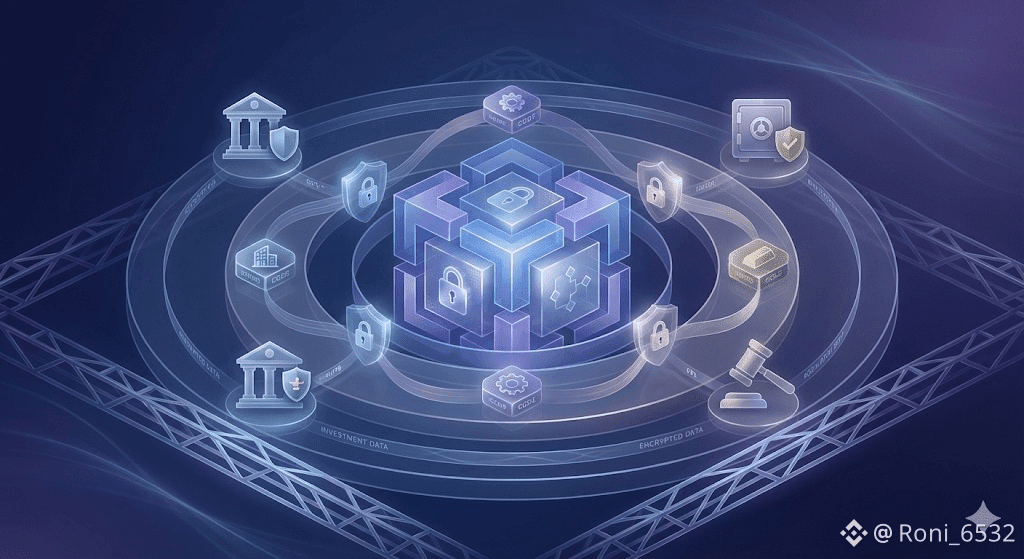
Enter Dusk Network. Founded in 2018, Dusk is a Layer 1 blockchain designed for regulated and privacy-conscious financial infrastructure. It approaches this problem with focus and discipline, addressing the tension between confidentiality and verifiability at the protocol level. For users and builders, this means a network that allows confidential financial transactions while preserving the ability to prove correctness to auditors, regulators, or counterparties. No more reliance on ad hoc off-chain solutions or trusted intermediaries that introduce hidden risk.
For builders, this changes how you think about product design. You can create tokenized securities, private DeFi products, or institutional trading platforms without having to constantly compromise between transparency and compliance. Users benefit indirectly: they engage with products that respect privacy while remaining reliable and auditable, even when high stakes are involved. The network itself doesn’t promise speed, hype, or attention—it offers certainty and structural soundness.
However, it is important to recognize Dusk’s deliberate limitations. It does not attempt to be a general-purpose smart contract platform for every possible application. It does not prioritize retail experimentation, speculative yield, or high-frequency trading environments. This scope discipline is intentional: the network focuses where its design principles are most valuable, namely privacy, verifiability, and resilience in regulated financial contexts. Adoption risks exist because these are specialized requirements. Projects outside this domain may not need Dusk, and the network’s quieter profile can lead to lower visibility compared with more generalized Layer 1 platforms. Yet for its target use cases, it provides foundational infrastructure that cannot be easily substituted.
At a broader level, the importance of networks like $DUSK goes beyond any single user or application. It represents a class of infrastructure that prioritizes reliability, trust minimization, and predictable incentives over hype and superficial adoption metrics. These qualities often go unnoticed until failure occurs, which is precisely why understanding the infrastructure’s role is critical. A network that silently ensures confidential compliance while providing provable correctness becomes the kind of backbone upon which responsible financial innovation can safely occur.
Reflecting on the ecosystem, one realizes that much of the excitement in crypto is visible: token launches, liquidity, yield experiments. The truly consequential work, however, is quiet: foundational layers that prevent systemic failure, reduce hidden dependencies, and align incentives correctly across participants. Dusk exemplifies this principle. Its impact may be invisible to many end users, yet the decisions it enforces shape the feasibility of a wide range of financial products. By embedding privacy and verifiability into the protocol, it removes the kind of structural risk that would otherwise force compromises or create regulatory exposure.
For observers, this illustrates a broader lesson about infrastructure. It is tempting to chase flashy innovation or rapid adoption. Yet the networks that endure are those that internalize constraints, minimize trust assumptions, and offer predictable, auditable behavior. These qualities are subtle, often intangible, but they define whether higher-level applications can reliably function. Dusk Network is an example of how intentionally focused infrastructure can quietly enable a whole ecosystem of financial innovation that would otherwise be difficult or impossible to deploy safely.
The takeaway is simple but important: reliable blockchain infrastructure matters more than hype. As crypto ecosystems grow in scale, complexity, and regulatory relevance, the networks that embed trust, privacy, and auditability at the core will determine which projects succeed and which fail silently. Even if you never interact with Dusk directly, its existence ensures that critical financial activity can be conducted safely and responsibly onchain. Understanding its role allows participants to appreciate the unseen scaffolding that makes the broader ecosystem resilient.