
In the real world, financial privacy is ordinary, not exceptional. Bank balances, trades, and positions are not broadcast publicly, yet they remain auditable under legal frameworks. On-chain finance, however, has struggled to replicate this balance, often forcing users and institutions to choose between transparency and confidentiality.
That tension is what pushed me to stress-test Dusk’s mainnet only days after its launch in January 2026. I am not an institution or a large capital holder—just a researcher with a long-standing interest in privacy technology and zero-knowledge systems. I had followed Dusk through its testnet phase, but the mainnet launch raised a more serious question: is this a real step forward for privacy DeFi, or simply a well-packaged technical narrative?
The problem Dusk is addressing is well-known but unresolved. Public blockchains expose transaction data by default, which is incompatible with how real financial activity operates. Privacy-first chains, on the other hand, often face regulatory resistance or lack credible paths for institutional adoption. As regulation tightens under frameworks like MiCA in Europe and increased scrutiny in the U.S., institutions want to move on-chain but cannot accept full public disclosure of financial data. Most platforms solve only half of this equation.
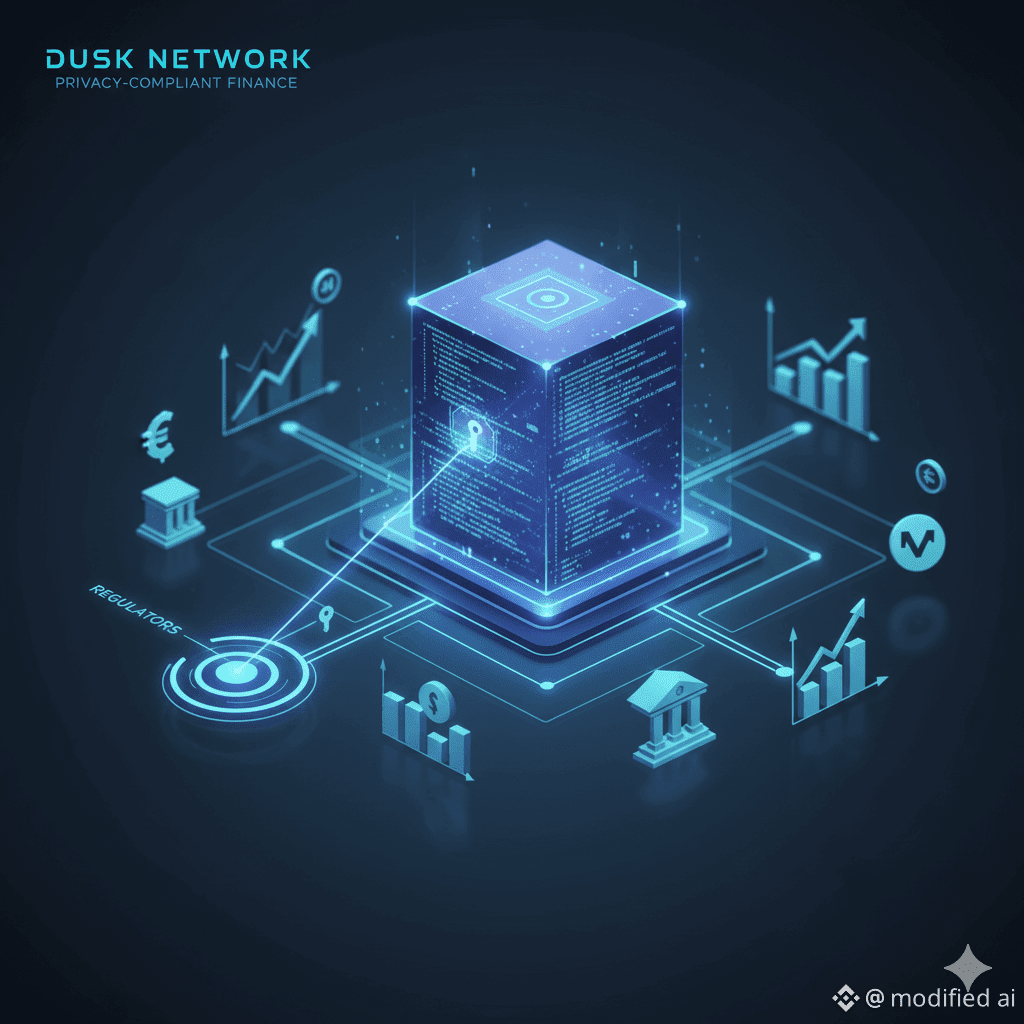
Dusk’s approach is to treat confidentiality as the default while preserving auditability through defined access. Its EVM-compatible environment supports confidential smart contracts where transaction details and state variables are encrypted before reaching the ledger. Validators can still verify correctness using zero-knowledge proofs, and specific data can be decrypted by authorized parties under controlled conditions. This design does not promise regulatory immunity, but it attempts to align on-chain execution with how regulated finance already works.
After the mainnet went live, I deployed simple contracts, transferred $DUSK between wallets, and replicated private DeFi logic I had tested earlier. The experience was notably smooth: transaction finality was fast, fees were low, and amounts were invisible on-chain unless decrypted by the key holder. Compared with earlier privacy chains—where latency, complexity, or usability often dominated—privacy here felt native rather than an added layer.
One clear positive is usability. The documentation is readable, the SDK lowers the barrier for developers without deep cryptographic backgrounds, and confidential logic does not require complex external tooling. For developers and researchers, this makes experimentation practical rather than theoretical.
One clear risk is maturity. The mainnet is still new, liquidity is limited, node distribution is uneven geographically, and tooling is evolving quickly. Regulatory interpretation of privacy-preserving systems can also shift unexpectedly, regardless of how thoughtfully they are designed. These are not hypothetical concerns, but normal constraints for an early-stage network.
None of this resolves overnight. Adoption, institutional participation, and regulatory clarity will take time, and some assumptions may prove wrong. For now, Dusk functions as a serious attempt to reconcile privacy and compliance rather than ignoring one for the other.
If regulatory conditions remain supportive and real-world assets continue moving on-chain, Dusk could become a meaningful infrastructure layer for confidential finance. If those conditions fail to materialize, it will still stand as an important experiment in how privacy can be engineered responsibly. The outcome depends less on promises and more on how the system performs under sustained, real-world use.

#MarketRebound #StrategyBTCPurchase #WriteToEarnUpgrade #CPIWatch