
Vanar Chain doesn’t slow down just because the consumer stack kept a session warm.
A Vanar's Virtua tab sits open. Wallet still connected. The player comes back and keeps moving like nothing changed. No fresh login. No entitlement refresh. They don’t even notice the session never really restarted.
An action goes through.
Finality lands.
Virtua’s side thinks the permission is still alive because it’s holding onto yesterday’s entitlement in the easiest place to hold it: the warm session path that was built to avoid friction. Meanwhile VGN’s account rules have already shifted. Different freshness. Different view. Same user.
So the chain records a clean outcome and the product starts arguing with itself after the fact.
Support doesn’t get “it failed.” Support gets contradictions. “It worked, then it didn’t.” “Desktop ok, mobile locked.” “I already used it.” Screenshots again. Screenshots only prove the screen existed.
Vanar chain's VGN makes it worse because identity and access aren’t single-app there. One title refreshes hard. Another keeps sessions sticky because drop-off hurts. The same wallet action behaves differently depending on which title touched the account layer last, and Virtua is the one taking the blame because it’s the place users can see.
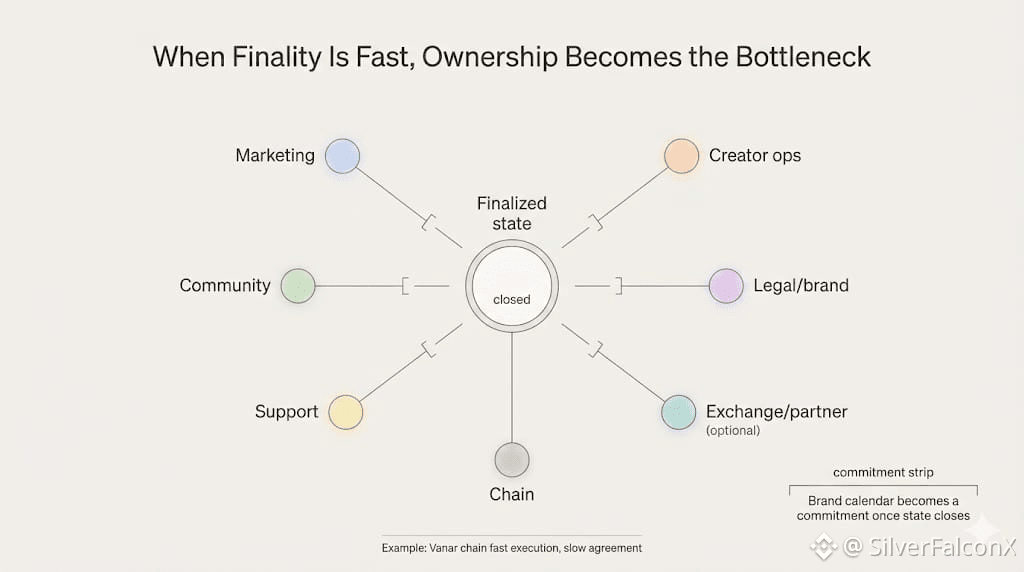
Brands don’t wait for a postmortem. Early access is leakage. Late access is refunds. By the time anyone agrees what the rule should have been, both outcomes already happened.
Someone asks for the simplest thing... when Vanar's Virtua and VGN disagree mid-session, which one is allowed to win.
