
Why Data Storage Is Critical for Autonomous AI Agents
AI agents are becoming more independent, performing tasks, making decisions, and learning with minimal human input. Just like humans rely on memory to improve skills over time, AI agents depend on stored data to evolve. If that data is unreliable, incomplete, or altered, the agent’s behavior can quickly become inconsistent. This makes data storage a core requirement rather than a background technical choice.
In traditional systems, AI data is usually stored in centralized servers. While efficient, this approach requires constant trust in one authority. For autonomous AI agents operating across different environments, this trust model becomes fragile. A single point of control can introduce bias, failure risks, or hidden changes.
Walrus and Talus AI explore a different direction by focusing on verifiable, on-chain data access. Instead of trusting an operator, AI agents can verify data integrity directly. This approach aligns naturally with autonomy, where systems must rely on rules rather than relationships.
Understanding Walrus and Talus AI in Simple Terms
Walrus can be seen as a data infrastructure layer designed for transparency and scale. It allows data to be stored and referenced in a way that makes its history verifiable. Talus AI focuses on building intelligent agents that can act independently using reliable information. Together, they form a model where AI agents interact with data confidently.
A simple analogy is a shared digital notebook with locked pages. Anyone can see that a page exists and when it was written, but not everyone can change it. Walrus provides this notebook, while Talus AI acts as the reader and writer that follows clear rules.
For beginners, this means AI agents do not blindly trust what they read. They can check whether data has been modified or replaced. This verification step is essential for responsible automation.
By separating intelligence from data control, Walrus and Talus AI promote cleaner system design. Each component focuses on what it does best, resulting in more reliable outcomes.
How On-Chain Data Changes AI Agent Behavior
When AI agents rely on centralized storage, they must assume data accuracy. This assumption limits autonomy. On-chain data introduces verification, allowing agents to confirm information before acting. Walrus supports this by anchoring data references onchain.
For example, an AI agent managing digital workflows may need to track previous actions. If that history is stored centrally, changes may go unnoticed. With on-chain verification, alterations become visible. This improves decision quality over time.
Talus AI agents can use this verified data as a stable memory layer. Instead of relying on temporary states, they reference consistent records. This consistency leads to predictable behavior, which is important for user trust.
Over time, this model supports learning without losing accountability. AI agents evolve while maintaining a clear record of past actions. Walrus enables this balance by keeping data histories intact.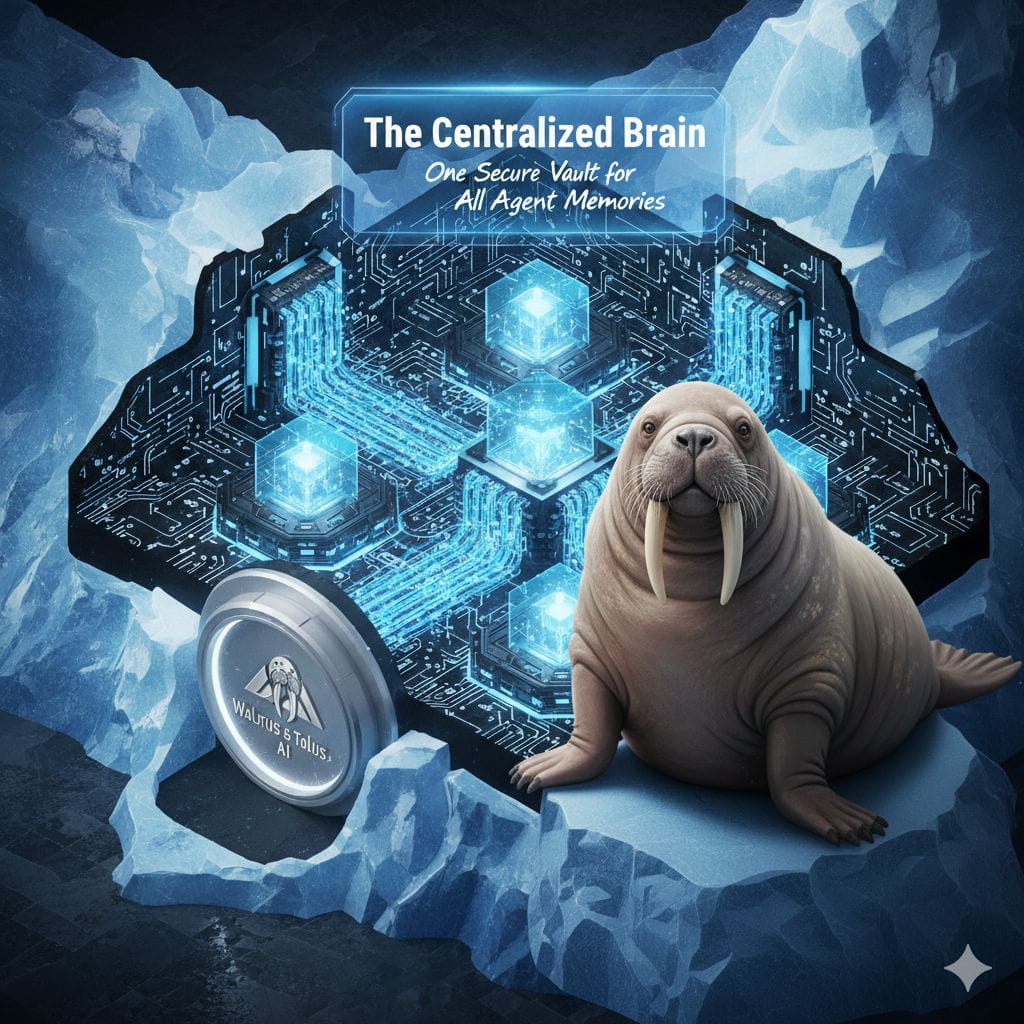
Secure Access Without Sacrificing Flexibility
Security is often misunderstood as restriction. In reality, good security enables flexibility by reducing risk. Walrus supports secure data access while allowing AI agents to operate freely. Data can be referenced, verified, and reused without exposing sensitive details.
Talus AI benefits from this model by focusing on logic rather than protection mechanisms. Instead of building custom security layers, agents rely on standardized verification. This simplifies development and reduces errors.
A useful comparison is using digital signatures. Users do not read cryptography manuals, but they trust signed documents. Similarly, AI agents trust verified data without manual checks. Walrus provides this verification layer seamlessly.
This approach also supports collaboration. Multiple AI agents can reference the same data without conflict. Secure access ensures consistency across systems.
Why This Matters for Developers and Users
Developers building AI systems want predictable behavior and reliable tools. Walrus reduces uncertainty by making data integrity a default feature. Talus AI leverages this reliability to build agents that behave consistently.
For users, the benefit is clarity. When AI systems act based on verifiable data, outcomes feel more understandable. Even if users do not inspect the data themselves, they know verification exists. This reassurance supports adoption.
Communities also benefit from transparency. When something goes wrong, data trails can be reviewed. This does not mean exposing private information, but it does support accountability.
By combining Walrus infrastructure with Talus AI agents, the ecosystem moves toward responsible automation. This approach prioritizes trust without slowing innovation.
The Long-Term Impact on AI and Web3
As AI agents become more common, their interactions will shape digital environments. Systems built on opaque data will struggle to earn trust. On-chain verification offers a sustainable alternative. Walrus and Talus AI contribute to this shift by redefining how data is stored and accessed.
In the long term, data infrastructure may become as important as algorithms. Reliable memory supports reliable intelligence. Walrus provides this memory layer, while Talus AI demonstrates how agents can use it effectively.
For Web3, this model reinforces core values. Decentralization, transparency, and resilience are easier to achieve when data is verifiable. AI systems built on these principles are more likely to gain community support.
As ecosystems grow, infrastructure that quietly works in the background often proves most valuable. Walrus and Talus AI focus on fundamentals rather than hype. This focus supports steady progress.
Autonomous AI systems will continue to evolve, but their success depends on trust. Data integrity is the foundation of that trust.

