
The Gap Between Blockchain And Traditional Finance
Blockchain technology was created to remove intermediaries and move fast. Traditional finance, especially in Europe, is designed to move carefully under strict legal frameworks. This gap has often slowed adoption, as regulators prioritize stability while innovators push speed. Dusk exists to bridge this divide by designing blockchain infrastructure that respects both innovation and regulation.
Many people think regulation limits creativity, but in finance, rules often protect users. Dusk approaches blockchain like modern road infrastructure, where speed limits and traffic rules allow everyone to travel safely. Instead of avoiding regulation, Dusk builds with it in mind. This mindset allows blockchain to grow sustainably within established financial systems.
By aligning with European rules from the start, Dusk reduces friction for institutions. It enables blockchain to be used where trust, compliance, and accountability matter most. This approach makes Dusk relevant beyond experimentation.
Understanding EU Regulations In Simple Terms
European financial regulations like MiFID II and MiCA focus on transparency, investor protection, and market integrity. These rules define how assets are issued, traded, and reported. For many blockchains, adapting to these standards later becomes complex. Dusk integrates these principles directly into its design.
Think of EU regulations as instruction manuals for financial systems. They explain how to handle money responsibly. Dusk reads these manuals carefully and builds its blockchain accordingly. This ensures that activities on the network can align with real-world legal expectations.
By supporting regulated environments, Dusk enables blockchain use cases that traditional finance understands. This includes asset issuance, settlement, and reporting. Instead of forcing regulators to adapt to blockchain, Dusk adapts blockchain to existing frameworks. That alignment builds confidence among institutions and users.
Compliance By Design, Not By Accident
Many platforms treat compliance as an add-on feature. Dusk treats it as a core architectural principle. This means rules are not enforced manually but supported natively through the protocol. Compliance becomes part of how the network functions, not an external layer.
Imagine building a house with safety features included, rather than adding them later. Dusk follows the same philosophy. Its infrastructure allows regulatory requirements to be met without exposing unnecessary data publicly. This balance supports both oversight and privacy.
This design helps avoid common issues like fragmented reporting or unclear accountability. Institutions can interact with blockchain systems knowing compliance is supported at a foundational level. Dusk proves that regulation and decentralization can coexist when designed thoughtfully.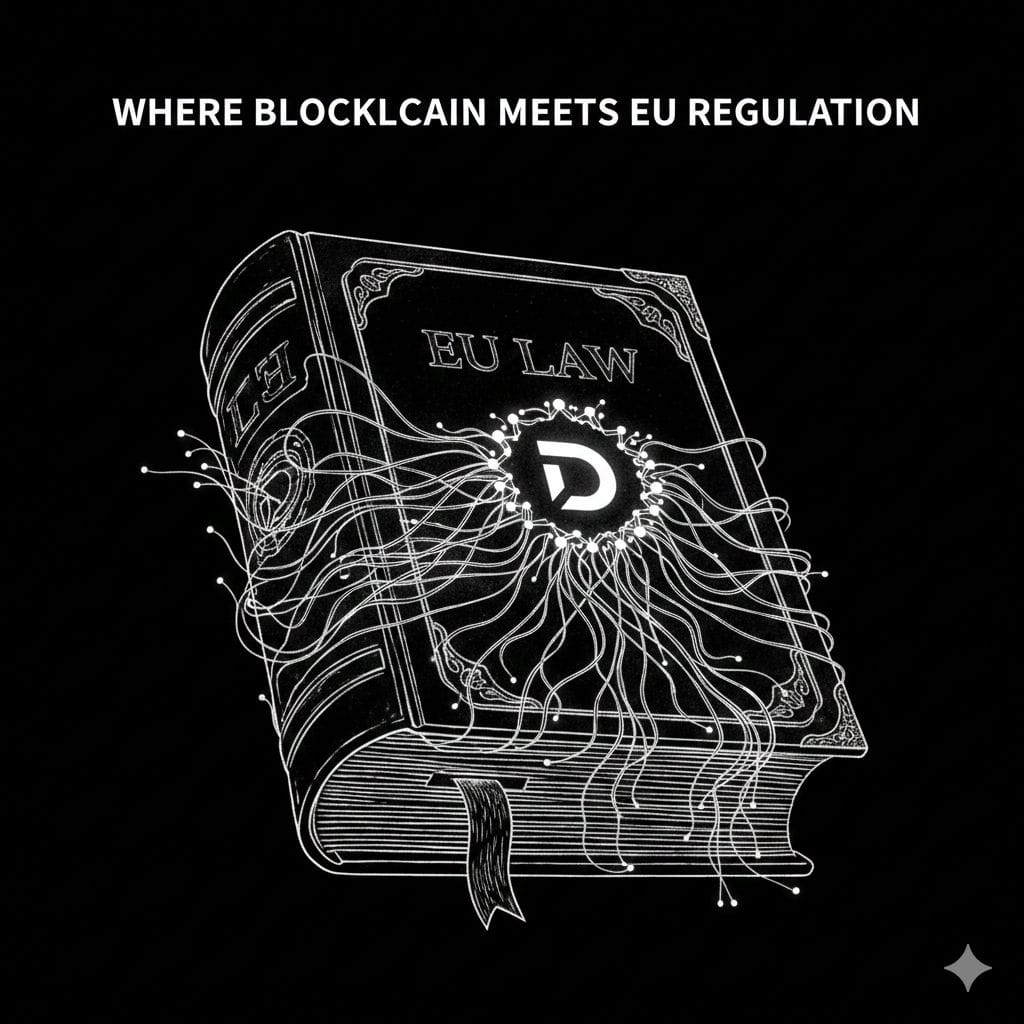
Privacy That Respects Legal Boundaries
Privacy is often misunderstood in blockchain discussions. Full transparency is not always appropriate, especially for financial transactions involving sensitive information. European regulations recognize this and allow privacy within controlled frameworks. Dusk reflects this understanding through privacy-preserving technologies.
Dusk uses advanced cryptographic techniques to protect sensitive data. At the same time, it allows regulators and authorized parties to verify compliance. This is similar to how bank transactions are private but still auditable when required. Privacy does not mean secrecy without accountability.
This approach is especially important for institutions handling client data. They need confidentiality without violating laws. Dusk provides tools that make this possible onchain. By respecting legal boundaries, privacy becomes a strength rather than a risk.
Making Blockchain Usable For Institutions
Institutions require predictability, clarity, and legal certainty. Many public blockchains struggle to meet these expectations. Dusk focuses on creating an environment institutions can understand and trust. This includes clear transaction rules and structured asset handling.
Think of Dusk as a well-organized digital marketplace rather than an open bazaar. Rules are visible, processes are defined, and participants know their responsibilities. This structure reduces uncertainty and supports institutional workflows. It also lowers barriers for traditional finance to explore blockchain solutions.
By aligning with EU regulations, Dusk speaks the same language as regulators and institutions. This shared understanding helps accelerate adoption. Institutions can experiment with blockchain without stepping outside legal frameworks. That balance supports gradual, responsible growth.
Building Long-Term Trust In Web3
Trust is essential for financial systems to scale. Short-term innovation without structure often leads to setbacks. Dusk focuses on long-term trust by aligning blockchain with established rules. This creates a foundation for sustainable growth.
When users know systems are designed responsibly, confidence increases. Developers can build knowing standards exist. Institutions can participate without fear of regulatory surprises. This ecosystem benefits from clarity rather than chaos.
Dusk’s approach shows that innovation does not need to disrupt rules to succeed. Instead, it can evolve within them. By aligning blockchain innovation with EU regulations, Dusk contributes to a more mature and trusted Web3 landscape.
