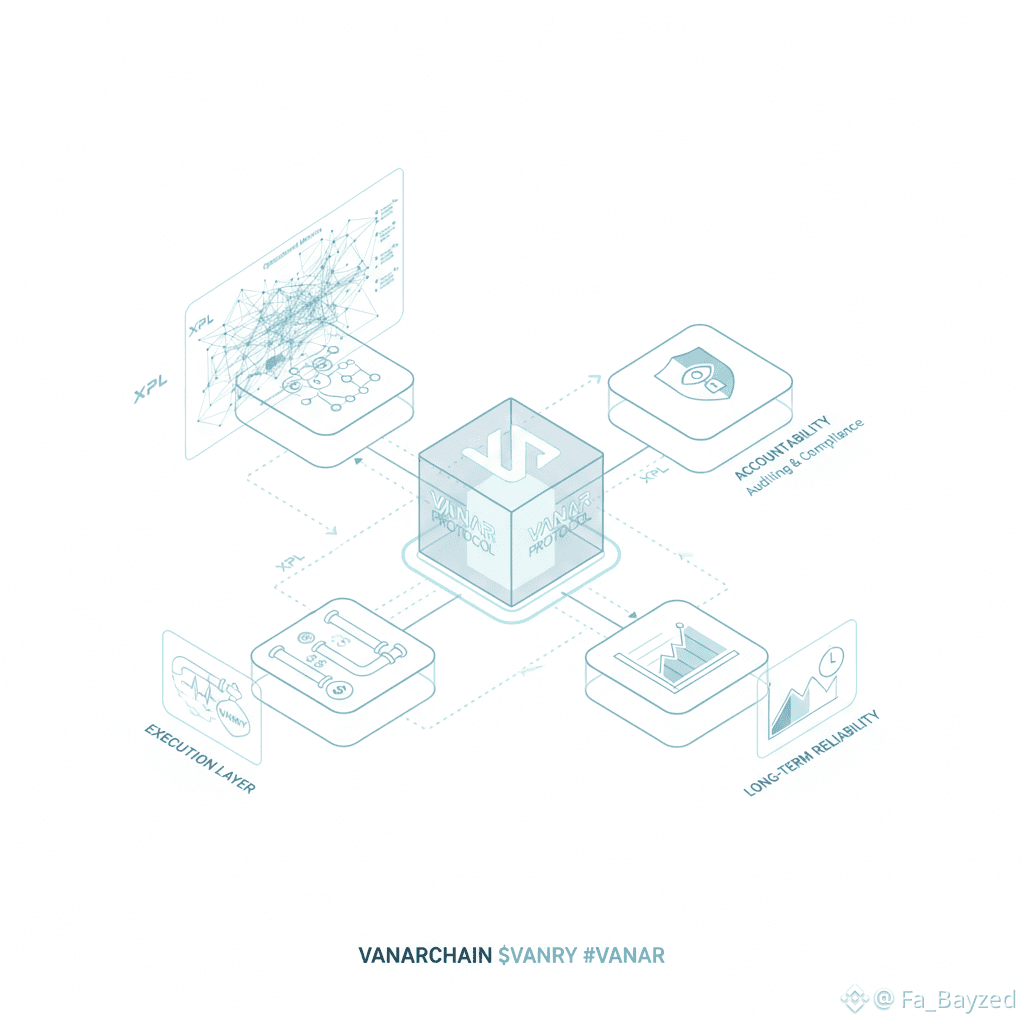
Vanar Chain is quietly taking a different approach in the AI and blockchain space. While many projects focus on flashy AI capabilities or conceptual applications, Vanar emphasizes one word: execution. This may sound simple, but it’s a fundamental shift. Execution means ensuring that AI Agents can actually complete actions end-to-end in real-world systems, not just generate outputs.
In practice, this distinction is huge. Most AI systems overlook the operational costs of actions. Every computation, interface call, or content authorization has a real cost and requires proper settlement. Traditional wallet-based approaches assume human interaction—confirmations, signatures, subjective judgments—which break the flow of continuous AI operations. Vanar doesn’t adapt Agents to these constraints. Instead, it integrates payment and settlement directly into the protocol layer, making transactions part of the execution process itself.
This integration ensures that task completion depends not only on decisions but also on actual system-level accounting and verification. Each action is traceable, measurable, and tied to clear resource usage. $VANRY functions as more than a token—it serves as a real-time indicator of operational activity, connecting value to tangible system behavior.
Compliance and cross-regional rules are also handled at the infrastructure layer. Rather than leaving regulation to application logic, Vanar reserves auditing and constraint interfaces at the base layer. This allows Agents to operate in a predictable, accountable manner without becoming opaque black boxes.
In essence, Vanar is quietly building the rails that allow AI Agents to move beyond conceptual demos. By putting execution and payment at the core, it turns theoretical models into practical tools capable of continuous, autonomous operation. The result is a system designed for long-term reliability rather than short-term hype—a blockchain where AI Agents don’t just think, they act.
For anyone exploring AI-enabled decentralized applications, Vanar Chain demonstrates that success isn’t about imagining possibilities—it’s about building a foundation where those possibilities can actually happen.