
In Web3, we often talk about decentralization, trustless systems, and censorship resistance. But behind every decentralized application lies a critical component that is sometimes overlooked: data storage. Smart contracts, NFTs, gaming assets, AI datasets, and user-generated content all rely on fast, reliable, and scalable data availability. This is where @Walrus 🦭/acc is positioning itself as a powerful next-generation solution.
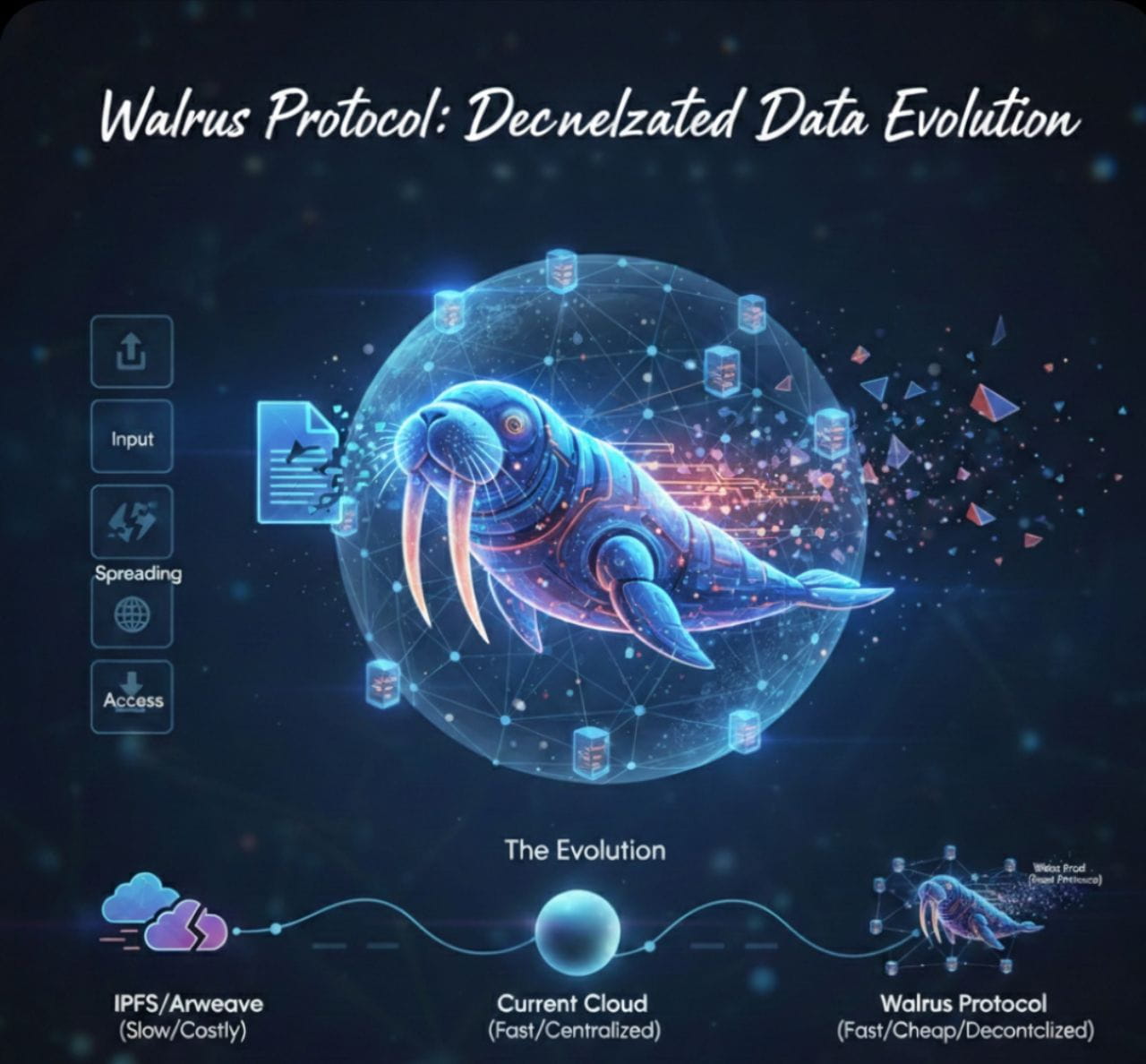
Walrus is a decentralized storage and data availability network built on Sui that treats data as a first-class primitive rather than an afterthought. Instead of simply storing files, Walrus focuses on making data programmable, verifiable, and efficient to access. This approach unlocks a new design space for developers who want to build data-intensive applications without sacrificing decentralization.
One of the biggest challenges in decentralized storage is handling large files efficiently. Traditional blockchain architectures struggle with size limitations and high costs. Walrus introduces a storage model optimized for large-scale data, enabling developers to store media files, game assets, AI training data, and application state in a more cost-effective way. This makes it possible to build richer dApps that feel closer to Web2 experiences while maintaining Web3 principles.
Another important aspect of Walrus is its deep integration with the Sui ecosystem. Sui’s parallel execution and high throughput complement Walrus’s storage layer, allowing applications to read and write data quickly. This synergy is especially important for real-time use cases such as gaming, social platforms, and on-chain AI agents, where latency and performance matter.
From a developer perspective, Walrus simplifies the process of working with decentralized data. Instead of juggling multiple tools and workarounds, builders can rely on a unified storage layer that supports programmability and verification. This reduces complexity and encourages experimentation, which ultimately leads to more innovative applications.
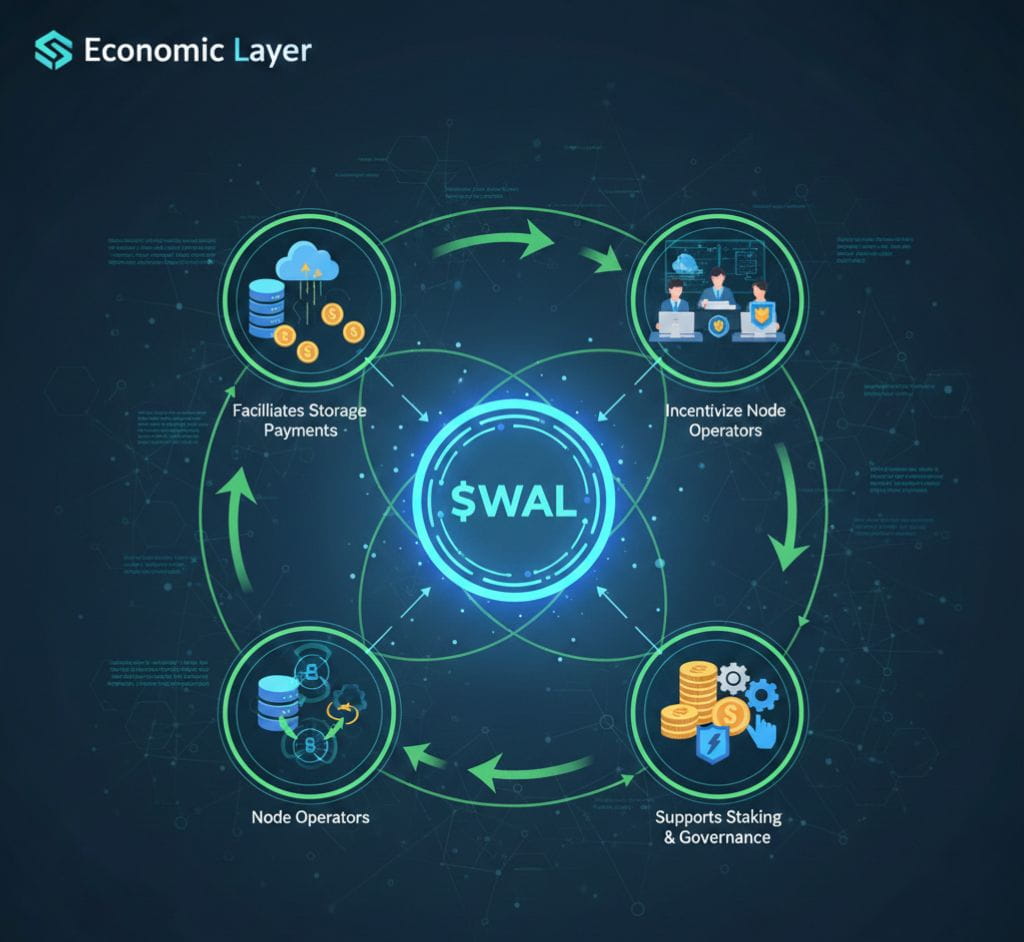
The economic layer of the network is also carefully designed. The token $WAL is used to facilitate storage payments, incentivize node operators, and support staking and governance. This creates a self-sustaining ecosystem where participants are rewarded for contributing resources and maintaining network reliability.
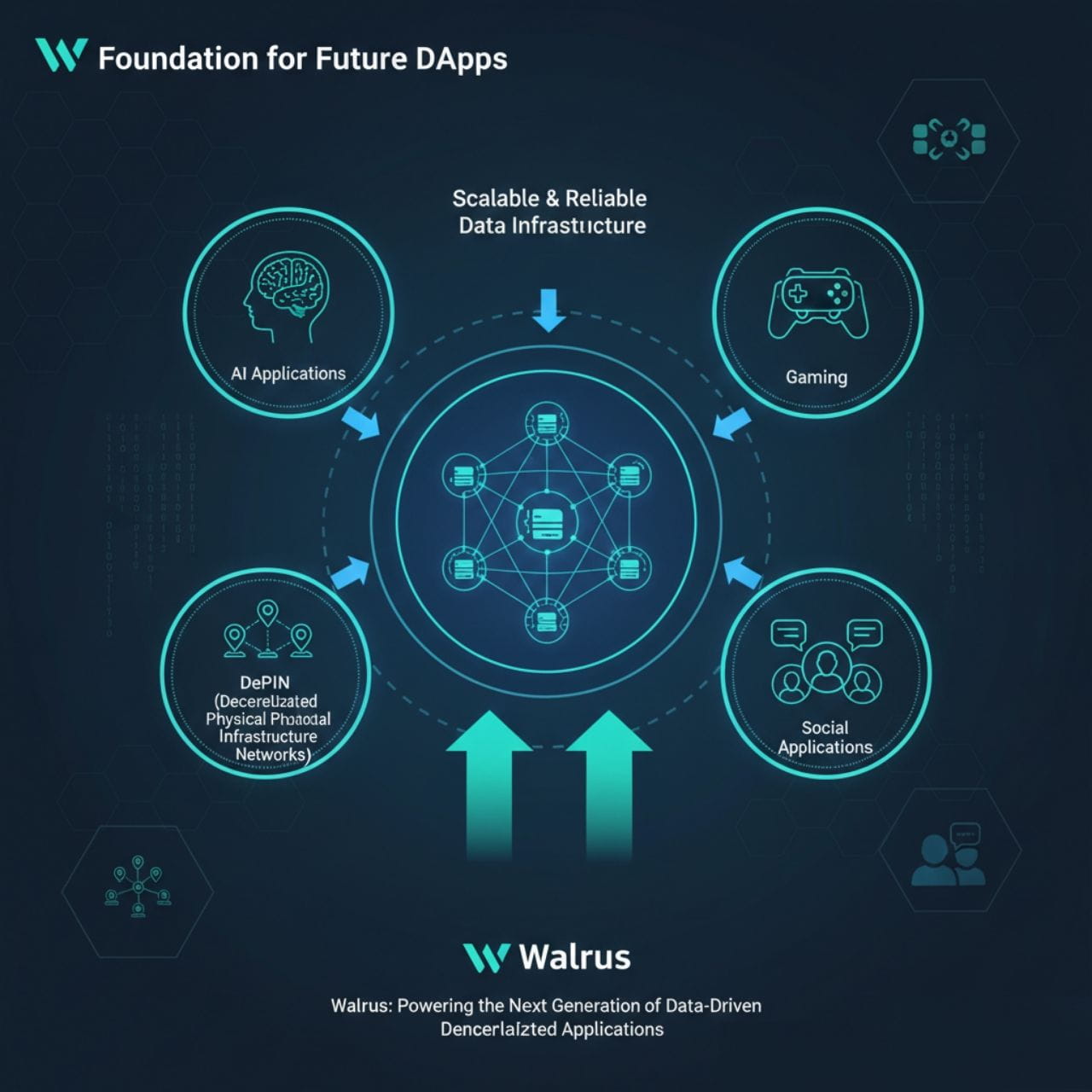
Looking ahead, the importance of decentralized data infrastructure will only grow. As AI, gaming, DePIN, and social applications expand in Web3, demand for scalable and reliable storage will increase dramatically. Walrus is not just solving today’s problems; it is laying the foundation for the next generation of data-driven decentralized applications.
In many ways, Walrus represents a shift in how we think about storage in blockchain systems. Instead of being a bottleneck, storage becomes an enabler of innovation. If Web3 is going to reach mainstream adoption, projects like Walrus will play a crucial role in making that future possible.

