
VanarChain is a name I’ve seen around since 2018, and if you’ve been in this market long enough, you learn one thing fast, most projects don’t die because they lack ideas, they die because they don’t have a backbone architecture strong enough to survive multiple cycles. So when VanarChain talks about pivoting to AI native, I’m not reading it as a fresh slogan to ride a trend, I’m reading it as a technical bet, because once you touch the architecture, you’re touching how the whole ecosystem works, and that decides whether a project can actually go the distance.
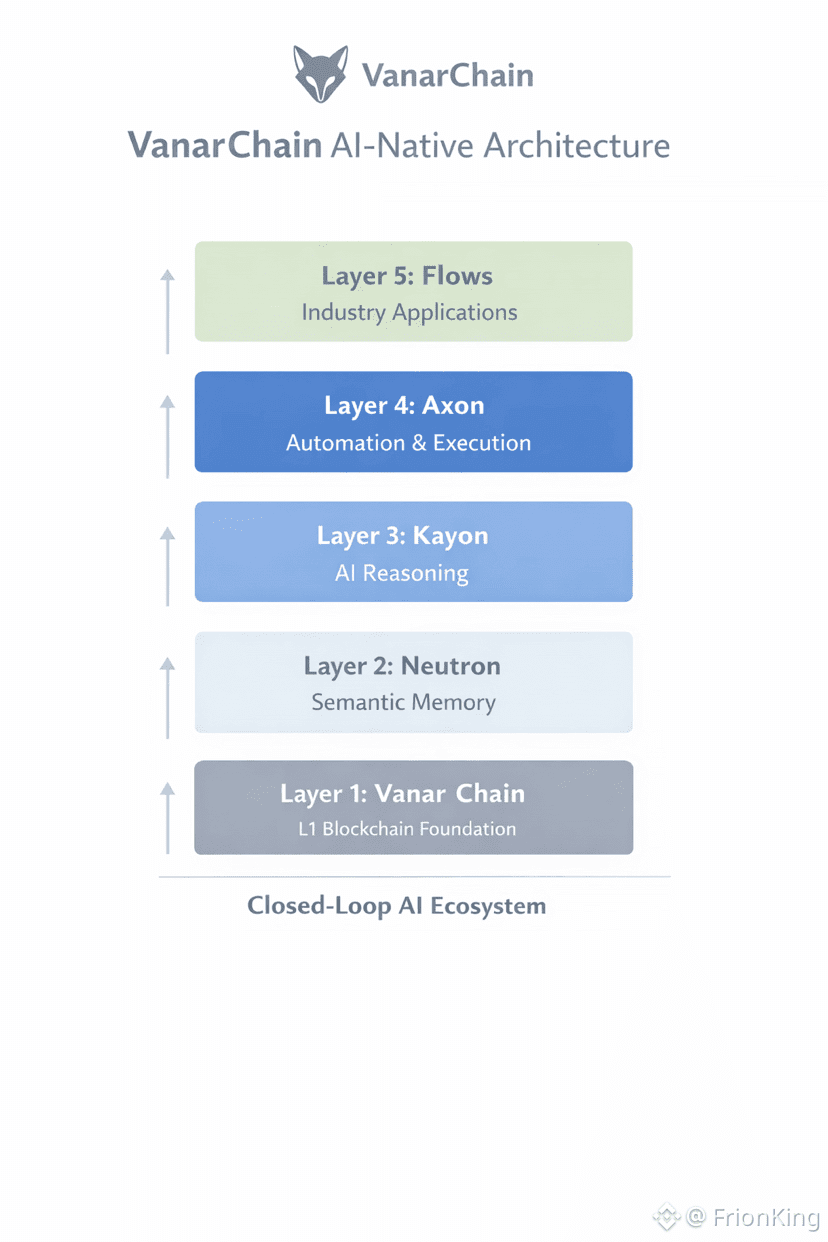
The market loves surface level metrics, TPS, cheap fees, exchange listings, partnerships. But what pulls my attention is that Vanar is trying to make AI part of the core, not an add on. They lay out a five layer model, and it may sound theoretical, but if you’ve watched chains pump and fade, you know the usual problem is disconnected data, no real context retention, apps that don’t build habits, and liquidity that shows up for the wave and disappears right after. Have you ever seen an ecosystem with plenty of dApps where users still pass through like it’s a quick stop, not a place they live.
Layer one is Vanar Chain, the L1 foundation that runs transactions, secures the network, and hosts deployments. I keep the same old view, anyone can claim “infrastructure”, but infrastructure only matters if it stays stable when the market heats up, when fees spike, when bots swarm, when users go full FOMO. If layer one can’t take pressure, everything above it is just decoration.
Layer two is Neutron, semantic memory, or in trader terms, the “context keeper”. AI without the right memory is just a bot that replies, not a system that delivers a coherent experience. Neutron is aimed at storing context, interaction history, and data relationships in a way the ecosystem can retrieve quickly without guessing. It sounds distant from the end user, but it’s the difference between a product people revisit and one they forget.
Layer three is Kayon, the AI reasoning layer. Here’s the blunt question I always ask, does your AI help users make better decisions, or does it create more noise. Good reasoning means it understands the data and the context, then produces actionable suggestions that reduce friction, improve outcomes, and most importantly, make the system feel like it knows what it’s doing.
Layer four is Axon, the automation layer. This is where I think Vanar is leaning into reality, because most users don’t want to babysit workflows, they don’t want to constantly sign, click, and monitor, especially as processes get more complex. If Axon is done right, it turns reasoning into actions, based on rules, permissions, schedules, and context, and that’s how you move an ecosystem from “feature rich” to “actually usable”.
Layer five is Flows, the industry apps layer. I always tell people infrastructure doesn’t pay your bills, applications do. Flows is about packaging the stack into concrete products that are simple enough for users who don’t care about the underlying architecture, but still deliver real value. If you’ve seen ecosystems that are all developer talk and no real adoption, you understand why the app layer decides whether users stick around or just visit once.
Put the five layers together and VanarChain is trying to build a closed loop, the chain operates, memory accumulates, reasoning generates decisions, automation turns decisions into actions, apps build habits, habits bring users, users generate data, and that data makes the AI smarter. It sounds clean on paper, but if they can translate it into real user experience, it becomes a kind of advantage that’s hard to copy.
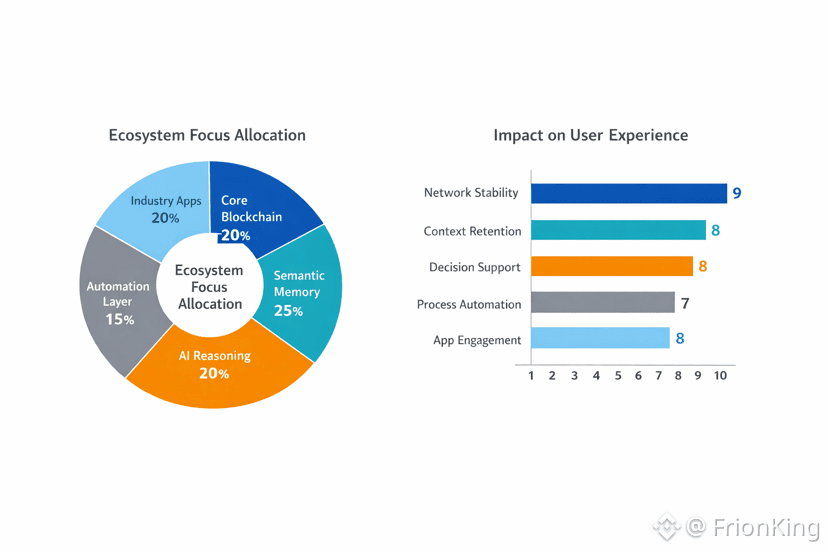
The real question I’m watching, and I think you should ask yourself too, is how VanarChain will prove AI native in practice, through what products, what user behavior, and what measurable outcomes. Because in this market, a narrative can explode in a week, but architecture only gets validated over months, across cycles, and under real stress. Are you looking at VanarChain as a chain chasing a trend, or as a team trying to build an on chain AI operating system for the long run.
