
✅ What Is Bitcoin?
Bitcoin is a decentralized digital currency created in 2008 that enables peer-to-peer transactions without a central bank or intermediary. It runs on a technology called blockchain — a distributed ledger of all transactions. �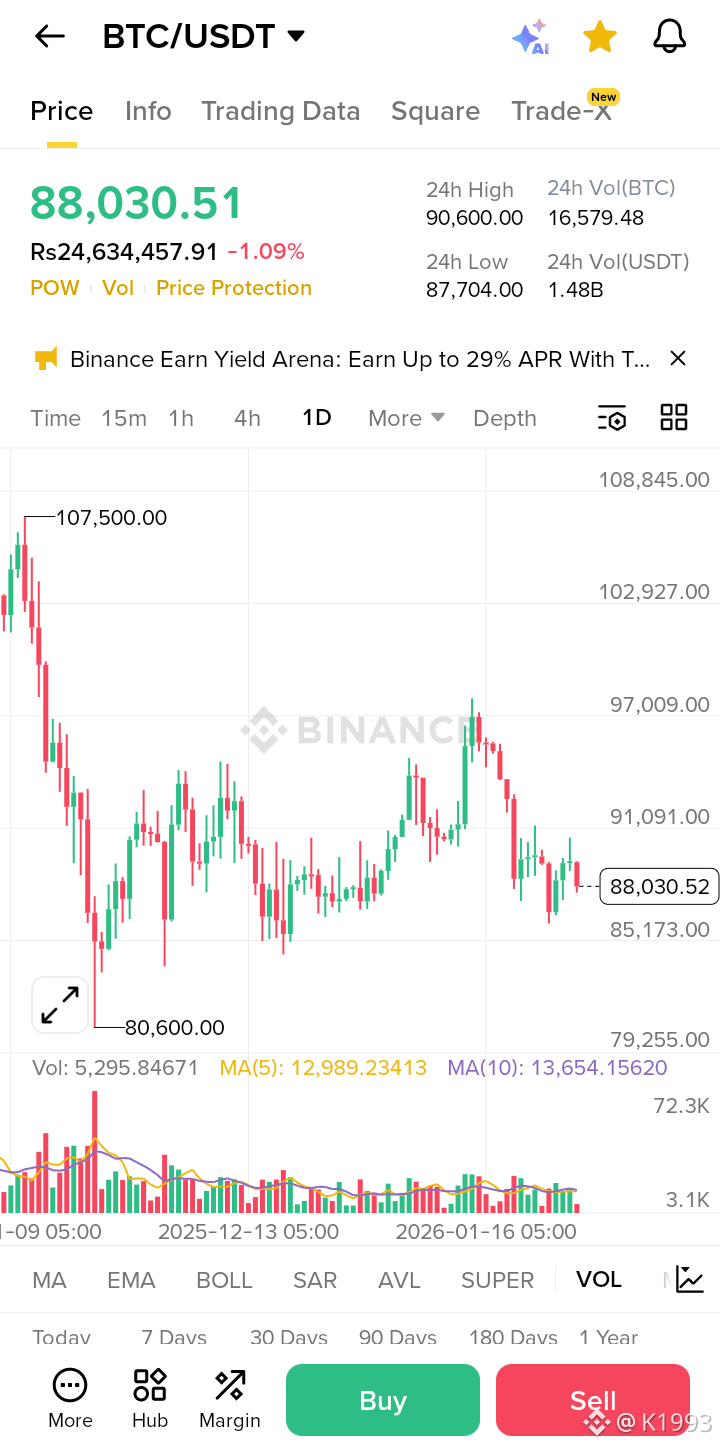 #Write2Earn
BSC News
🌟 Benefits of Bitcoin (BTC)
1. Store of Value (“Digital Gold”)
BTC is widely seen as a store of wealth, similar to gold, because of its fixed supply capped at 21 million coins. This scarcity can protect against inflation. �
axi.com
2. Decentralization
It’s not controlled by any government or financial institution — the network is maintained by miners and nodes globally. �
BSC News#BTC
3. Financial Inclusion
Bitcoin can be used by anyone with internet access, enabling people in unbanked regions to participate in financial systems. �
BSC News
4. Transparency
All transactions are publicly recorded on the blockchain, which increases transparency and auditability. �
BSC News
5. Lower Costs for Some Transactions
For cross-border transfers, Bitcoin can reduce fees and processing delays compared to traditional remittances. �
AP News
6. Fast Transactions via Layer 2 Solutions
Technologies like the Lightning Network enable faster, cheaper Bitcoin transactions suitable for micro-payments. �
Wikipedia#StrategyBTCPurchase
🚀 Future Projects & Innovations Around Bitcoin
1. Lightning Network (Scalability Solution)
A Layer 2 protocol that allows billions of small transactions with low fees by settling off-chain and later reconciling. �
Wikipedia
2. Bitcoin Layer-2 Scaling Research
Academic research like Bitcoin-IPC aims to scale Bitcoin using proof-of-stake subnets, increasing transaction throughput from ~7 to ~160 transactions per second. �
arXiv
3. Integration with DeFi (Decentralized Finance)
Bitcoin is being integrated into DeFi platforms for lending, borrowing, and yield products, increasing its utility beyond just holding. �
AIBC
4. Tokenization & Institutional Products
Real-world assets are being tokenized and collateralized with BTC, and Bitcoin ETFs (Exchange-Traded Funds) are bringing large institutional capital into the market. �
TMGM
5. Stablecoin Synergies
Stablecoins interacting with Bitcoin improve liquidity and enable more seamless trading and financial activities. �
TMGM
📊 Predictions for Bitcoin’s Future
📍 2025–2026 Forecasts
Analysts and institutions offer bullish forecasts:
• Galaxy Digital: BTC ~$200,000 by Q4 2026.
• JP Morgan: BTC ~$160,000 by end of 2026. �
NAGA
Research firms see Bitcoin potentially outperforming gold and stocks if macro conditions remain supportive. �
Business Insider
📍 Mid-To-Long-Term Outlook
Some long-term models forecast BTC could reach hundreds of thousands to over $1 million by 2030+, based on adoption, scarcity, and macro demand. �
axi.com
Other analysts predict sovereign adoption and Bitcoin competing as a global reserve asset. �
⚠️ Challenges & Considerations
1. Volatility
Bitcoin is known for large price swings — both gains and losses — which makes it riskier than traditional assets. �
axi.com
2. Regulatory Uncertainty
Different countries have varied approaches to crypto, and changing regulations can impact markets. �
TMGM
3. Technological Threats
Future advances like quantum computing could pose risks to blockchain security, though defenses are in development. �
Barron's
📌 Summary
Benefits: Scarcity, decentralization, transparency, financial inclusion, lower costs, fast payments. �
Future Projects: Lightning Network, DeFi integration, L2 scaling, tokenization, institutional products. �
Predictions: Possible strong price growth through 2026 and beyond, with potential long-term global financial significance. �
BSC News +1
TMGM +1
NAGA +1
If you want, I can also explain how Bitcoin works technically, risks, or how to invest safely — just let me know!