
The current sell-off in Bitcoin and Ethereum is not random, and it is not caused by a single headline.
It is the result of macro pressure, liquidity tightening, and risk rotation happening at the same time.
Here are the real reasons behind the dump:
1️⃣ LIQUIDITY IS TIGHTENING
Crypto is a high-beta, liquidity-sensitive asset class.
When global liquidity tightens:
→ Risk assets are sold first
→ Crypto absorbs the impact faster than stocks
Dollar liquidity is constrained, funding conditions are tightening, and leverage is being reduced across markets.
2️⃣ PROFIT TAKING + LEVERAGE CLEAN-UP
Bitcoin and Ethereum had strong upside moves earlier.
Large players:
→ Lock in profits near key resistance levels
→ Trigger liquidations of over-leveraged long positions
Once liquidations begin, they create a cascading sell-off driven by forced selling, not fear.
3️⃣ MACRO UNCERTAINTY IS HIGH
Markets are currently pricing risk, not growth:
→ Fed policy uncertainty
→ Bond market volatility
→ Yield instability
→ Unclear dollar direction
In this environment, capital moves out of speculative assets and into defensive positioning.
4️⃣ GOLD AND SILVER RALLY = RISK-OFF SIGNAL
When gold and silver move aggressively higher:
→ It signals capital preservation, not economic strength
This rotation is classic:
Gold ↑
Silver ↑
Crypto ↓ 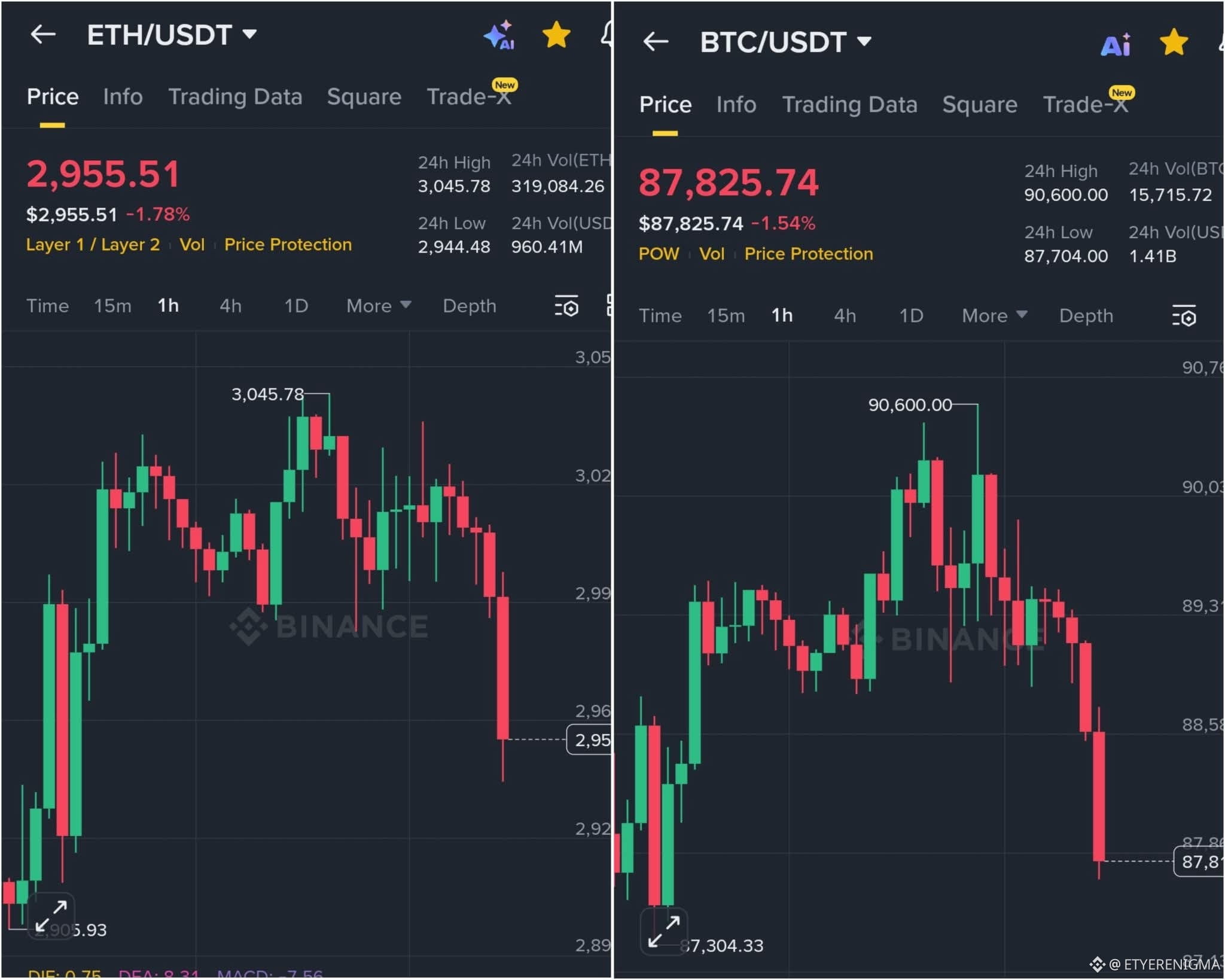
Crypto typically underperforms during the first phase of risk-off behavior.
5️⃣ ALGORITHMIC AND SYSTEMATIC DE-RISKING
Institutional funds and trading algorithms automatically reduce exposure when:
→ Volatility spikes
→ Liquidity drops
→ Correlations increase
Crypto is sold first because it is liquid, 24/7, and easy to hedge.
🔑 THE KEY TAKEAWAY
This is not a structural collapse.
This is a liquidity reset and risk rotation phase.
Historically:
→ Crypto dumps during uncertainty
→ Crypto leads once liquidity stabilizes and policy shifts
Those who understand structure don’t panic during volatility.
They prepare for the next phase.
Markets are not broken — they are transitioning.