
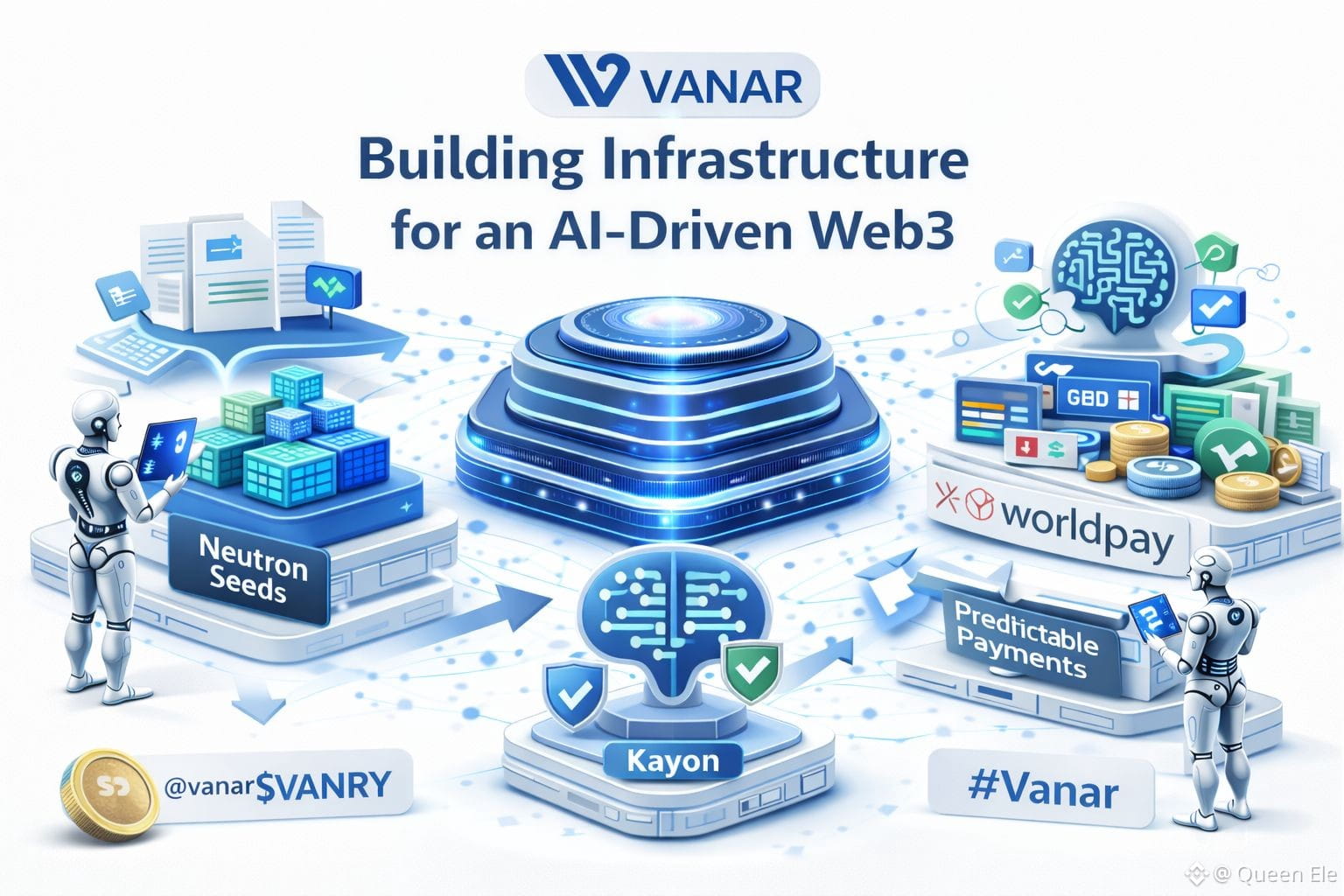
Most blockchains today are designed around human interaction: wallets, buttons, and manual approvals. But the next phase of Web3 adoption is unlikely to look like that. It will be driven by AI agents, automated payments, compliance checks, and systems that operate continuously in the background.
This is where Vanar Chain takes a different path.
Rather than chasing short-term hype, @Vanarchain is focused on building infrastructure that machines can actually rely on. Fixed and predictable fees make automation possible at scale. An AI-native memory layer allows applications to store context, not just transactions. And the PayFi-first design signals a clear focus on real payments, settlement, and commerce rather than speculation alone.
Vanar’s approach suggests a future where AI agents verify data, settle transactions, and manage workflows without constant human input. In that kind of environment, reliability matters more than excitement. Costs must be stable. Data must be usable. Systems must work quietly and consistently.
The design choices behind $VANRY reflect this same philosophy. Incentives are aligned toward validators, developers, and long-term ecosystem growth instead of short-lived narratives.
As Web3 matures, the chains that last may not be the loudest ones, but the ones that function as dependable rails. Vanar appears to be positioning itself for that role.