trading journal is not a diary.
It’s a feedback loop.
Every trade you take produces data. Most traders ignore that data and move on to the next setup. Professionals collect it, analyze it, and extract patterns—about the market and about themselves.
Your journal answers three questions no chart can:
What am I actually doing?
Why am I doing it?
Is it working over time?
Without a journal, trading becomes emotional improvisation. With one, it becomes a measurable business.
It shows you overtrade.
It shows you revenge trade.
It shows you break rules.
It shows your losses aren’t “bad luck.”
Most traders would rather change strategies than confront behavior. Journaling removes that escape.
But here’s the irony:
The faster you face your mistakes, the faster you stop repeating them.
How to Maintain a Trading Journal (The Right Way)
You don’t need a fancy platform. You need consistency.
You can use:
A spreadsheet (Excel / Google Sheets)
A dedicated journaling app
A notebook (digital or physical)
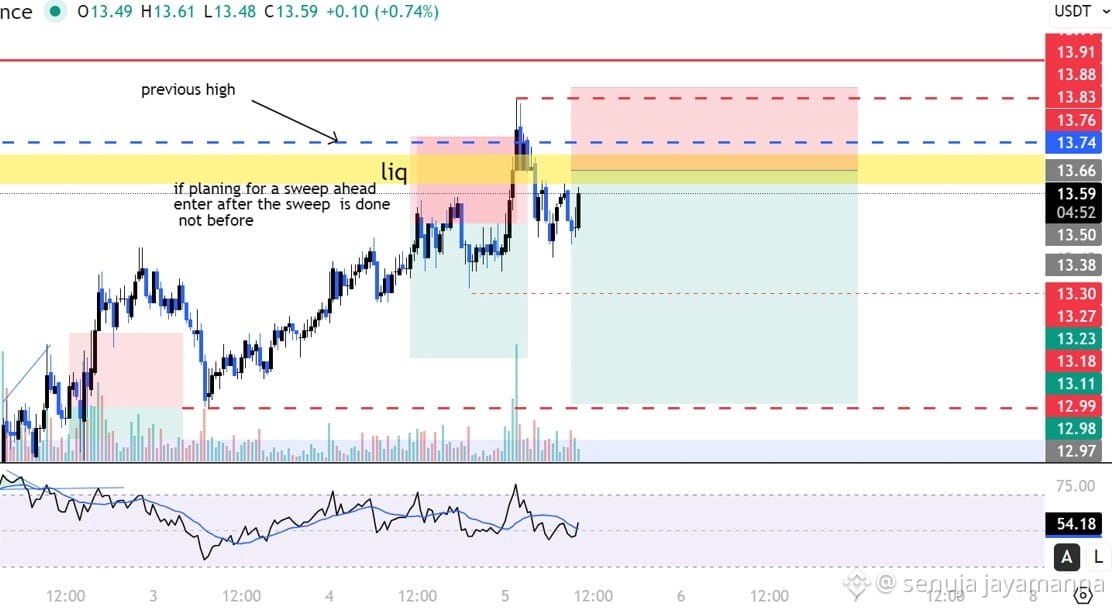
As for me i take screenshots on trading view with text explaining details and stores them in folders
What matters is structure and honesty, not aesthetics.
🙂Rule #1: Journal Every Trade
Wins, losses, break-evens—everything. Selective journaling destroys accuracy.
🙂Rule #2: Journal Immediately
Record the trade while details are fresh. Emotions fade fast. Memory lies.
🙂Rule #3: Be Brutally Honest
If you broke rules, write it. If the trade was impulsive, admit it. The journal is not public. It’s a mirror.
🟥What to Record in a Trading Journal
A complete journal has three layers:
✅Technical data
✅Emotional and behavioral data
✅Post-trade analysis
🟥1. Technical Data (The Facts)
This is the foundation.
Record:
Date and time
Asset (BTC, ETH, Gold, Index, etc.)
Timeframe used for bias (e.g., 4H, Daily)
Entry timeframe (e.g., 5m, 15m)
Trade direction (Long / Short)
Entry price
Stop loss
Take profit
Risk per trade (% or $)
Position size
R-multiple (reward vs risk)
Result (Win / Loss / BE)
This data lets you answer:
Is my strategy statistically profitable?
What is my average win vs loss?
Am I risking consistently?
Many traders discover their strategy works—but their risk management doesn’t.
🟥2. Context and Bias (The “Why”)
This separates amateurs from professionals.
Record:
Higher timeframe bias (bullish / bearish / neutral)
Market condition (trending, ranging, volatile)
Key levels (support, resistance, supply, demand)
Liquidity context (above highs, below lows, equal highs/lows)
Session (Asia, London, New York)
Major news nearby (CPI, FOMC, NFP)
This reveals something critical over time:
You don’t lose randomly—you lose in specific conditions.
Many traders are profitable in trends and bleed in ranges. Journals expose that.
🥲3. Emotional and Behavioral Data (The Truth)
This is where real growth happens.
Before the trade, record:
Emotional state (calm, anxious, bored, overconfident)
Reason for entry (setup vs impulse)
During the trade:
Did you move stop loss?
Did you close early?
Did fear or greed interfere?
After the trade:
Did you follow your plan?
If not, why?
What were you thinking when you broke rules?
Most losses don’t come from bad analysis. They come from bad execution. Journals make that undeniable.
Using Screenshots: A Non-Negotiable Habit
Take screenshots:
Before entry (idea)
At entry
At exit
Professional traders review charts like athletes review game footage.
🤔How to Review Your Journal (This Is Where Profit Comes From)
🟥Recording data alone won’t make you profitable. Reviewing it will.
🟥Weekly Review
🟥Once per week, ask:
How many trades did I take?
How many followed my rules?
What mistakes repeated?
Did I overtrade?
Did I respect risk limits?
Focus on process, not P&L.
Monthly Review
This is where edge becomes clear.
Analyze:
Win rate
Average R per trade
Best-performing setups
Worst-performing setups
Best trading days and sessions
Emotional patterns linked to losses
You’ll start seeing patterns like:
“Most losses happen after my first win.”
“I lose money trading against higher timeframe bias.”
“I’m profitable only in London session.”
That insight is priceless.
How a Journal Turns Losing Traders Profitable
Let’s be blunt.
Profitability rarely comes from finding a new strategy. It comes from eliminating what’s already hurting you.
If you remove just one recurring mistake, profitability often follows.
Fix behavior—not strategy—and the equity curve changes.
🟥Journaling and Psychology: The Hidden Edge
Markets amplify human flaws:
Fear
Greed
Impatience
Ego
A journal creates psychological distance. You stop identifying with each trade. You start thinking in probabilities.
🟥Journaling as a Business Tool
If trading is your business, your journal is your accounting system.
No business operates without:
Records
Reviews
Performance metrics
Traders who don’t journal are running a business blind.
Institutions journal everything. Retail traders should too—especially since they don’t have capital advantages.
Common Journaling Mistakes
Avoid these:
Only journaling losing trades
Lying to yourself
Making it too complex
Never reviewing data
Obsessing over single trades instead of patterns
Simplicity beats perfection.👍