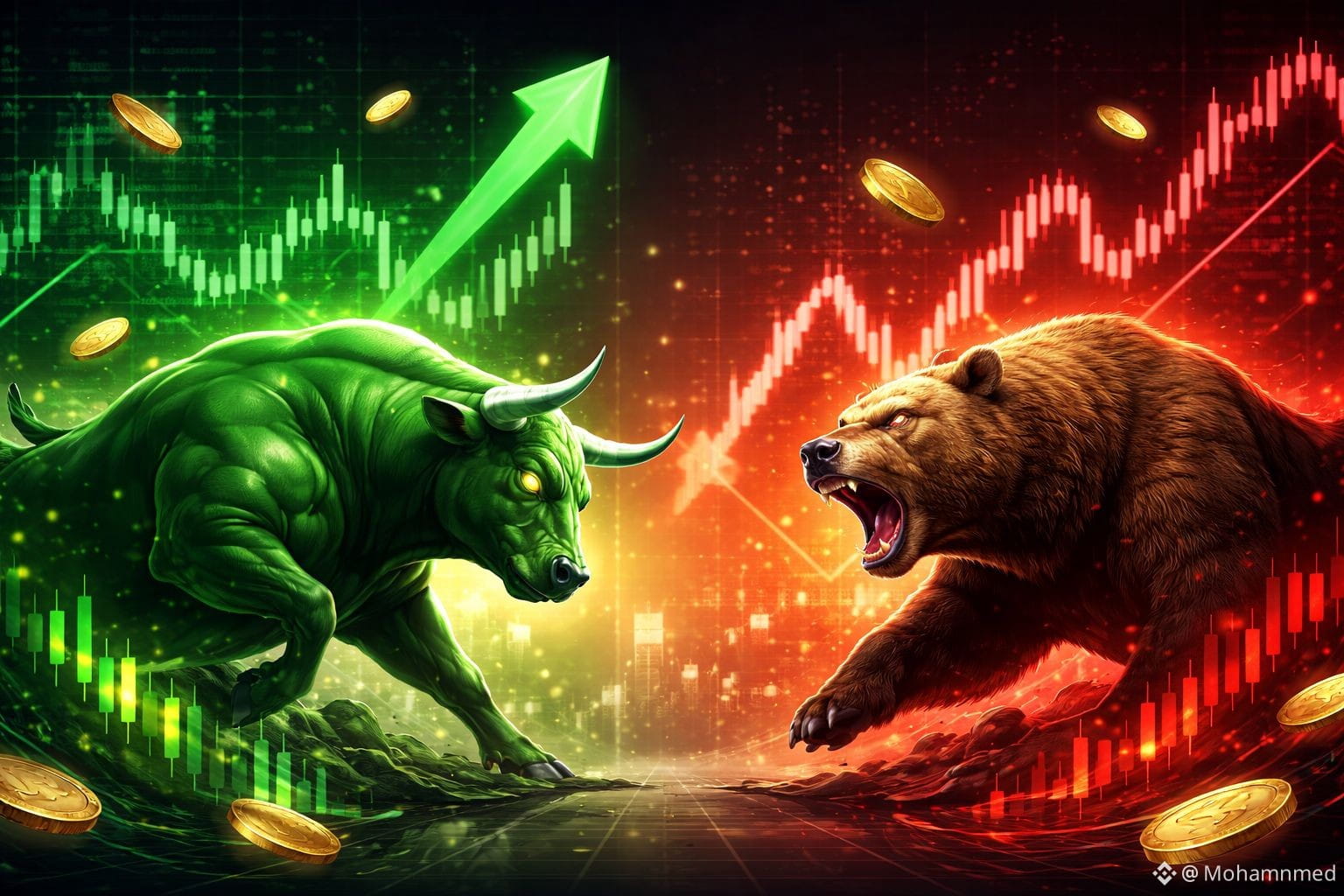
In the world of financial markets and cryptocurrencies, we often hear the terms "Bull Market" and "Bear Market". But what do these terms really mean? And how can investors understand and leverage them wisely? This article provides a comprehensive and structured explanation, highlighting how these market phases impact trading and investment decisions.
1. Bull Market
A Bull Market refers to a phase of sustained price increases, where optimism dominates the market and investors are eager to buy. The term comes from the bull, which attacks upward with its horns.
Key Characteristics:
Long-term price growth: Assets consistently rise over time.
High trading volumes: Investors actively buy, expecting future gains.
Positive sentiment: Good economic data and positive news boost investor confidence.
Long-term investment mindset: Investors tend to hold assets longer.
Examples:
Bitcoin rising from $10,000 to $60,000 in 2021.
Continuous growth of U.S. stocks between 2016 and 2019.
2. Bear Market
A Bear Market is the opposite, indicating sustained price declines. The name comes from the bear, which attacks downward with its claws.
Key Characteristics:
Extended price drops: Assets fall consistently, making reversals harder to predict.
Low trading volumes: Investors prefer to sell or wait, reducing market activity.
Negative sentiment: Bad news or geopolitical events create fear.
Risk-averse behavior: Protecting capital becomes a priority over seeking profits.
Examples:
2008 financial crisis market crash.
Bitcoin dropping from $64,000 to around $30,000 in mid-2021.
3. Why Understanding Bull and Bear Markets Matters
Knowing the market phase helps investors make smarter decisions:
In a Bull Market, the opportunity lies in buying and holding to benefit from rising prices.
In a Bear Market, a wise approach might involve buying at lower prices or hedging against risks.
Analysts often use indicators to identify market phases, such as:
Momentum Indicators
Trading Volume
Economic and geopolitical news
4. Markets Where Bull and Bear Trends Apply
Bull and Bear markets are not limited to stocks or cryptocurrencies—they extend across all financial markets:
Cryptocurrencies: Bitcoin, Ethereum, and altcoins.
Stocks: Large-cap and small-cap companies.
Commodities: Gold, oil, and precious metals.
Futures & Forex: Foreign currencies and commodity contracts.
Conclusion
Understanding Bull and Bear Markets is not just about knowing terms—it’s an art of reading the market, understanding investor psychology, and predicting price movements. Whether you are a day trader or a long-term investor, recognizing these dynamics gives you a strong edge in making smart financial decisions, managing risks, and maximizing potential profits.
Always remember: markets change, opportunities come and go, but the smart investor knows when to charge like a bull and when to protect like a bear!