

Feb 1
Silver just had one of its craziest days ever.
In a single session, prices crashed over 32% — the biggest intraday drop since 1980. In less than two days, around $2.5 trillion in value disappeared.
Moves like this don’t happen by accident.
So naturally, one question is back on the table:
Is JPMorgan involved again?
Why People Are Suspicious?
This isn’t random speculation.
JPMorgan was fined $920 million by U.S. regulators for manipulating gold and silver prices between 2008–2016.
They used a tactic called spoofing — placing fake buy/sell orders to move prices, then canceling them.
Several JPMorgan traders were criminally convicted.
That’s official record, not conspiracy.
So when silver collapses like this, people remember.
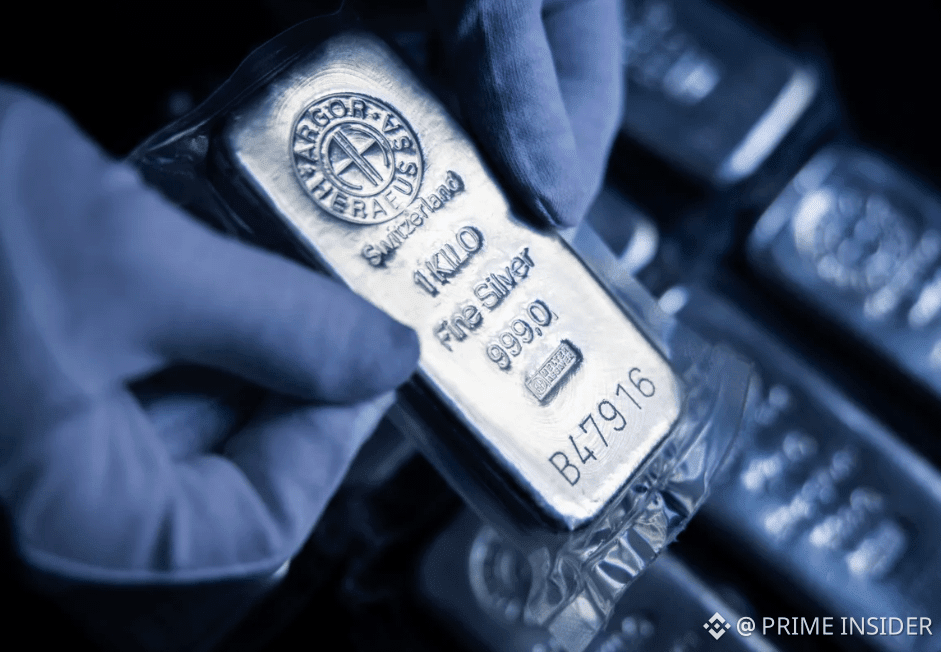
How the Silver Market Really Works ⚙️
Most silver trading today isn’t physical metal.
It’s done through futures contracts — paper claims.
For every real ounce of silver, there are hundreds of paper ounces trading.
That means prices can crash hard without any real change in physical supply.
And JPMorgan sits right at the center of this system:
:One of the biggest players on COMEX
:One of the largest holders of physical silver
:Deep balance sheet that can handle extreme volatility
That combo matters.
Who Wins When Prices Crash Fast? 💥
Not retail traders.
Not over-leveraged funds.
The winner is the player who:
:Can survive margin calls
:Can buy when others are forced to sell
That player is JPMorgan.
Before the drop, silver had gone almost vertical.
Leverage piled in. When prices turned, traders didn’t exit — they were liquidated.
Then exchanges raised margin requirements, forcing even more selling.
A domino effect.
JPMorgan’s Advantage 🏦
During the crash:
:JPMorgan issued 633 February silver contracts (short side)
:Traders believe shorts were opened near the top and closed much lower
:JPMorgan could buy back contracts cheaply
:It could take physical delivery at depressed prices
:Margin hikes didn’t hurt JPM — they wiped out competitors
Big balance sheets thrive in chaos.
Paper Price vs Physical Reality.
Here’s the most important detail.
In the U.S. paper market, silver collapsed.
But in Shanghai, physical silver traded far higher, even near $136 at one point.
That tells us something big:
👉 Physical demand didn’t disappear
👉 Paper selling did
This wasn’t a supply flood.
It was a paper market flush.
The Bigger Picture 📉
No one has to prove JPMorgan “planned” anything.
The real issue is market structure:
•Heavy leverage
•Paper dominance
•Sudden margin hikes
•Forced liquidations
In that environment, the biggest players always win.
And when one of those players has a proven history of silver manipulation, it’s fair to ask questions.
History doesn’t need to repeat exactly —
it just needs to rhyme.🥈
