
The digital world is currently facing a data explosion, driven largely by high-resolution media, expansive AI datasets, and the growing history of blockchain networks. Traditional cloud storage solutions, while convenient, often come with risks of centralized control and single points of failure. The Walrus Protocol, developed by Mysten Labs, has emerged as a decentralized alternative specifically designed to handle these massive data blobs with high efficiency and reliability. Built on the Sui blockchain, Walrus is not just another storage provider; it is a foundational layer for the next generation of data-heavy decentralized applications.
One of the primary uses of Walrus is the storage of unstructured data, often referred to as blobs. These can range from large video files and high-definition images to the complex training datasets required for artificial intelligence. Unlike many other decentralized storage protocols that struggle with the latency and cost of large files, Walrus utilizes a proprietary erasure-coding algorithm known as Red Stuff. This technology breaks files into smaller fragments called slivers and distributes them across a global network of nodes. The brilliance of this system is that it only requires a fraction of the fragments to be available to reconstruct the original file. In fact, even if two-thirds of the storage nodes in the network were to go offline, the data would remain fully accessible and recoverable.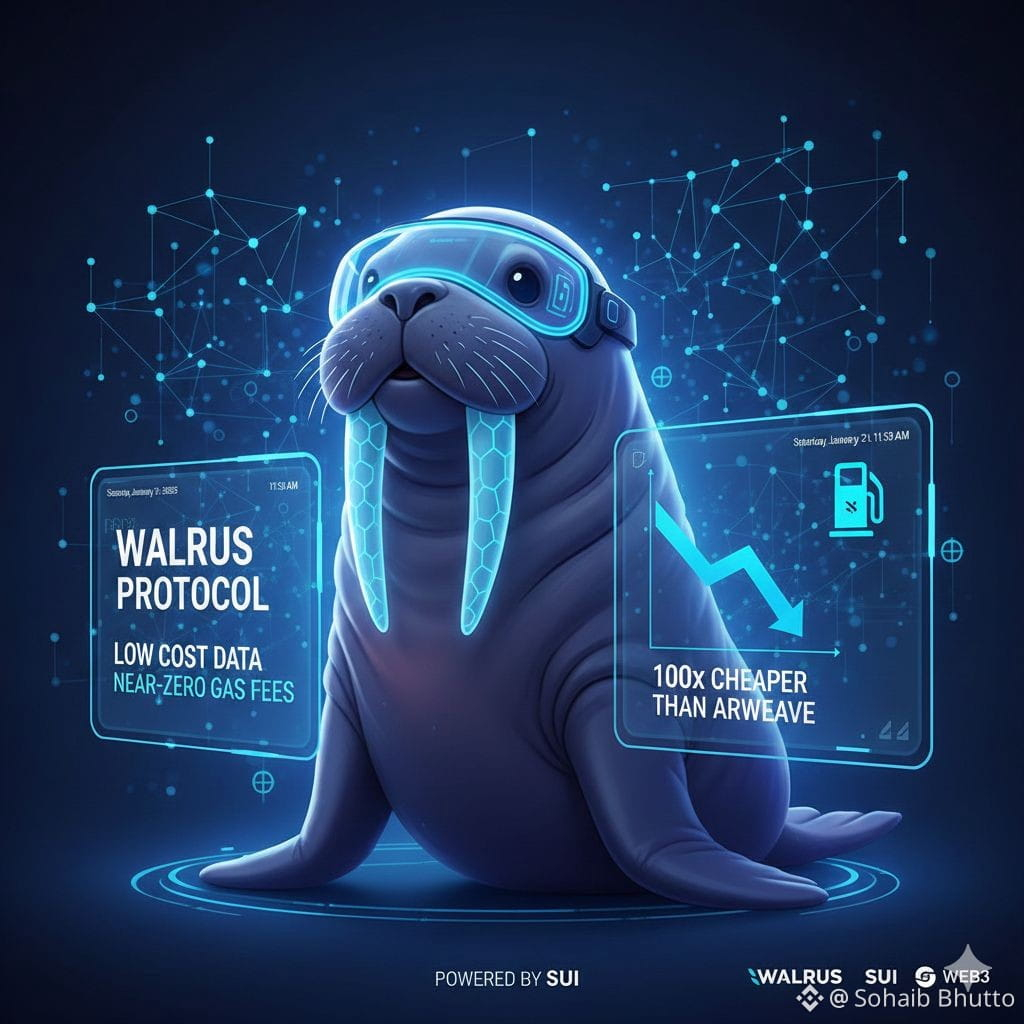
The market reliability of Walrus is reinforced by its strong institutional backing and its deep integration with the Sui ecosystem. The project recently secured one hundred and forty million dollars in a private token sale, with participation from some of the most prominent venture capital firms in the world, including a16z crypto and Standard Crypto. This level of investment indicates a high degree of confidence in the protocols long-term viability and its ability to compete with both decentralized giants like Filecoin and centralized giants like Amazon Web Services. Furthermore, because it is built on Sui, it benefits from high-speed parallel execution, allowing for nearly instantaneous registration and retrieval of data.
Another critical factor in its reliability is the incentivized economic model powered by the WAL token. Storage nodes are required to stake these tokens to participate in the network, creating a system where they are financially rewarded for maintaining high availability and penalized if they fail to provide the data when requested. This delegated proof-of-stake mechanism ensures that only high-quality, reliable operators are responsible for the worlds data. For developers, this creates a programmable storage environment where smart contracts on Sui can directly manage, pay for, and even delete data blobs based on specific application needs.
As the industry moves toward more decentralized web hosting and AI-driven applications, the Walrus Protocol stands out as a robust solution. Its ability to offer low-cost, verifiable storage without sacrificing speed makes it an essential tool for creators and enterprises alike. By solving the persistent problem of storage overhead and high bandwidth costs, Walrus is paving the way for a truly decentralized internet where users have full control over their digital assets without the fear of data loss or censorship.

