
Many crypto investors focus only on charts, news, or hype. But behind every major crypto move, there is something deeper at work: macro forces. These are the large economic conditions that influence how money flows between assets like stocks, crypto, gold, and cash.
Understanding macro means reading the environment, so you know when to take risk, when to slow down, and when to protect capital.
In 2026, crypto no longer moves in isolation. It reacts to the same global pressures as traditional markets, sometimes even faster.
1. What “Macro” Means in the Context of Crypto
Macro refers to the big-picture economic environment rather than individual projects or short-term price movements. It includes factors such as monetary policy, economic growth, inflation, and geopolitical risk.
These forces shape investor behavior. When confidence is high, money flows into risk assets like crypto. When uncertainty rises, capital seeks safety. Crypto sits on the higher-risk side of the spectrum, which makes it highly sensitive to macro shifts.
2. Bitcoin’s Role as a Macro Signal
Bitcoin is often the first part of the crypto market to react when big economic sentiment changes, and early 2026 was a clear example of this.
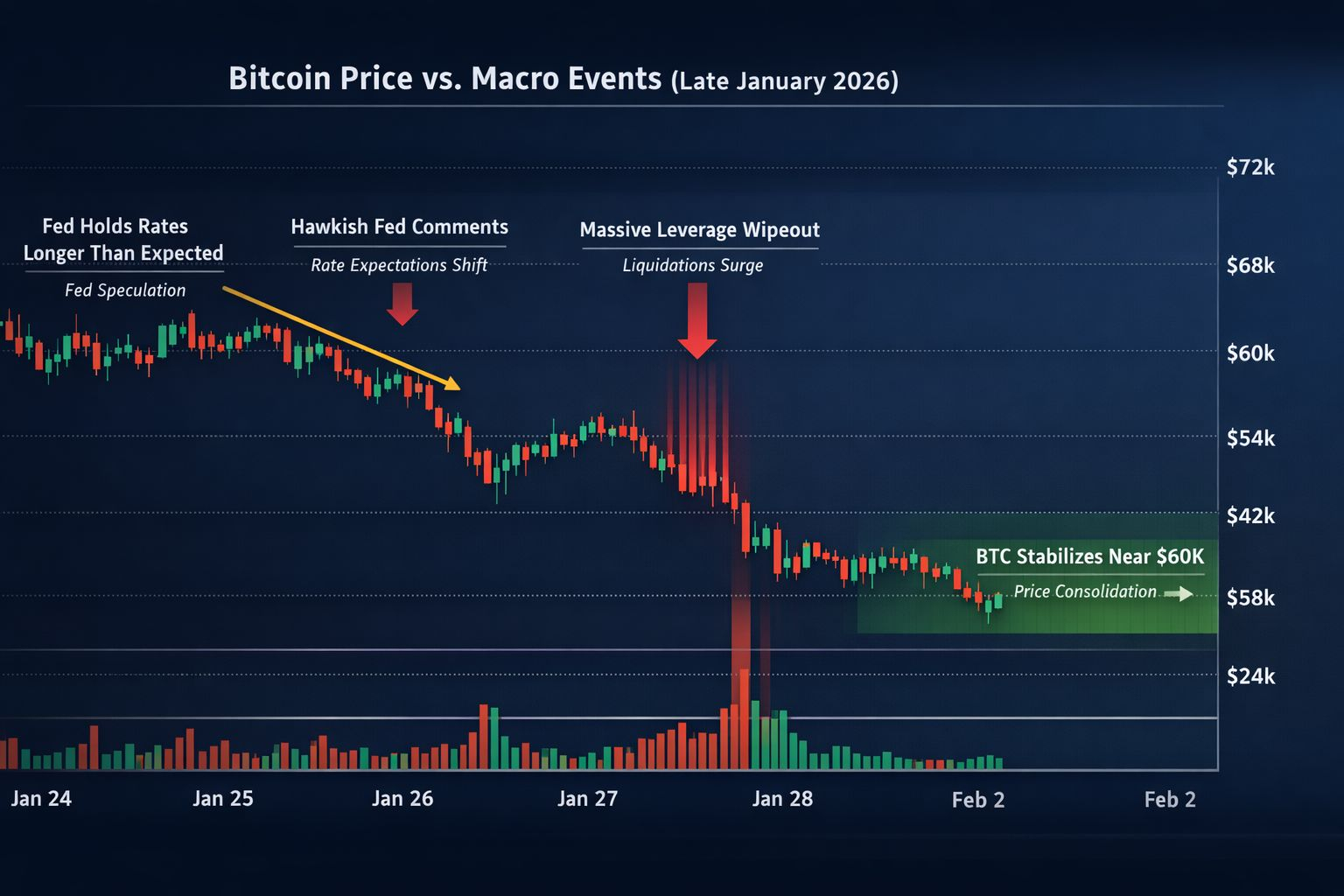
In late January 2026, $BTC experienced a significant correction, sliding from levels near its late-2025 highs toward the $60,000 area before stabilizing. This wasn’t triggered by a problem within the Bitcoin network, instead, it reflected broader macroeconomic forces that shaped risk appetite across global markets.
One of the biggest influences was monetary policy expectations from the U.S. Federal Reserve. Markets shifted their expectations about interest rates and liquidity following the January 27–28 Federal Open Market Committee (FOMC) meeting..Another notable trigger was also the nomination of Kevin Warsh as the next Fed Chair in US.
When macro conditions such as interest-rate expectations or central bank leadership create uncertainty, risk assets like Bitcoin often respond first.
Understanding these dynamics, not just price levels, equips investors to interpret corrections as part of wider economic cycles rather than isolated crypto events.
3. Risk-On and Risk-Off: The Market’s Emotional State
Markets constantly switch between two broad modes: risk-on and risk-off.
In a risk-on environment, investors feel optimistic about growth. Capital moves into volatile assets such as altcoins, emerging tokens, and speculative sectors. Volatility increases, but so do opportunities.
In a risk-off environment, fear and uncertainty dominate. Investors reduce exposure to risky assets and shift capital into stablecoins, cash, bonds, or precious metals. Crypto markets often slow down or decline during these phases.
Recognizing which mode the market is in helps investors avoid fighting the broader trend.
4. Relation between Gold/Silver and Macro movements
Gold and silver act as traditional safe havens. When both rise together, it usually signals that investors are becoming more cautious. This does not mean crypto is failing. It often means that capital is temporarily prioritizing safety. Historically, these periods allow markets to reset before the next expansion phase.
For crypto investors, rising precious metals are a signal to slow down, reduce leverage, and focus on preservation rather than aggressive growth
5. Practical Macro Signals You Can Track
You don’t need advanced economics to follow macro trends. Simple indicators already tell a clear story:
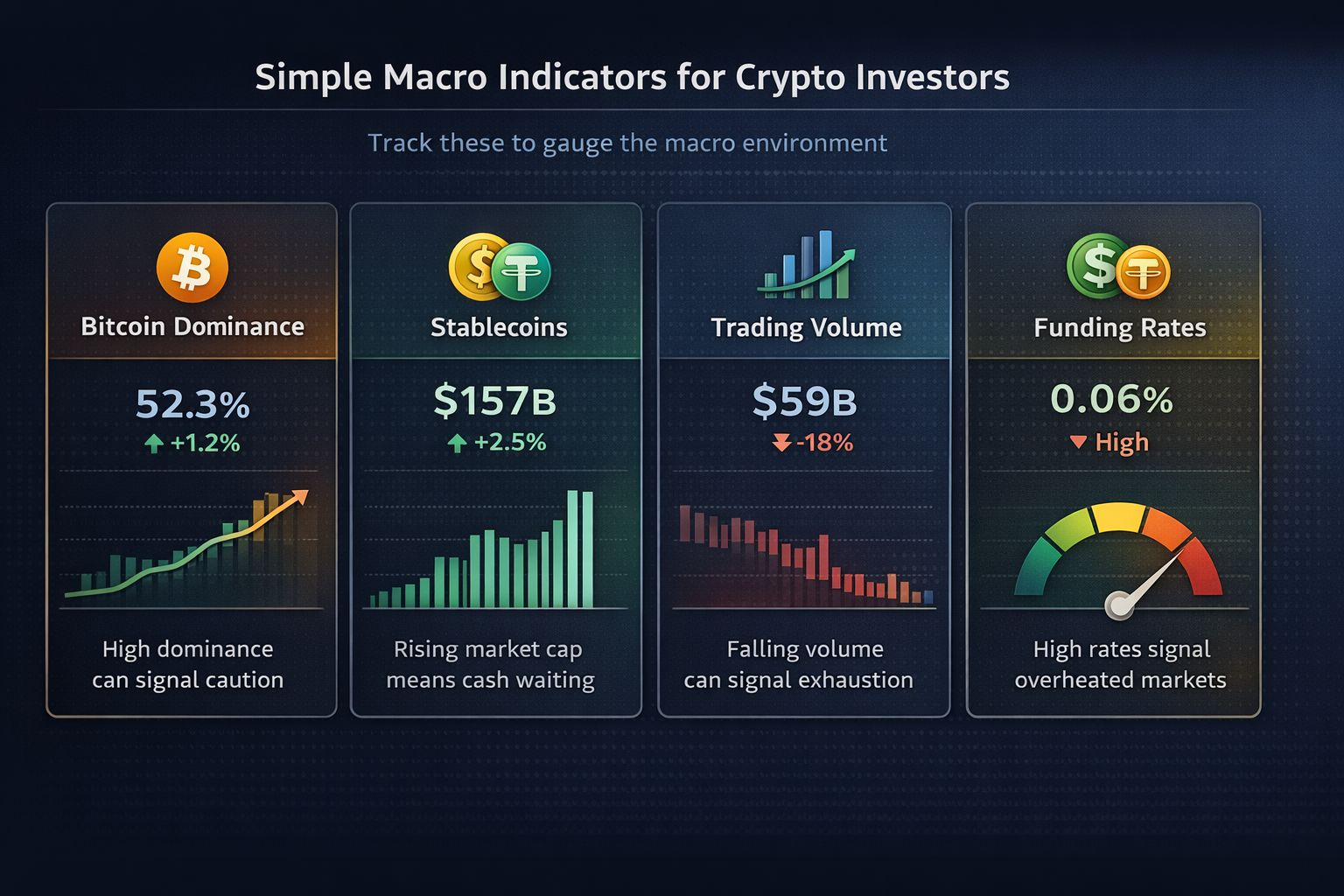
📍Bitcoin Dominance: Rising dominance often signals risk-off conditions
📍Stablecoin Market Cap: Growing stablecoin supply suggests capital waiting on the sidelines
📍Trading Volume: Falling volume during dips often signals exhaustion, not panic
📍Funding Rates: Extremely positive rates warn of overheating
To summarize Macro understanding improves decision-making. In cautious environments, disciplined investors reduce risk, prioritize strong projects, and avoid emotional trades. In improving environments, they gradually increase exposure and let trends confirm before acting.
This approach helps investors stay aligned with the market rather than reacting to noise.