want to dig into Plasma a scaling framework that’s shaped how people think about blockchain infrastructure.If you’re curious about how blockchains can actually scale, why Plasma still matters,or just want a clearer picture of what it does,you’re in the right place.My goal is to make this practical,not just technical jargon.
Blockchains changed the rules of finance. Suddenly,anyone could send programmable money or make agreements,all enforced by smart contracts no middleman needed.But this breakthrough didn’t come without problems.On networks like Ethereum,every transaction is fighting for a spot in the same global blockspace.When things get busy, fees spike.Suddenly,only big transactions make sense,and regular users get priced out. That’s a huge issue.If a system is supposed to support everyone but gets choked by its own popularity,something’s got to change.
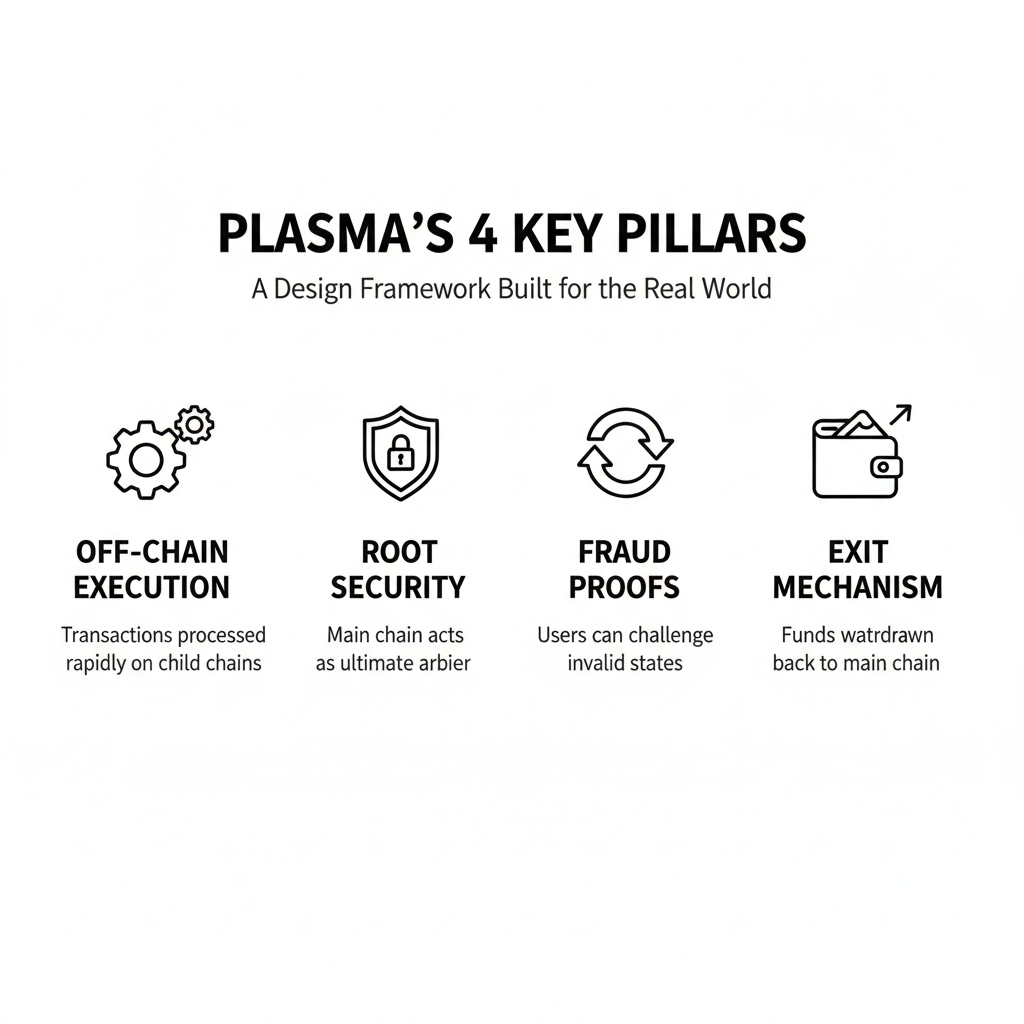
That’s where Plasma comes in.Plasma is a Layer 2 scaling framework.Instead of cramming every transaction onto the main chain,Plasma lets most activity happen off chain, on smaller “child” chains.These child chains handle their own business fast and cheap.Every so often,they send a summary back to the main chain.The main chain steps in only when there’s a dispute or something smells fishy.It’s the ultimate backup,not the bottleneck.
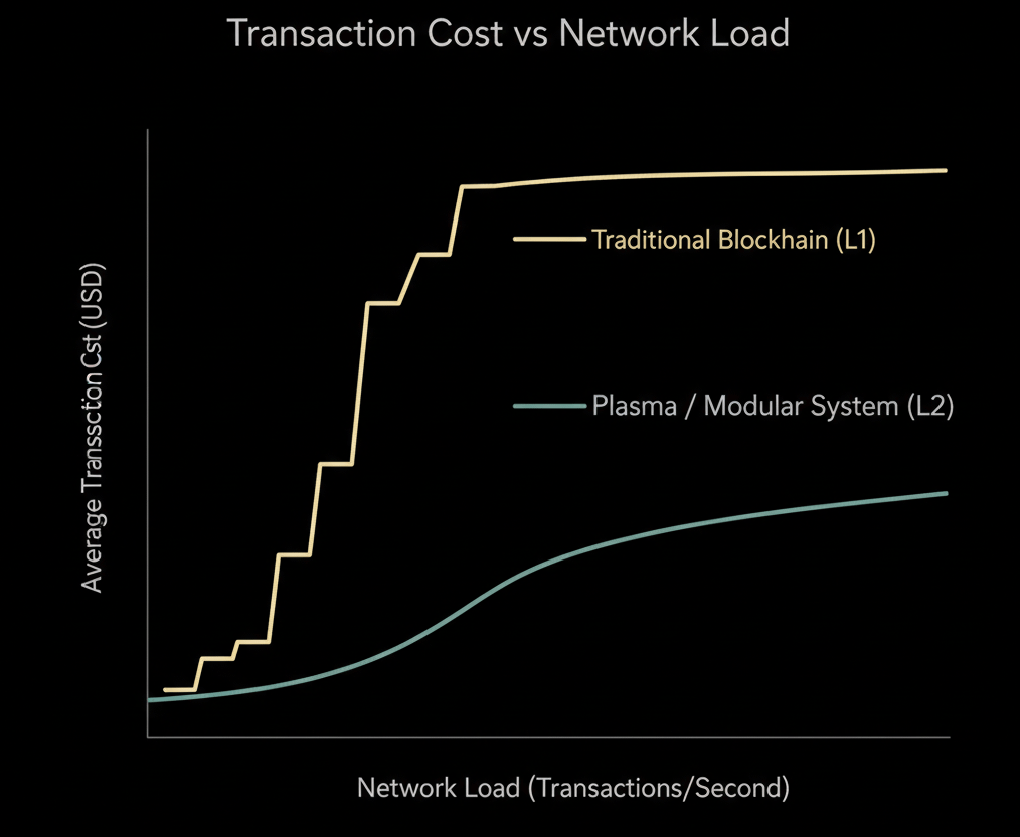
Here’s how it plays out:you deposit funds into a smart contract on the main blockchain. Those funds are now locked,and you can use them inside the Plasma chain.Transactions inside Plasma are quick and cost far less.The Plasma chain’s operator bundles up the latest state and submits it to the base chain at set intervals.If the operator tries to cheat,anyone can challenge it using fraud proofs,but only within a set window.This keeps everyone honest.And if you ever want out,you can exit and pull your funds back to the main chain your money,your control.
Plasma’s big idea?Not every transaction needs everyone’s approval.Only disputes need the heavy hand of global consensus. That’s a game changer.Instead of paying through the nose for global validation every time, you pay only when something needs sorting out.This keeps costs down,reduces congestion,and still leans on the main chain when it counts.
Even as rollups and other scaling solutions steal the spotlight,Plasma’s influence runs deep.It introduced the idea of separating execution (where transactions happen) from settlement (where finality happens).That separation is now core to modular blockchain design.Today’s demands games, DeFi,digital ID,AI need systems that handle lots of transactions without blowing up costs. Offloading routine work to side chains while anchoring security to a robust base chain? That’s more important than ever.
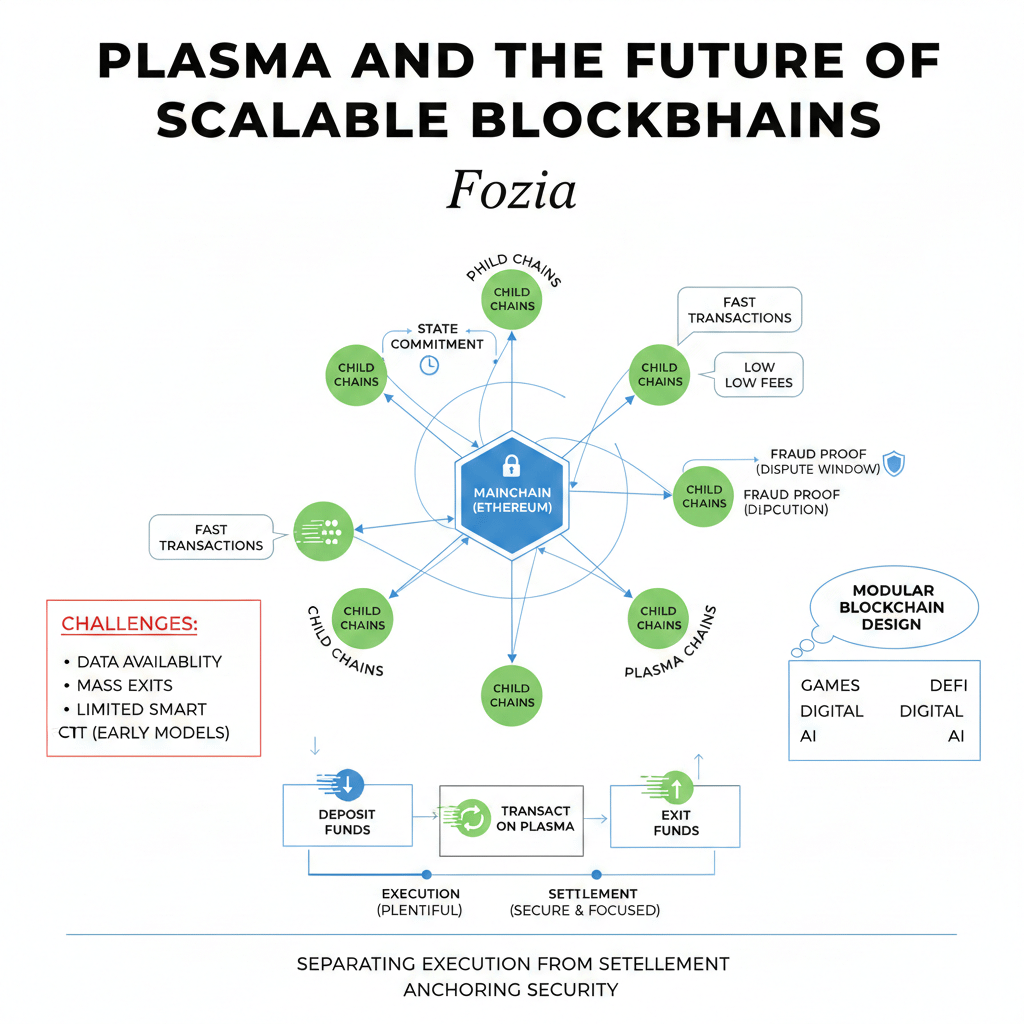
Plasma isn’t perfect,though.Data availability is a real worry.If the operator hides transaction data,users might struggle to prove fraud.There’s also the risk of mass exits if trust collapses,which could jam up the main chain.Early Plasma models couldn’t handle complex smart contracts either.These are real trade offs,and anyone looking at scalability needs to weigh them.
For me,Plasma marks a turning point.It moved the conversation away from “how do we make the main chain faster?”to “how do we keep the main chain secure while letting most stuff happen elsewhere?”That mindset shift echoes through modern blockchain designs everywhere.
To wrap up:Plasma shows how we can scale without losing the security that makes blockchains trustworthy.Execution can be plentiful settlement can stay secure and focused.If you want to understand today’s modular,scalable blockchains,you have to understand how Plasma paved the way. Thanks for reading I hope this clears up why Plasma still matters and how it fits into the future of scalable blockchains.