
The gap between what blockchain technology promises and what major organizations can actually deploy has been narrowing slowly, frustratingly slowly, for anyone watching the enterprise adoption narrative unfold. For years, the pattern repeated with numbing consistency: enthusiastic executives green-lighting blockchain pilots, technical teams building promising proof-of-concepts, and initiatives dying during the transition from pilot to production because infrastructure couldn’t deliver at enterprise scale. The obstacles weren’t mysterious. Performance inadequate for consumer-facing applications. Costs that made business models unworkable. Environmental concerns that sustainability teams vetoed. Integration complexity that exceeded available resources. Each failed attempt added clarity about what was needed but didn’t bring the solution any closer. Vanar entered this landscape with a specific thesis: the enterprise blockchain adoption problem was fundamentally an infrastructure problem, and solving it required building infrastructure purpose-designed for enterprise requirements rather than hoping enterprise needs could eventually be accommodated by infrastructure built for other purposes.
The validation of this thesis is arriving through the kind of proof that actually matters in enterprise technology markets: production deployments at scale serving real customers. Brands that spent years evaluating blockchain initiatives without finding viable paths forward are now deploying applications on Vanar that would have been impossible on previous infrastructure. The applications aren’t generating headlines because they work exactly as intended, fading into the background of normal brand digital experiences rather than standing out as blockchain experiments. This invisibility represents success rather than failure because the goal was never to make users think about blockchain but to give brands capabilities that create value for customers regardless of underlying implementation details.
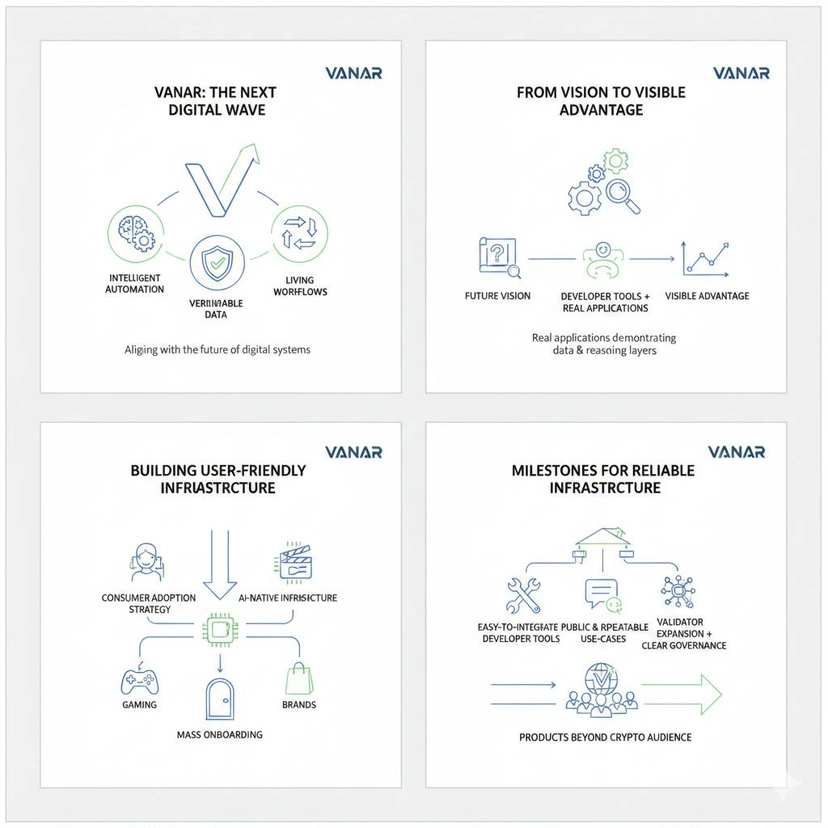
Understanding why these deployments are succeeding where previous attempts failed requires examining specific obstacles that Vanar’s architecture addresses and how those solutions translate into practical deployment feasibility. The examination reveals that technical specifications matter far less than whether those specifications satisfy real operational requirements that determine whether projects proceed from concept to production.
Performance Requirements That Actually Determine Deployment Decisions
The performance characteristics that enterprise decision-makers care about differ substantially from the metrics that blockchain technical communities prioritize. When blockchain engineers discuss performance, they focus on transactions per second, block confirmation times, and throughput under various conditions. These metrics matter, but they’re not how brand technology teams frame performance requirements. They ask different questions: Will our customers notice any delay when interacting with blockchain features? Can the infrastructure handle traffic spikes during our biggest campaigns without degrading? Will performance remain consistent as our user base grows? Can we guarantee uptime levels our customers expect from all digital experiences?
Vanar’s one-second block finality addresses the consumer perception question directly. Research on user experience consistently shows that delays below one second feel instantaneous to users while delays above one second begin registering as noticeable lag that creates negative impressions. Vanar engineered finality to sit comfortably below this perceptual threshold, ensuring blockchain features feel as responsive as any other digital interaction. This isn’t about achieving the fastest possible blockchain finality but about achieving the finality speed that makes blockchain transparent to consumer experience.
The throughput capacity was designed around realistic brand campaign load patterns rather than theoretical maximum throughput. Analyzing traffic data from successful product launches, viral marketing moments, and limited-edition drops reveals characteristic spike patterns where traffic can increase by orders of magnitude within minutes. Traditional infrastructure planning provisions capacity for expected peak loads with modest headroom. Vanar provisions for extreme peaks with substantial headroom because the cost of infrastructure failure during high-visibility brand moments exceeds the cost of excess capacity that sits unused most of the time.
Consistency matters as much as raw performance numbers. Brands need confidence that the infrastructure performs reliably under all conditions rather than achieving impressive peaks occasionally while experiencing degradation frequently. Vanar’s architecture prioritizes consistent performance over maximum performance, ensuring that the experience delivered to the ten-millionth user matches the experience delivered to the tenth user. This consistency requirement influenced architectural decisions throughout the stack, from consensus mechanisms to resource allocation strategies.
Economic Viability Making Deployment Decisions Possible
The transaction economics that determine whether brand applications can proceed to production are straightforward but unforgiving. Brand teams build financial models projecting customer usage patterns and multiplying transaction volumes by infrastructure costs to estimate total operational expenses. These models also factor in customer acquisition costs, revenue per user, and acceptable unit economics for profitable operation. When infrastructure costs make the unit economics unworkable, projects terminate regardless of other considerations. The calculation is binary: either the economics work or they don’t, and if they don’t, no amount of technical elegance matters.
Vanar’s fee structure was reverse-engineered from viable brand economics rather than forward-engineered from protocol cost structures. The team worked with brands to understand what fee levels would allow their intended applications to be economically viable, then designed protocol economics to deliver fees at or below those levels. This approach inverted the typical relationship where technology defines costs and businesses adapt to those costs. Instead, business requirements defined acceptable costs and technology adapted to deliver them.
The implications of this reversal are profound for application categories that blockchain enables. Digital collectibles distributed to millions of users become economically viable when per-transaction costs measure in fractions of cents rather than dollars. Loyalty programs that generate millions of daily transactions can operate profitably when infrastructure costs remain minimal. Community access systems managing continuous authentication checks for large user bases work financially when verification costs don’t accumulate into unsustainable totals. Each application category has economic thresholds determining viability, and Vanar designed infrastructure that makes more categories viable by keeping costs below critical thresholds.
The predictability of costs matters as much as their absolute levels. Brands building financial models need confidence that infrastructure costs won’t spike unpredictably during usage surges. Networks where fees increase dramatically during congestion create economic uncertainty that makes financial planning difficult and makes approving projects risky. Vanar’s capacity provisioning ensures that performance remains consistent and fees remain predictable even during extreme usage peaks, giving brands the cost certainty they need for confident financial modeling.
Environmental Credentials Enabling Rather Than Blocking Progress
The environmental dimension of blockchain infrastructure affects enterprise adoption in ways that are easy to underestimate until you’ve participated in internal approval processes at major consumer brands. Sustainability isn’t a peripheral concern that gets consideration after technical and economic feasibility are established. It’s a qualifying criterion evaluated early in approval processes, and failures on sustainability grounds kill projects immediately regardless of other merits. This dynamic reflects the reality that consumer brands face intense pressure from customers, investors, employees, and regulators to demonstrate environmental responsibility across all operations.
Vanar’s carbon-neutral architecture removes sustainability objections from enterprise evaluation processes entirely. When sustainability officers review blockchain initiatives built on Vanar, they find verified carbon-neutral operations that align with corporate environmental commitments rather than creating new conflicts requiring justification. The proof-of-stake consensus mechanism ensures minimal baseline energy consumption. Additional offset programs achieve net-zero impact across all operations. Third-party verification provides credible confirmation rather than self-assessment that might be questioned.
The strategic importance of these environmental credentials extends beyond avoiding objections into enabling positive positioning. Brands increasingly want to highlight sustainability across their operations because customers increasingly value environmental responsibility when making purchase decisions. Blockchain implementations on environmentally responsible infrastructure can be positioned positively as aligned with brand values rather than requiring defensive explanation about why the brand accepted environmental costs. This transforms blockchain from a potential sustainability liability into a neutral or positive component of environmental positioning.
We’re seeing evidence that environmental credentials have become table stakes for enterprise blockchain infrastructure rather than differentiators that create competitive advantages. Infrastructure without strong environmental positioning gets excluded from consideration early in evaluation processes. Infrastructure with environmental positioning proceeds to evaluation based on other criteria. This dynamic means environmental responsibility is necessary but not sufficient for enterprise adoption, creating a high bar that all serious enterprise infrastructure must clear.
The Trust Network That Compounds With Each Deployment
Enterprise technology adoption in risk-averse categories like consumer brand infrastructure follows patterns fundamentally different from consumer technology adoption or even enterprise adoption in less critical contexts. Decision-makers evaluating infrastructure for business-critical consumer applications need extensive proof that solutions work as promised under production conditions. They seek this proof through reference customers, detailed case studies, and direct conversations with peers who have deployed successfully. This creates network effects where each successful deployment makes subsequent deployments more likely by providing the proof points that risk-averse decision-makers require.
Vanar’s partnership portfolio has been assembled with careful attention to how each partnership contributes to the trust network that enables subsequent partnerships. Luxury brand partnerships establish that the platform meets quality standards that luxury brands require, which matters when other luxury brands evaluate options. Entertainment partnerships demonstrate consumer-scale performance, which matters when other entertainment properties consider deployment. Gaming partnerships validate real-time performance under demanding conditions, which matters when other gaming companies assess infrastructure capabilities.
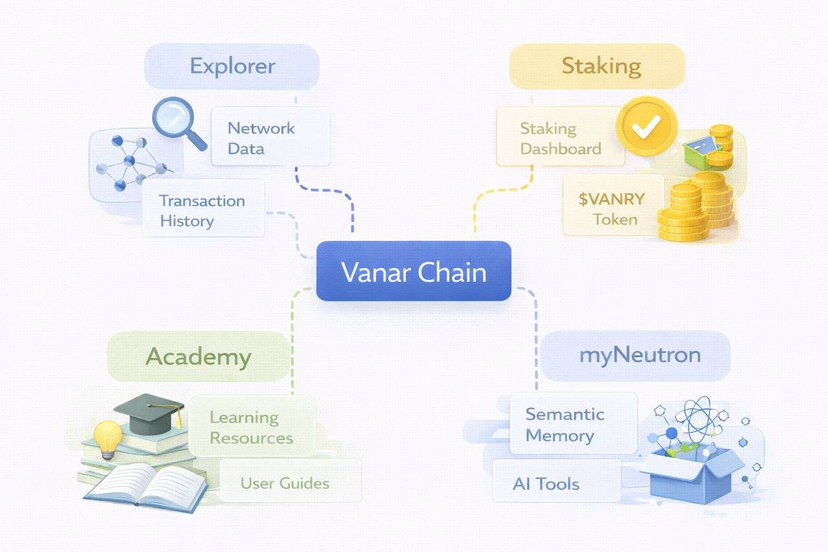
The credibility transfer between partnerships happens through direct reference conversations more than through published case studies. Decision-makers at organizations evaluating blockchain infrastructure reach out to counterparts at organizations that have deployed, asking detailed questions about implementation challenges, ongoing operational issues, support quality, and whether they would make the same decision again knowing what they know now. These private conversations carry more weight than any marketing claims because they provide unfiltered peer assessment from people without incentive to misrepresent experiences.
They’re building what effectively functions as a distributed proof network where each node represents a successful deployment that can validate the platform’s capabilities to potential future partners. The network’s value grows nonlinearly with size because more nodes provide more independent verification points that collectively build comprehensive proof across different use cases, industries, and deployment scenarios. New organizations evaluating Vanar find multiple reference points relevant to their specific context rather than having to extrapolate from dissimilar examples.
Developer Ecosystem Maturation and Enterprise Integration
The developer ecosystem surrounding Vanar has been maturing from early experimentation toward established patterns and professional integration services. This maturation trajectory follows predictable patterns where early developers prove possibilities, intermediate developers establish best practices, and mature ecosystems provide professional services enabling standardized implementation that doesn’t require specialized expertise for each deployment.
Professional services firms and agencies specializing in brand digital transformation have been building Vanar expertise as client demand for blockchain capabilities has grown. These firms bridge the gap between brand strategic vision and technical implementation, translating business requirements into technical specifications and managing deployment details that brand internal teams often lack capacity or expertise to handle. The growth of professional service capacity around Vanar dramatically reduces the barrier to brand adoption by providing turn-key implementation support that makes deployment practical even for organizations with limited blockchain expertise.
Integration patterns and reusable components developed through early deployments are being packaged into frameworks that accelerate subsequent implementations. Rather than building each deployment from scratch, development teams can leverage proven patterns that address common requirements around user authentication, transaction management, error handling, and operational monitoring. These reusable components reduce implementation time and risk by avoiding the need to solve problems that have already been solved multiple times.
The Solidity-compatible development environment continues providing value by enabling access to the large pool of developers with Ethereum experience. As blockchain development has matured, Solidity expertise has become genuinely available in the professional developer market rather than being scarce specialty knowledge. Brands can hire developers or contract with firms that have Solidity capabilities without needing to find specialists in exotic development environments that lack broad talent pools.
Application Evolution and Emerging Categories
The application landscape on Vanar has been evolving beyond initial NFT and collectible implementations toward more sophisticated brand relationship models that leverage blockchain capabilities in ways that aren’t possible through traditional infrastructure. These emerging applications reveal how blockchain enables fundamentally new patterns rather than simply digitalizing existing approaches with different technology.
Dynamic membership and access systems that respond to on-chain behavior create engagement models where brand relationships evolve based on customer actions rather than following predefined progression paths. Brands can create membership tiers that unlock automatically based on ownership patterns, community participation, or cross-brand activity without requiring manual administration or centralized tracking. These dynamic systems create engagement depth that static membership structures cannot match because they respond continuously to customer behavior rather than updating periodically based on manual reviews.
Cross-brand loyalty networks enabled by interoperable token standards allow multiple brands to create shared reward frameworks where participation in one brand’s ecosystem creates benefits in partner brands’ ecosystems. These networks create value that none of the participating brands could generate independently because the value comes from the network connections rather than from any single brand’s offering. The technical infrastructure enabling these networks must be capable of coordinating state across multiple separate brand applications, which traditional centralized loyalty systems struggle to accomplish without complex bilateral integration agreements.
If it becomes standard for consumer brands to offer programmable relationship structures that respond dynamically to customer behavior across brand portfolios, the infrastructure enabling these capabilities will have enabled a fundamental shift in how brand-customer relationships function. The shift from static predetermined relationship structures to dynamic responsive relationships represents qualitative change rather than quantitative improvement, creating engagement possibilities that weren’t feasible under previous technical constraints.
The Trajectory Becoming Clearer
Looking at Vanar’s development trajectory from sufficient distance reveals a consistent pattern that’s easy to miss when focusing on individual developments: each quarter brings more production deployments, deeper brand relationships, and more comprehensive enterprise capabilities. The velocity isn’t dramatic enough to generate continuous headlines but it’s consistent enough to demonstrate sustainable progress rather than temporary momentum. This consistent execution matters more than spectacular individual achievements because enterprise adoption happens through accumulating proof rather than through sudden revelations.
The infrastructure being built is approaching the comprehensiveness necessary for brands to deploy blockchain capabilities without encountering unexpected capability gaps that block implementation. Each deployment reveals additional requirements that feed back into development priorities, creating iterative improvement driven by real production needs rather than speculative anticipation about what might be needed. This deployment-driven development produces infrastructure that actually solves the problems brands encounter rather than solving theoretical problems that might not matter in practice.
I’m genuinely convinced that we’re watching the early stages of a transition that will eventually feel obvious in retrospect but remains underappreciated in real-time because the progress happens gradually through consistent execution rather than through dramatic breakthroughs. The brands deploying blockchain capabilities on Vanar today are establishing patterns that subsequent brands will follow, creating the network effects and ecosystem maturity that enable mainstream adoption. The infrastructure making these deployments possible today will eventually be invisible infrastructure that everyone depends on without thinking about, and that invisibility will represent complete success rather than irrelevance.