


Not technology, but transforming usage into predictable, organic utility, is a challenge with many blockchains. Vanar Chain, which was fundamentally feature-based, is silently transitioning to a network connecting the value of its token to actual utility through subscription and extensive integration in ecosystems. This transformation is a distinctive Web3 strategy that is worth developing.
Instead of reliant on hypothetical trades or even single transactions, Vanar is transferring the primary products, myNeutron and its AI solutions, into subscription payments under the label, $ VANRY. This renders the token necessary in continued usage, as opposed to the token being a gas charge or token reward.
Some Subscription-First products: Web3 Economics Changed.
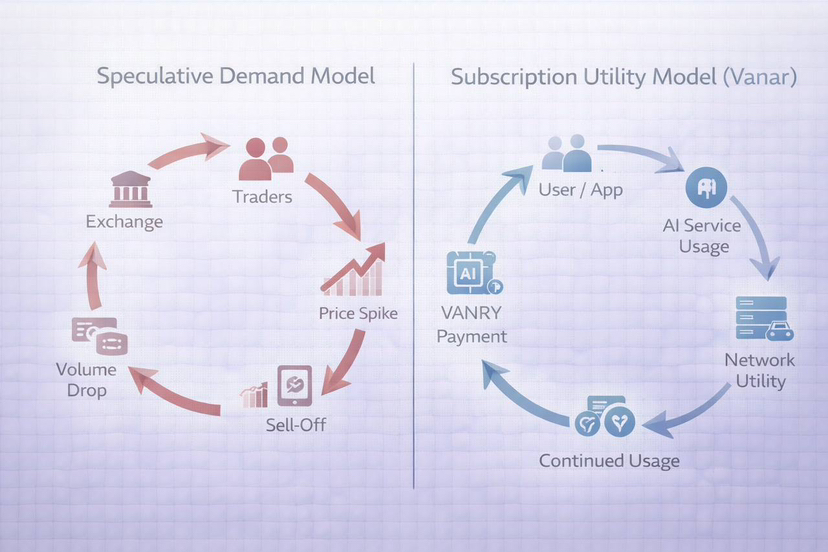
However, previously, blockchain products had free or low-cost essentials and optional charges. Vanar reverses this model by charging even its most advanced features of AI since the beginning, and implementing them on the protocol level. The case of myNeutron, a semantic memory apps developed by Vanar, and other hi-tech AI apps are shifting into repeat subscriptions that would use VANRY.
This cannot be said to address a systemic Web3 problem: unpredictable usage has unpredictable token demand. A subscription obliges users to make expected outlays of tokens and the token is no longer a speculative asset, but a utility that is linked to real platform usage.
Possible classical cloud services are based on foreseeable billing. The cost of compute, storage and API calls are budgeted by companies on a monthly basis. Vanar applies the same reasoning to on-chain AI: developers and teams will pay per query cycle, memory indexing or reasoning workflow, not only when users make transactions.
The reason why Subscription Models may achieve network stability.
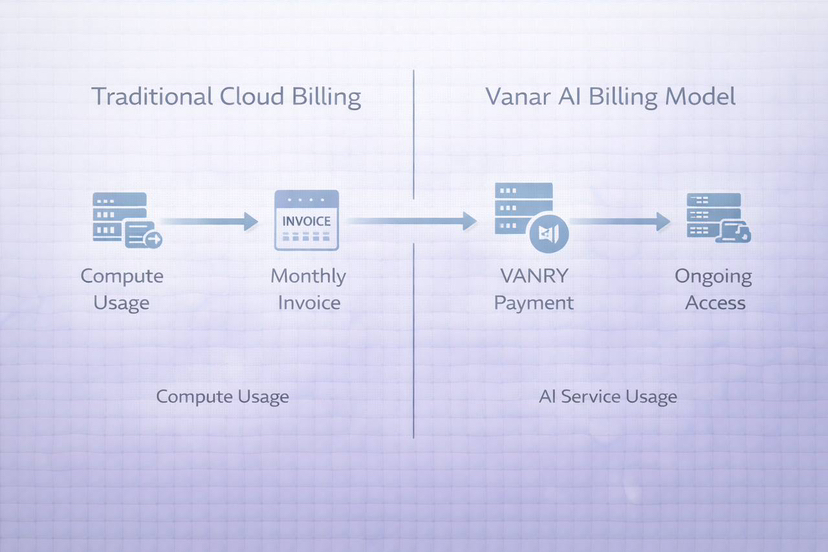
A subscription system not only leads to token demand but also leads to product stickiness and intended usage. Projects based on Vanar on-chain AI are contracted to schedule payments creating a consistent demand price to VANRY that is not tied to sentiment in the trading or a singular event.
This is reminiscent of Web2: when one businesses adds a billing API or CRM, it continues to pay as long as it remains valuable. When myNeutron or Kayon AI are made central to the workflow of builders (analytics, automation, or reasoning), it will no longer be optional to charge in $VANRY, but rather a standard element of the product life cycle.
It brings Vanar into line with business requirements too. The controlled industries prefer traceable and predictable costs. The cost in subscription billing in VANRY is clear and predictable costs - far more justifiable than unpredictable gas costs or sporadic use.
Inter-Chain Utility Extension.
One more indicator of expansion: the AI layers at Vanar will cease to remain confined. More recent news and roadmap ideas indicate the intention to make Neutron extend past the base chain allowing other ecosystems to use its compressed, semantically enriched data with Vanar remaining the settlement layer.
The cross-chain demand of VANRY might occur when Vanar is required by apps in other chains in their memory layer. The developers would be willing to pay VANRY to anchor or settle the token, and these tools would be useful in more than just one ecosystem in numerous chains.
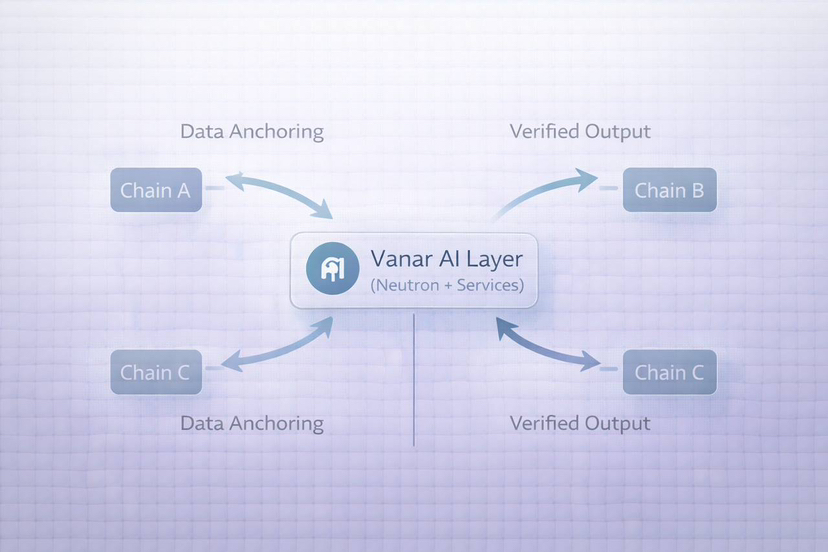
Practically, Vanar might become an AI infrastructure vendor not only a single L1. An ecosystem-spanning utility is much more powerful than a chain that primarily competes to be a smart contract host.
Integrations and Strategy Alliances.
Vanar does not just expand to headline relationships. Recent release - NVIDIA Inception support offers advanced AI hardware tooling on the platform, increasing the potential of developers and making the chain more attractive to projects based on AI.
In addition, its practical implementation in the gaming, metaverse and AI experiences indicates that Vanar is not remaining niche. The AI service, microtransactions in games, and immersive experiences, and real-world economy applications are their sources of token utility. Such diversity reduces reliance on any particular use case and token demand is more resilient.
The Real World vs. Market Speculation.
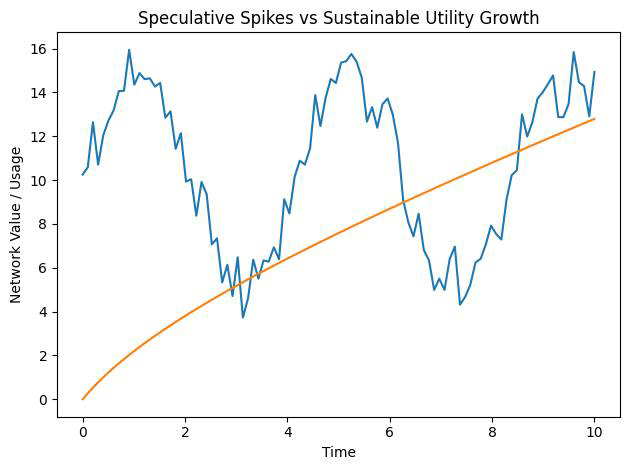
Most Layer1 tokens are based on trade or hype, a very thin foundation that may crumble when the mood shifts. Vanar reverses this by adopting the subscription billing and utility-based use of tokens. The network does not need traders to create value; the network creates actual repeatable economic utility of its token.
The approach is similar to the conventional platforms that generate revenue every time, predictably and using actual customer requirements. It might not contain marketing drama but it is business wise good.
Fascinations and the Way Ahead.
The subscription models do not work magic. They rely on the products which make sense in terms of the price. Unless myNeutron or AI technology assists the builders in saving time, making improved decisions, or providing economic results, recurrent payments turn into overhead. Vanar should demonstrate the services he/she paid are worth the money.
It should be mature in terms of technicality, well-documented and have a predictable experience with the developer. Subscriptions must also have trusted billing UX on-chain and clear off-chain visualizations, invoicing, and integration and support.
Another hurdle is scale. Subscriptions and meaningful token demand will take a large base of paying apps and users. This will require not only the tools, but also onboarding, education and ecosystem support.
Conclusion: Towards a Token to Power Sustainable Utility.
The transition of Vanar to AI utility through subscriptions and the expansion of the ecosystem is an indicator of a new blockchain story. Instead of relying on hype, the project establishes the mechanisms through which the use of the token has a direct connection to repeatable and predictable activity of a product, as software platforms are currently monetized.
This transition is more than most blockchains get. It transforms VANRY into a utility token, which businesses and builders use on a regular basis since the services are a part of their business.