
Most traders are watching charts.
Some are watching whales.
Almost no one is watching the real thing that moves markets:
Liquidity.
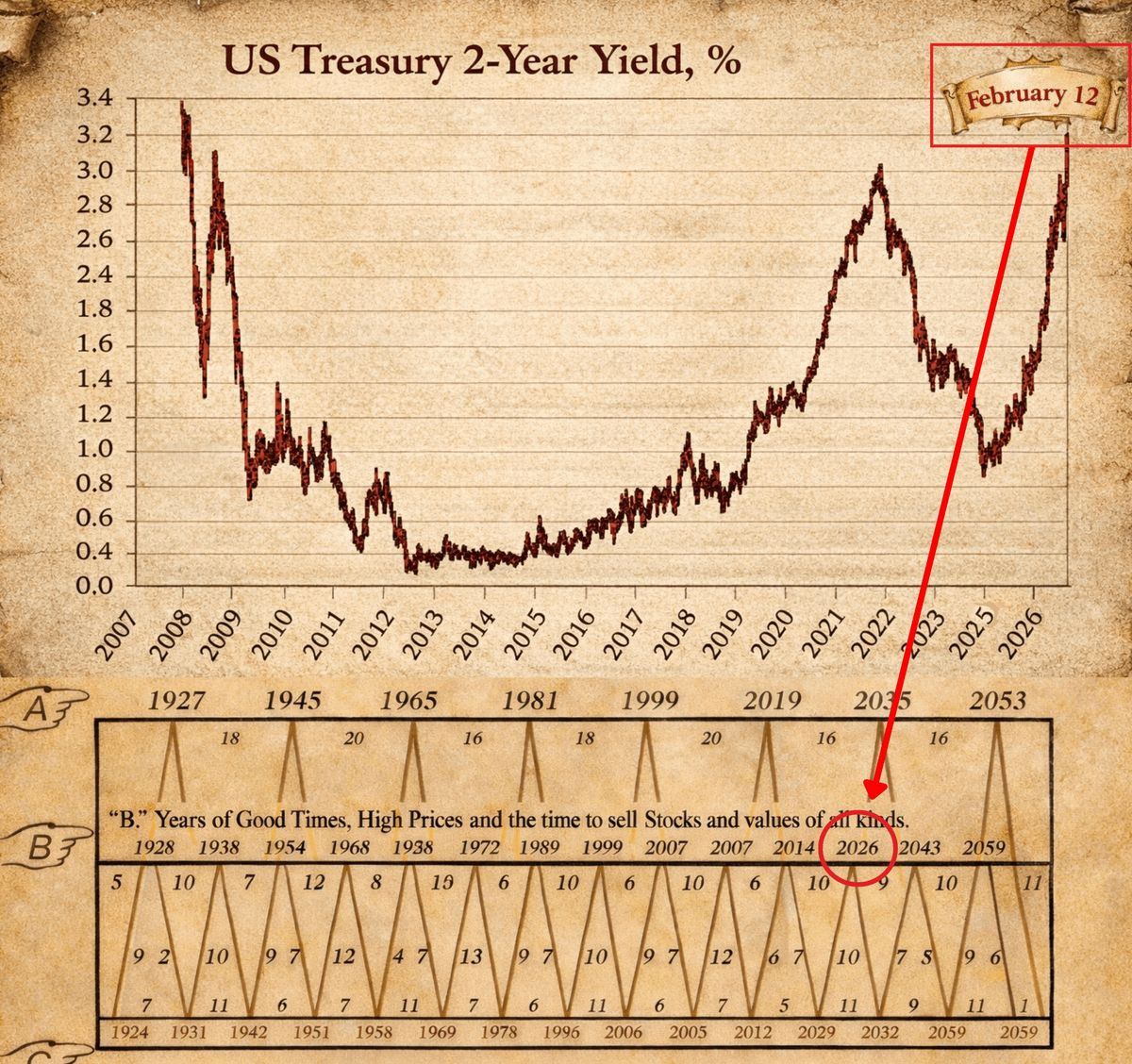
And between Feb 10 – Feb 12, the U.S. system faces a silent stress test most retail won’t even notice — until it’s too late.
The $125B Shockwave Nobody Is Pricing In
The U.S. Treasury is issuing:
$58B in 3-Year Notes → Feb 10
$42B in 10-Year Notes → Feb 11
$25B in 30-Year Bonds → Feb 12
Total: $125,000,000,000
Settlement date: Feb 17
This isn’t just “routine debt.”
It’s a liquidity vacuum.
What Actually Happens During These Auctions
Let’s simplify it.
When the Treasury sells bonds:
Banks, funds, institutions buy them
They pay in cash
That cash leaves the financial system
Liquidity tightens
Less liquidity = less oxygen for risk assets.
And when oxygen gets thin, risk chokes first.
Why This Isn’t Just Another Auction
Auctions are stress tests.
They reveal the real appetite for U.S. debt.
Two outcomes exist:
Scenario 1: Strong Demand
Auctions clear smoothly
Yields stay stable
Liquidity impact is absorbed
Risk assets breathe
Scenario 2: Weak Demand
Yields spike
Liquidity tightens aggressively
Financial conditions harden instantly
Selling feeds on itself
And here’s the key:
Bonds move first. Then equities react. Then crypto gets hit hardest — and fastest.
Why This Is Giga Bearish If It Goes Wrong
This isn’t about “new debt.”
The U.S. always issues debt.
This is about timing.
Markets are stretched. Positioning is crowded. Volatility is suppressed. Sentiment is complacent.
Now drop a $125B liquidity drain into that environment.
That’s not neutral. That’s combustible.
Feb 10–12: The Test
Feb 17: The Impact
The auctions happen Feb 10–12.
But the cash leaves the system Feb 17.
That’s when the real tightening hits.
If something breaks, it won’t break during a quiet afternoon.
It’ll break when positioning is heavy and liquidity is thin.
And crypto — being the most reflexive asset class — reacts violently.
Why Crypto Traders Should Care
Crypto doesn’t trade in isolation anymore.
It trades with:
Treasury yields
Dollar strength
Liquidity flows
Risk appetite
When liquidity expands, crypto flies.
When liquidity contracts suddenly, crypto gets nuked.
If auctions are weak and yields spike:
Equities wobble
Leverage unwinds
Crypto sees forced liquidations
It’s not theory.
It’s how modern markets are wired.
The Trap
The real trap?
Charts look fine.
BTC structure looks constructive.
Alts are stabilizing.
Volatility is low.
That’s exactly when macro shock hurts the most.
Because no one is positioned for it.
What Smart Traders Watch
Instead of guessing tops and bottoms, watch:
Auction bid-to-cover ratios
Indirect bidder participation
Yield tail vs when-issued levels
Dollar index reaction
10Y yield behavior
If yields jump and the dollar rips, liquidity just tightened.
And risk assets won’t ignore that.
This Is Not Fear — It’s Awareness
Maybe auctions clear cleanly. Maybe demand is strong. Maybe yields stay calm.
If so, risk assets likely continue higher.
But if they don’t?
The move won’t be gentle.
And crypto won’t get a warning candle.
It’ll get a cascade.