

When I first heard about VanarChain, my immediate reaction was skepticism. Another blockchain promising “on-chain AI with persistent memory”? Crypto loves adding AI to every roadmap, and most of the time it’s more narrative than substance. So I assumed this was just another feature meant to make the L1 feel futuristic.
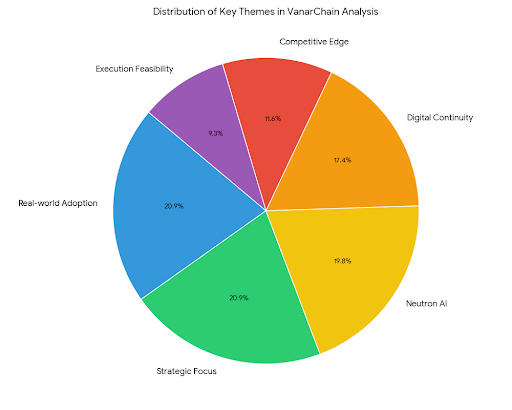
What caught my attention wasn’t TPS, fees, or decentralization theater—it was real-world adoption. Vanar already has live products like Virtua Metaverse and the VGN Games Network, targeting gamers, brands, and digital experiences. Neutron AI isn’t framed as a chatbot or novelty—it’s described as reasoning on-chain with persistent memory. That one word, persistent, made me pause.
Persistent memory could change how we interact with digital worlds. Most AI is stateless: you ask a question, it responds, and forgets. In Web3, your wallet is your identity, but it rarely carries behavioral context. Neutron aims to bridge that gap, letting AI evolve based on user activity, creating NPCs that adapt, economies that respond, and brand experiences that shift in real time.
Execution is the tricky part. On-chain AI is expensive, and storage and memory costs scale fast. If it’s too abstract, developers won’t adopt it. Too costly, and users won’t care. Too centralized to offset cost, and Web3 ideals weaken. Balancing these constraints is critical, especially if mainstream adoption is the goal.
From my perspective, the smartest move Vanar made was starting in gaming, not AI-first. Neutron is being built to enhance live products, not chase a trend. That means users experience smarter, evolving digital worlds without needing to understand AI mechanics, while developers get a tool that can create more dynamic applications.
There’s also a structural angle. Persistent on-chain memory could provide continuity that Web3 lacks. Web2 platforms own your data and adapt experiences around it. Most dApps are memoryless beyond wallet balances. If Vanar can enable AI that respects ownership while still adapting to behavior, it could create a layer of digital continuity that feels genuinely human.
My biggest hesitation remains speed and relevance. Off-chain AI evolves quickly, scales instantly, and often outpaces decentralized solutions. Neutron needs to offer something uniquely Web3-native—wallet-linked intelligence, composable logic, and persistent memory might be that edge. If it does, it could become more than a narrative; it could quietly enhance user retention and engagement.
Despite my doubts, I’m watching closely. This isn’t hype-driven or about token speculation it’s about whether persistent AI can genuinely improve gaming, brands, and digital experiences. If it succeeds, Vanar might be one of those rare L1s where infrastructure quietly makes Web3 feel alive, rather than mechanical. For now, it’s worth observing, quietly and carefully.