
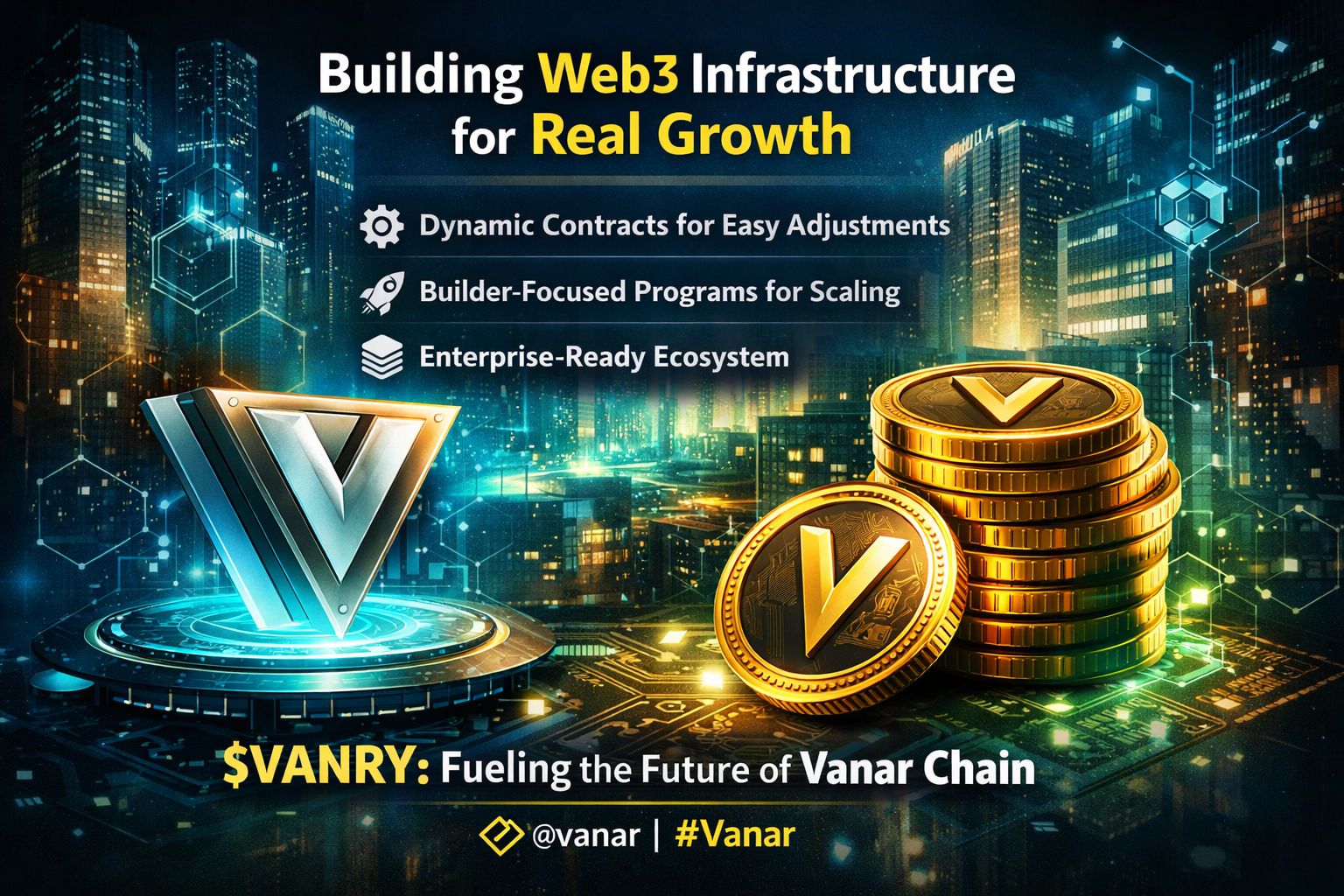
The real challenge for most blockchains isn’t technology — it’s converting usage into predictable, organic token demand. Vanar Chain is quietly shifting from a feature-focused Layer 1 into something more strategic: a network where token value is directly tied to recurring, real-world utility through subscriptions and deep ecosystem integration.
Instead of relying on speculative trading or one-off transactions, Vanar is embedding its core products — including myNeutron and its AI infrastructure — into subscription-based models denominated in $VANRY. This transforms the token from a simple gas or reward asset into a required utility for continuous platform access.
Subscription-First: A Shift in Web3 Economics
Historically, many blockchain platforms offered core services for free or nearly free, monetizing through token speculation or transaction fees. Vanar flips that model. Advanced AI services are positioned as paid infrastructure from day one, integrated at the protocol level.
Products like myNeutron — a semantic memory layer — and other AI-driven tools are evolving into recurring subscription services payable in VANRY. This directly addresses one of Web3’s biggest systemic problems: unpredictable usage creates unpredictable token demand.
Subscriptions introduce scheduled, expected token outflows. Instead of speculative spikes, VANRY demand becomes linked to consistent platform activity.
This mirrors traditional cloud models. Businesses budget monthly for compute, storage, and API usage. Vanar applies similar logic to on-chain AI: developers pay for query cycles, memory indexing, and reasoning workflows — not just transactions.
Why Subscriptions Strengthen Network Stability
Recurring payments do more than generate demand — they create stickiness. Projects integrating Vanar’s AI infrastructure commit to scheduled payments, building a steady demand layer that is less dependent on market sentiment.
This mirrors Web2 SaaS dynamics. When a company integrates a billing API, CRM, or analytics engine into its workflow, it continues paying as long as value is delivered. If myNeutron or Kayon AI become embedded in builders’ operations — analytics, automation, decision-making — VANRY becomes a structural cost, not a speculative position.
This approach also aligns with enterprise needs. Regulated industries prioritize predictable costs. Subscription billing in VANRY offers clearer economic forecasting compared to volatile gas fees or inconsistent transactional usage.
Extending Utility Beyond One Chain
Vanar’s AI infrastructure is not designed to remain confined to its base chain. Roadmap developments suggest Neutron’s semantic compression and enriched data layers could extend cross-chain, with Vanar acting as the settlement layer.
If applications on other ecosystems rely on Vanar’s memory layer, developers would require VANRY for anchoring or settlement. This expands demand beyond a single ecosystem.
In this scenario, Vanar evolves from being “just another L1” into an AI infrastructure provider serving multiple chains — a far stronger long-term positioning than competing solely for smart contract volume.
Strategic Integrations and Alliances
Vanar’s inclusion in NVIDIA Inception enhances its credibility within AI development circles, offering developers access to advanced tooling and hardware resources.
Beyond that, integrations across gaming, metaverse environments, AI-powered experiences, and microtransaction ecosystems diversify utility sources. This reduces reliance on any single vertical and strengthens resilience in token demand.
When token usage spans gaming AI, immersive environments, enterprise automation, and data infrastructure, demand becomes multi-layered rather than narrative-driven.
Utility vs. Market Speculation
Many Layer 1 tokens derive value primarily from trading activity and narrative momentum — foundations that can erode quickly when sentiment shifts.
Vanar’s subscription-driven model aims to invert that dependency. The network doesn’t require hype cycles to create value. Instead, repeatable product usage generates recurring token demand.
It may lack dramatic marketing appeal, but it reflects a more traditional and sustainable business model.
Challenges Ahead
Subscription models only work if the underlying product delivers measurable value. If myNeutron and Vanar’s AI tools do not help builders save time, improve decisions, or generate economic outcomes, recurring payments become friction.
Technical maturity, documentation quality, billing UX, developer experience, and ecosystem support will be critical. Subscriptions require trust, clarity, and seamless integration.
Scale is another hurdle. Meaningful token demand will require a substantial base of paying applications. That means onboarding, education, partnerships, and ecosystem expansion must accelerate alongside product development.
Conclusion: A Token Backed by Recurring Utility
Vanar’s pivot toward AI-driven subscriptions and ecosystem expansion signals a new blockchain narrative — one rooted in predictable economic activity rather than speculative cycles.
By tying VANRY directly to recurring infrastructure usage, Vanar is positioning its token as a structural utility within builder workflows. If executed effectively, this could transform VANRY from a tradable asset into an operational necessity.
In a market often driven by hype, Vanar’s strategy reflects something different: building sustainable token demand through real, repeatable utility.