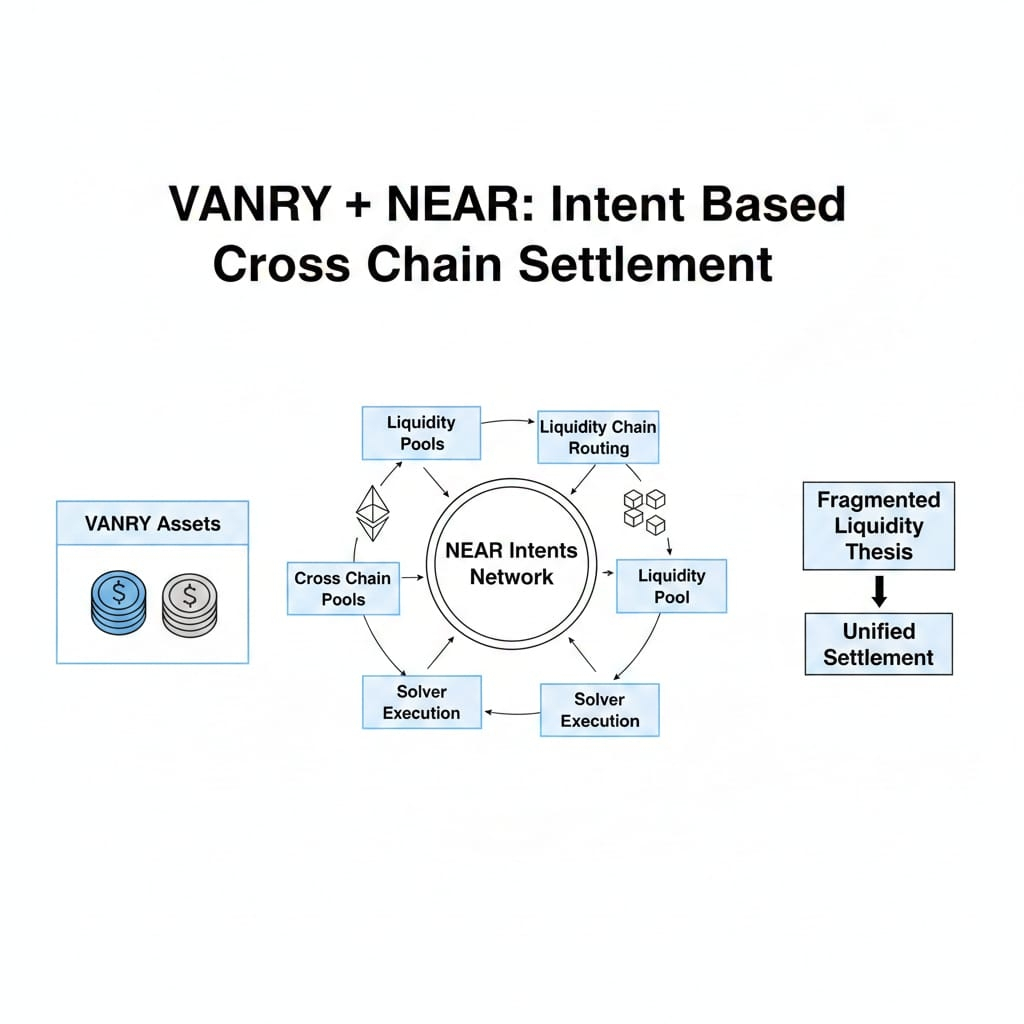
When I look at Vanar Chain, I don’t see just another Layer 1 trying to compete on speed charts or technical benchmarks. What I see is an attempt to answer a much more uncomfortable question: why hasn’t blockchain naturally fit into everyday digital life yet?
For years, we’ve talked about mass adoption as if it’s just around the corner. But if I’m honest, most people still don’t wake up wanting to use a blockchain. They want to play games, connect with friends, discover content, or interact with brands they care about. Blockchain is rarely the goal. It’s supposed to be the invisible layer underneath.
That’s where the real tension sits.
The Core Problem
The gap isn’t about technology being weak. It’s about technology being misaligned with behavior.
Most blockchain systems were built during a time when decentralization and financial experimentation were the priority. That shaped everything — from how wallets work to how tokens are distributed. But when you try to place those same systems into gaming, entertainment, or brand experiences, friction appears.
Users don’t want to study tokenomics before they play a game. Brands don’t want to rebuild infrastructure just to test a digital campaign. Developers don’t want to spend months stitching together fragmented tools before they can even focus on user experience.
The industry often expects people to adapt to the technology. But in the real world, technology that wins adapts to people.
Where Current Systems Struggle
I’ve noticed a pattern across many projects. They optimize for performance and decentralization — which are important — but they underestimate simplicity.
Onboarding still feels intimidating for newcomers. Managing wallets and private keys feels risky. Moving assets between chains feels uncertain. Even when everything works technically, it can feel mentally heavy.
There’s also fragmentation. One chain for gaming. Another for NFTs. Another for identity. Another for liquidity. Each piece works, but they don’t always speak the same language.
For mainstream users, that fragmentation isn’t exciting. It’s exhausting.
What Vanar Is Trying to Do Differently
What makes Vanar interesting to me is its starting point. Instead of asking, “How do we build the fastest chain?” it seems to ask, “How do we make blockchain make sense in industries people already care about?”
Gaming. Virtual worlds. AI-powered tools. Brand engagement.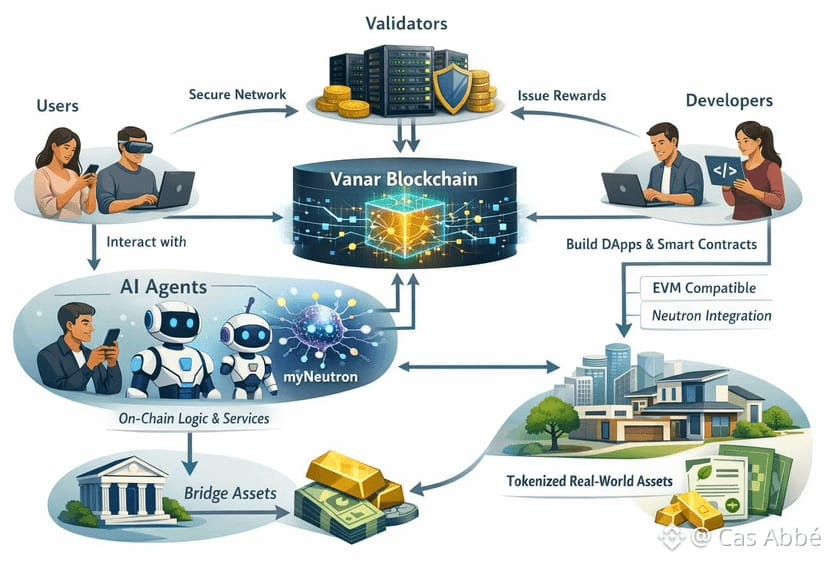
When you build around those sectors from the beginning, your design priorities shift. You start thinking about retention, smooth onboarding, cross-platform experiences, and consistent incentives — not just throughput numbers.
The VANRY token, in that context, isn’t positioned as a speculative centerpiece. It’s meant to connect different parts of the ecosystem — games, virtual spaces, brand programs — into one economic loop.
That changes the mindset. The chain isn’t the product. The experiences are.
What This Means in Practice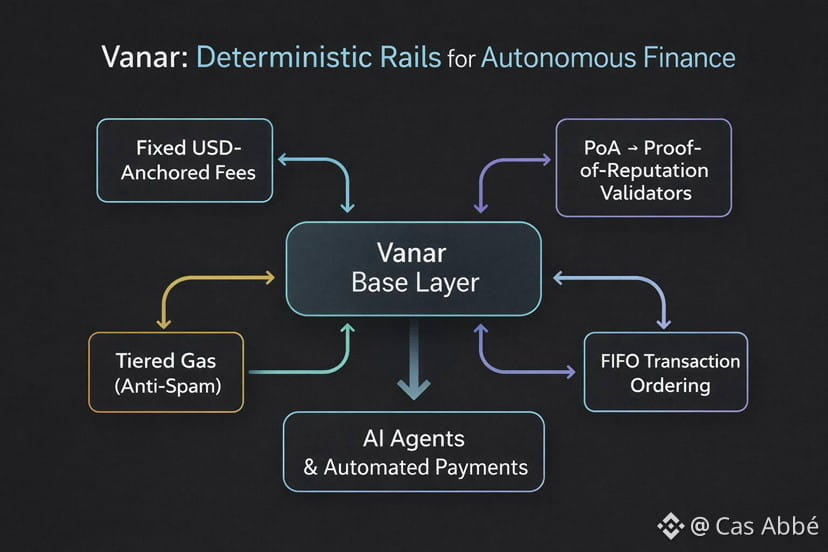
If this approach works, the impact feels practical rather than dramatic.
For users, it could mean interacting with digital ownership without constantly thinking about it. Playing a game, earning something meaningful, moving between virtual spaces — all without feeling like you’re navigating a financial system.
For brands, it lowers the barrier to experimentation. Instead of building isolated blockchain campaigns, they could plug into an ecosystem already designed for entertainment and engagement.
For developers, it offers alignment. Building on infrastructure that understands gaming and media reduces the need to force-fit tools into use cases they weren’t designed for.
It’s less about disruption and more about integration.
The Real Questions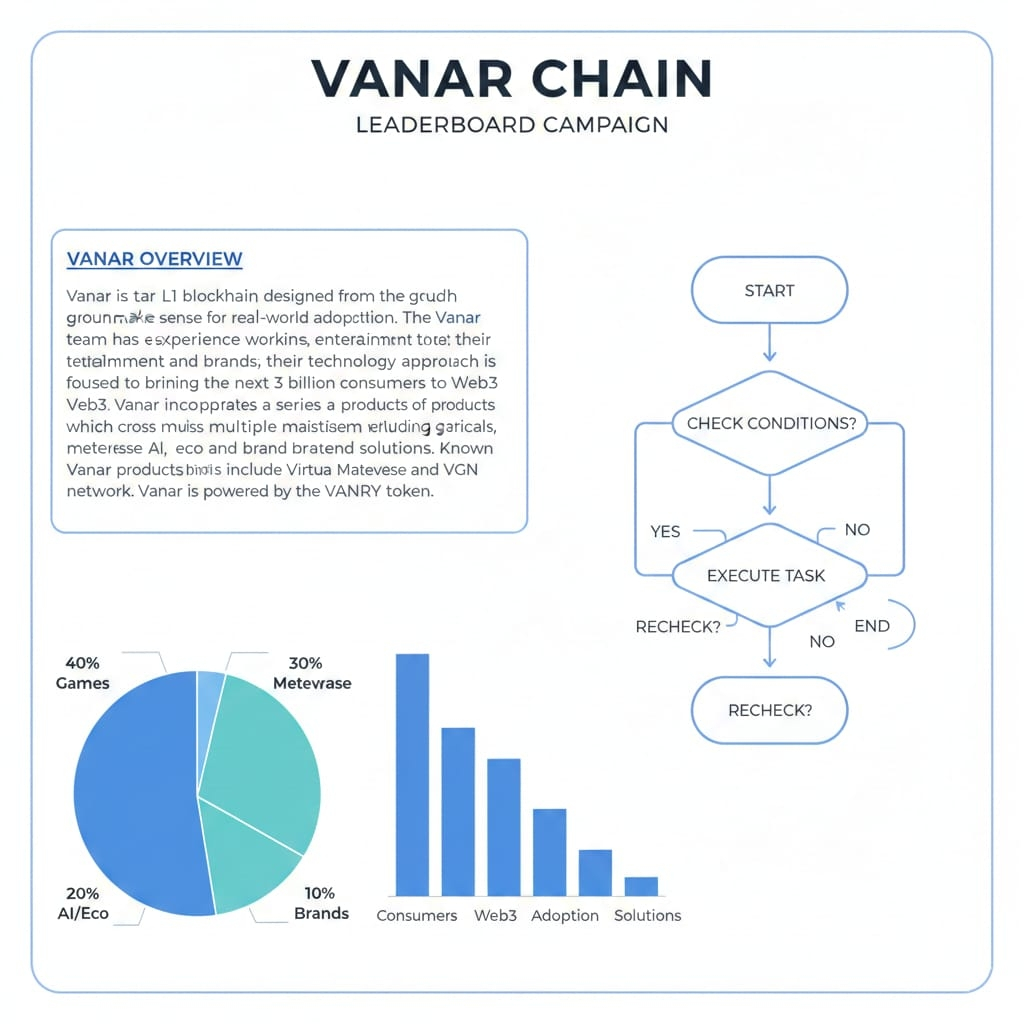
Of course, intention isn’t execution.
A multi-vertical ecosystem is ambitious. Balancing gaming, AI, metaverse environments, and brand partnerships requires coordination and consistent quality. If one part underdelivers, it affects the whole.
There’s also the classic challenge of any Layer 1: network effects. Developers go where users are. Users go where experiences are compelling. Breaking into that cycle takes more than infrastructure — it takes products people genuinely enjoy.
And then there’s sustainability. Token economies can either support ecosystems or distort them. Getting that balance right isn’t simple.
The Bigger Picture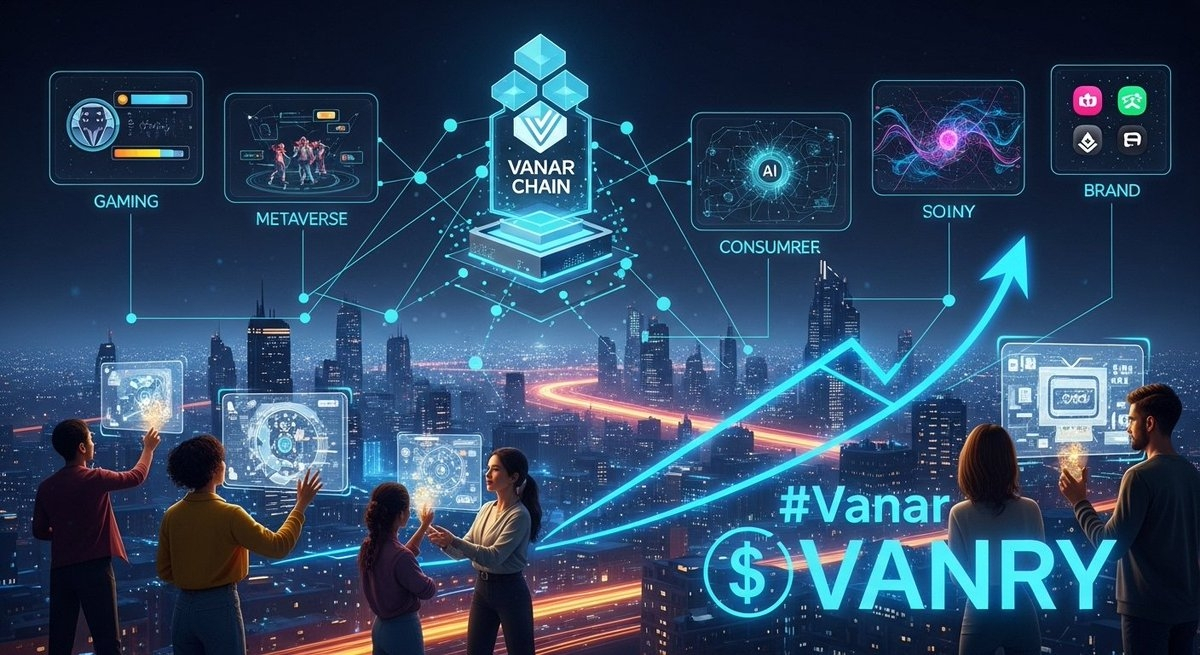
What I find most meaningful here isn’t whether Vanar becomes dominant. It’s what this direction represents.
The next evolution of blockchain probably won’t be about louder claims or bigger numbers. It will be about subtlety. About systems that fit naturally into digital life without demanding attention.
If blockchain is going to reach billions of people, it won’t happen because they suddenly become crypto enthusiasts. It will happen because the technology becomes invisible — woven into games, digital identities, brand interactions, and AI-driven experiences in a way that feels normal.
That’s the real experiment.
And whether Vanar succeeds or not, the attempt to design around human behavior instead of pure technical metrics feels like a step in a more mature direction.