
@Vanarchain is a Layer 1 blockchain built with a specific objective: to reduce the gap between experimental blockchain technology and real world consumer applications. Many existing blockchains were designed primarily for financial use cases or developer experimentation, which often results in systems that are difficult for mainstream users to interact with. Vanar addresses this by focusing on infrastructure that supports familiar digital experiences such as gaming, entertainment platforms, brand engagement, and emerging AI-driven services, without requiring users to understand blockchain mechanics.
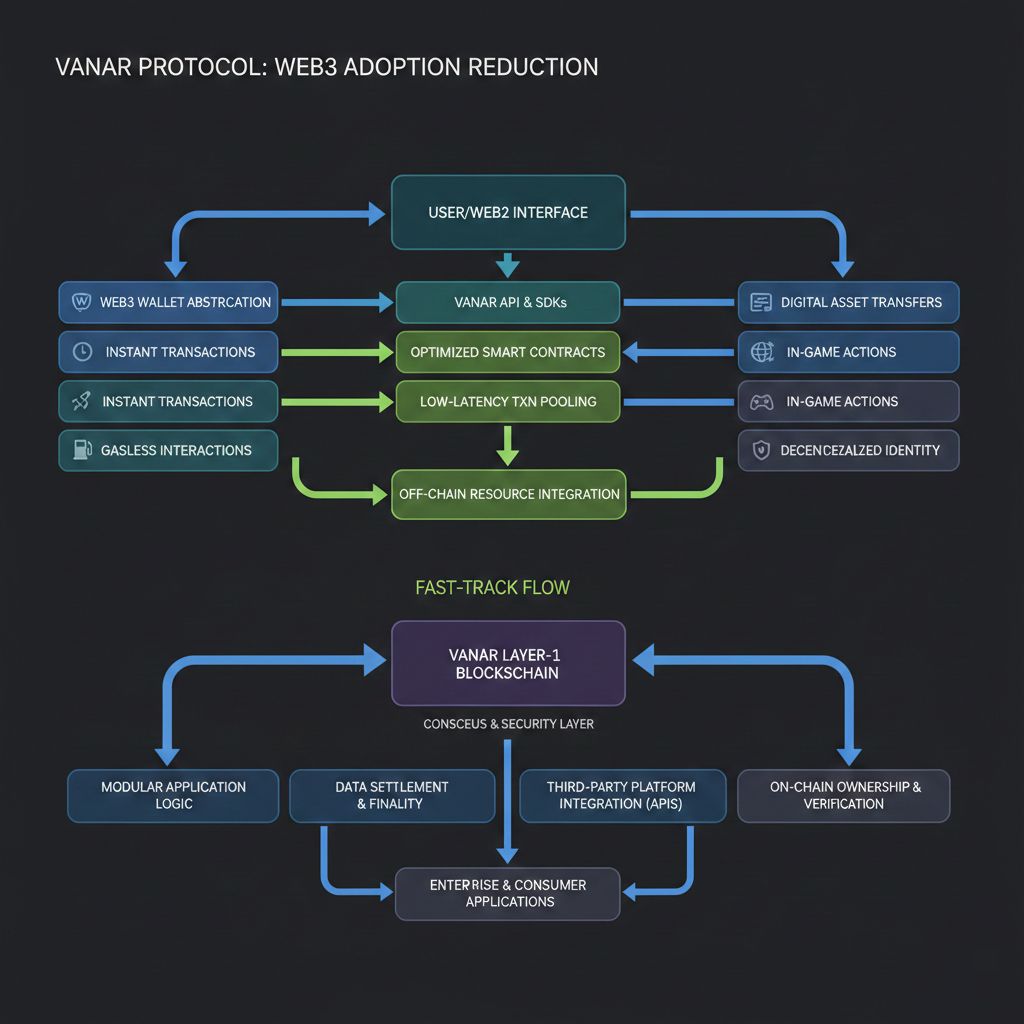
The core problem Vanar is trying to solve is adoption friction. In many Web3 systems, users must manage wallets, private keys, gas fees, and unfamiliar transaction flows. For businesses and developers, deploying applications on chain can introduce performance limits, unpredictable costs, and security trade offs that are unacceptable for consumer-scale products. Vanar’s design philosophy treats blockchain as a background infrastructure layer rather than a visible product, allowing applications to feel similar to traditional Web2 services while still benefiting from decentralization and on chain ownership.
At a high level, Vanar operates as a Layer 1 blockchain that provides a base settlement layer for applications. Transactions are validated by the network and recorded on chain, while applications interact with this layer through smart contracts and APIs. The system is designed to handle frequent interactions, such as in game actions or digital asset transfers, without exposing users to complex technical steps. From the user’s perspective, actions feel instant and familiar, while the blockchain quietly handles ownership, verification, and settlement behind the scenes.
Key functional features of Vanar focus on performance, usability, and interoperability. The network is optimized for high transaction throughput and low latency, which is essential for gaming and interactive media. Smart contract execution is designed to be predictable and efficient, reducing the risk of unexpected behavior for developers. The system also supports integration with existing digital platforms, allowing brands and content providers to adopt blockchain features incrementally rather than rebuilding entire products from scratch.
From an architectural standpoint, Vanar emphasizes a modular design. Core consensus and security are handled at the base layer, while application-specific logic can be built on top without affecting network stability. This separation allows the network to evolve over time without breaking deployed applications. Compatibility with standard blockchain development tools further reduces onboarding friction for teams already familiar with smart contract development.
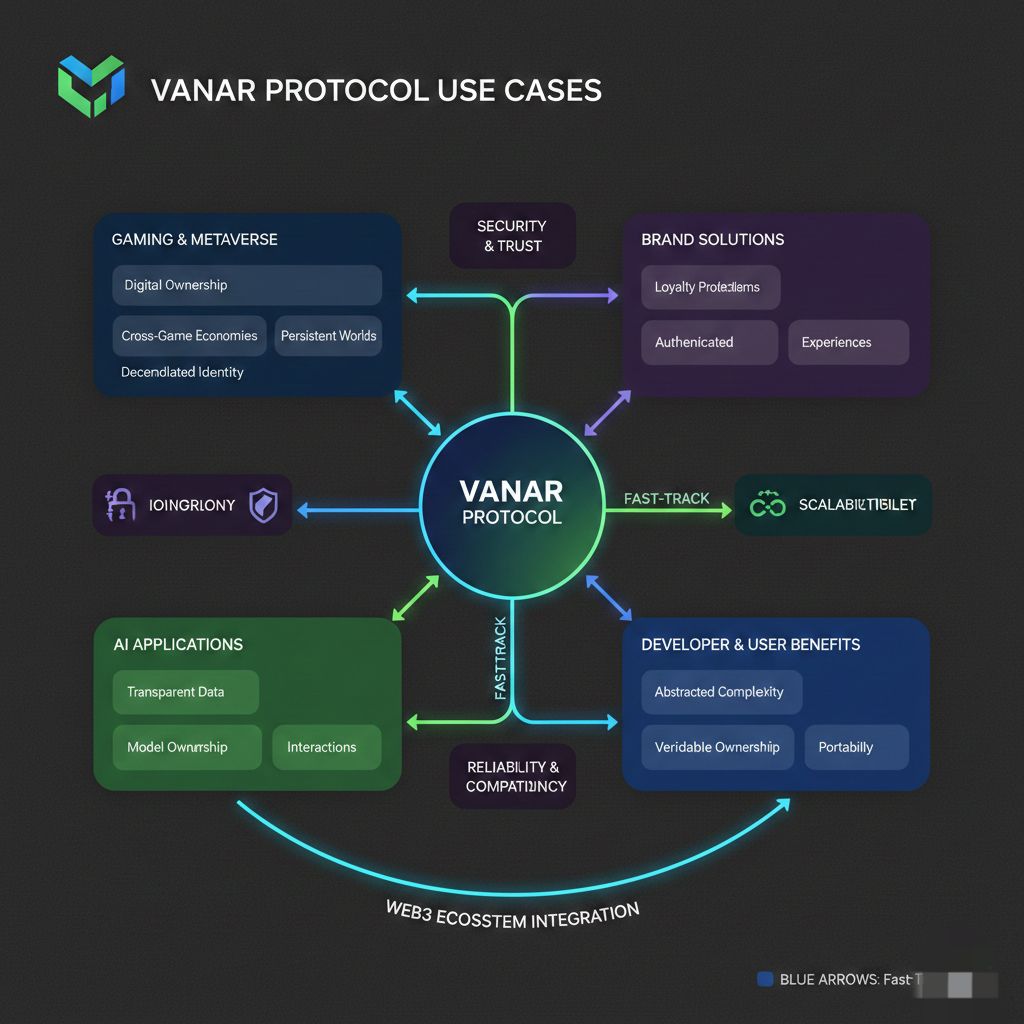
Vanar’s use cases span multiple industries because its infrastructure is not tied to a single application type. In gaming, it enables true digital ownership of in game assets and cross game economies without sacrificing performance. In metaverse environments, it supports persistent virtual worlds where identities and assets exist independently of any single platform. Brand solutions can use Vanar to manage digital collectibles, loyalty programs, and authenticated digital experiences. AI related applications can rely on the network for transparent data usage, model ownership tracking, or automated on-chain interactions between services.
From a developer perspective, Vanar is useful because it abstracts many blockchain complexities while retaining control over logic and security. Developers can focus on user experience and application design rather than transaction optimization or network instability. For users, the benefits are mostly invisible but meaningful. They gain verifiable ownership, transparency, and portability of digital assets without needing deep knowledge of blockchain systems.
Security and trust are addressed through standard blockchain principles such as decentralized validation, cryptographic verification, and immutable records. By keeping critical state changes on chain, Vanar reduces reliance on centralized servers that can be altered or compromised. Reliability is supported by network-level redundancy and consensus mechanisms designed to resist single points of failure.
Scalability is a central consideration in Vanar’s design. The network aims to support large numbers of users and frequent interactions without congestion. Compatibility with broader Web3 ecosystems allows assets and data to move across networks when needed, reducing isolation and increasing long term utility. This approach helps future proof applications as the wider blockchain landscape continues to evolve.
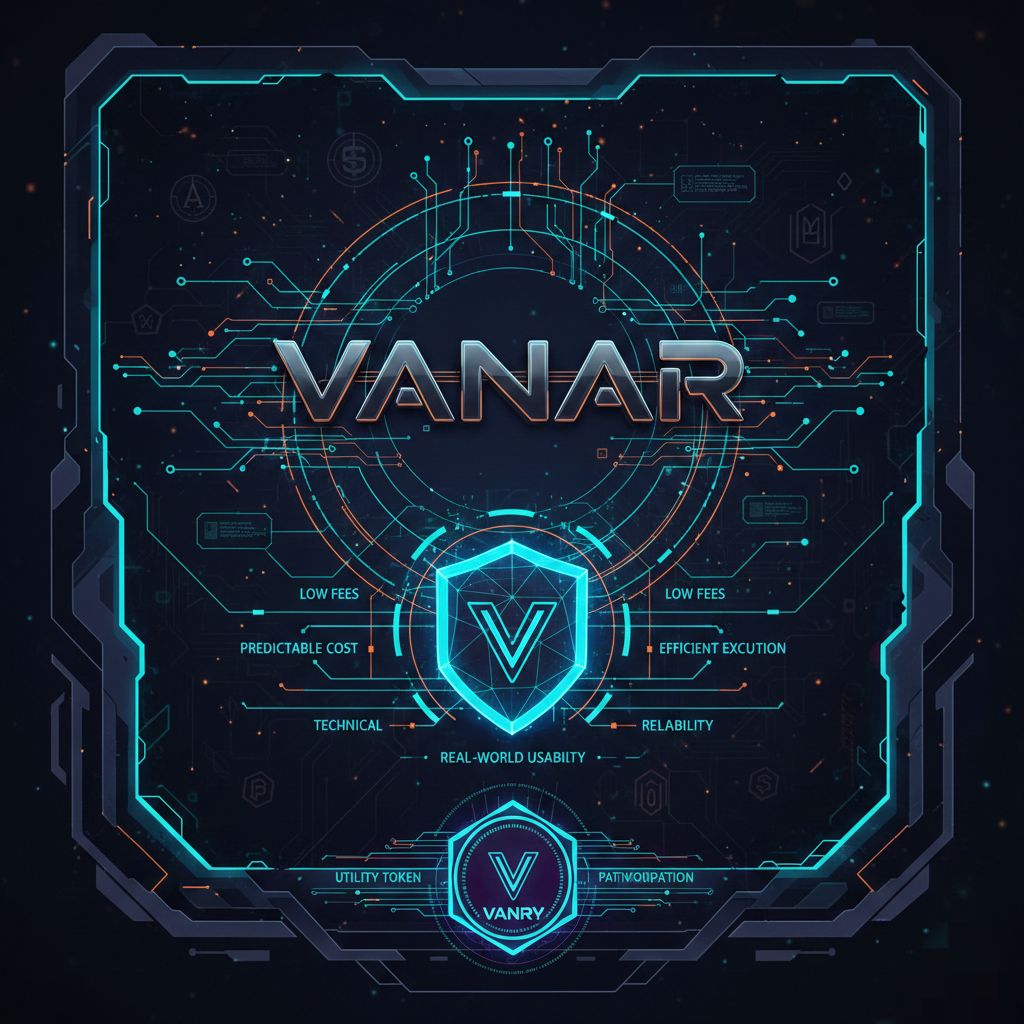
Cost efficiency and performance are balanced to meet consumer expectations. Transaction fees are designed to remain low and predictable, which is critical for applications where users interact frequently. Efficient execution reduces computational waste, benefiting both developers and network participants.
In the long term, Vanar’s relevance depends on its ability to maintain technical reliability while adapting to a competitive and rapidly changing market. Many Layer 1 blockchains compete on speed or decentralization alone, but Vanar’s challenge is to sustain its focus on real world usability as standards and user expectations evolve. If it continues to align infrastructure design with practical application needs, Vanar can remain a meaningful platform for consumer focused Web3 development, even as the underlying technology becomes increasingly invisible to end users.
Vanar is powered by the VANRY token, which functions as a utility component within the network rather than as a speculative focus. Its role is to support network operations and participation, reinforcing the broader goal of building a blockchain that serves as dependable infrastructure rather than a standalone product.
