

People in the blockchain world talk a lot about how fast things are, but what really counts is how well a network does when lots of people are using it at the same time, especially over long distances. That's where Fogo comes in. It’s not just about being a little bit faster; it's designed to get rid of the things that physically slow down most blockchains.
Fogo is a Layer 1 network that aims to give me quick response times, fast transaction confirmations, and steady performance. It uses the Solana Virtual Machine, so coders can easily bring over their existing tools and apps. But it also makes stuff better where delays usually happen: how far info has to travel and how well validators are doing. One of Fogo's main ideas is easy to understand: the internet has limits. It takes time for data to get around the world, and that slows things down. So, instead of ignoring that, Fogo works around it. It has consensus zones in certain areas so validators working together are closer to each other physically. This cuts down on communication time and helps blocks confirm faster.
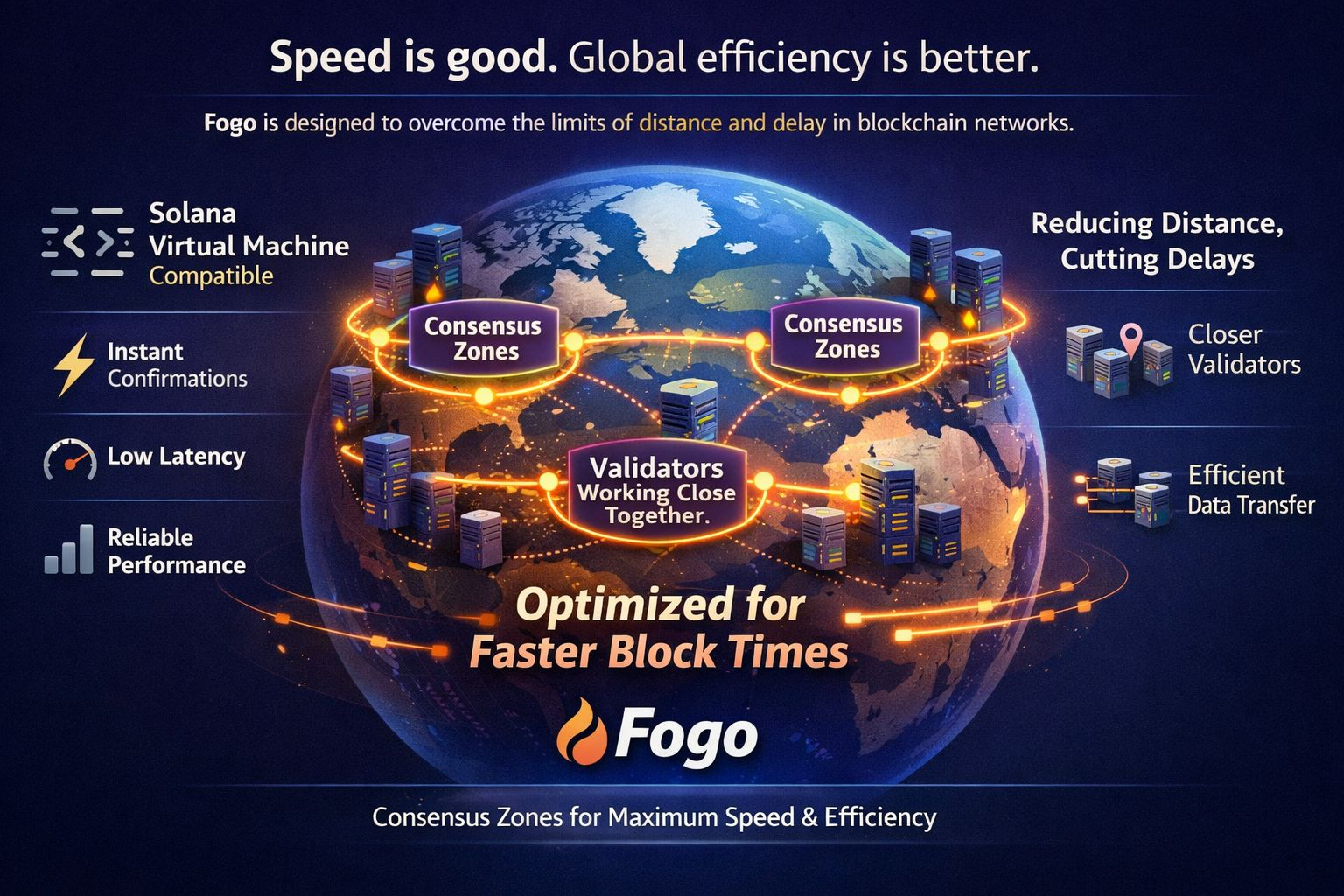
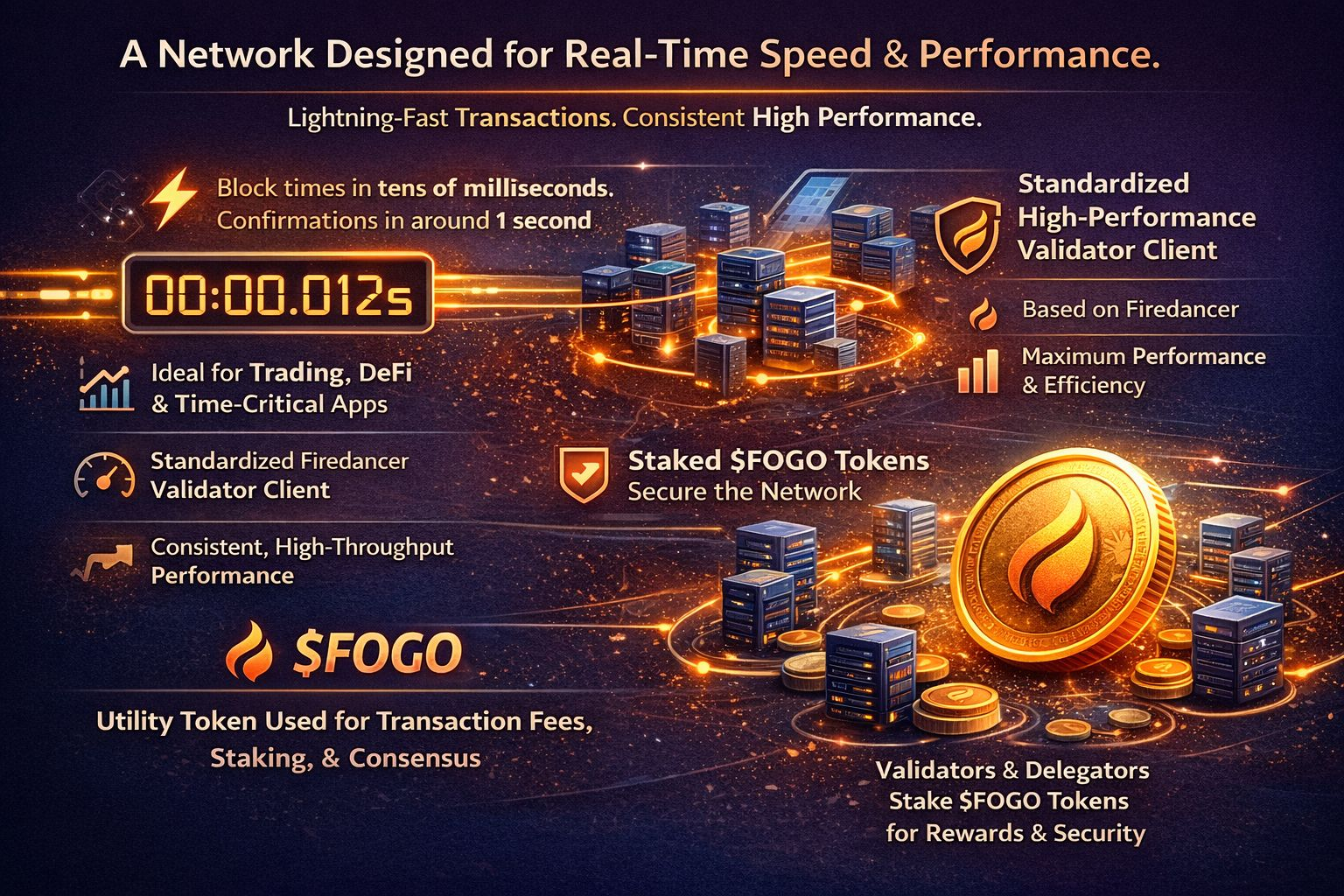
What I get is a network that feels like it's happening in real time. Transactions go through fast, and users aren't left waiting like they usually are on other chains. According to the project info, Fogo wants block times of around tens of milliseconds and confirmations in about one second. This kind of speed is super important for trading, DeFi, and anything where timing is key.
Another big thing is how it makes sure performance stays high. A lot of networks let validators use different software or hardware, which can cause problems if some are slower than others. Fogo does things differently by using a standard, high-performance validator client based on Fire dancer. This makes performance more consistent and lets the network run closer to its max. The $FOGO token is what makes the whole thing run. It's used to pay transaction fees and keep the network secure through staking. Validators and delegators stake tokens to help with consensus and earn stuff. It’s not an ownership or equity thing. It's a utility token that gives I access to network stuff and helps keep the protocol safe.
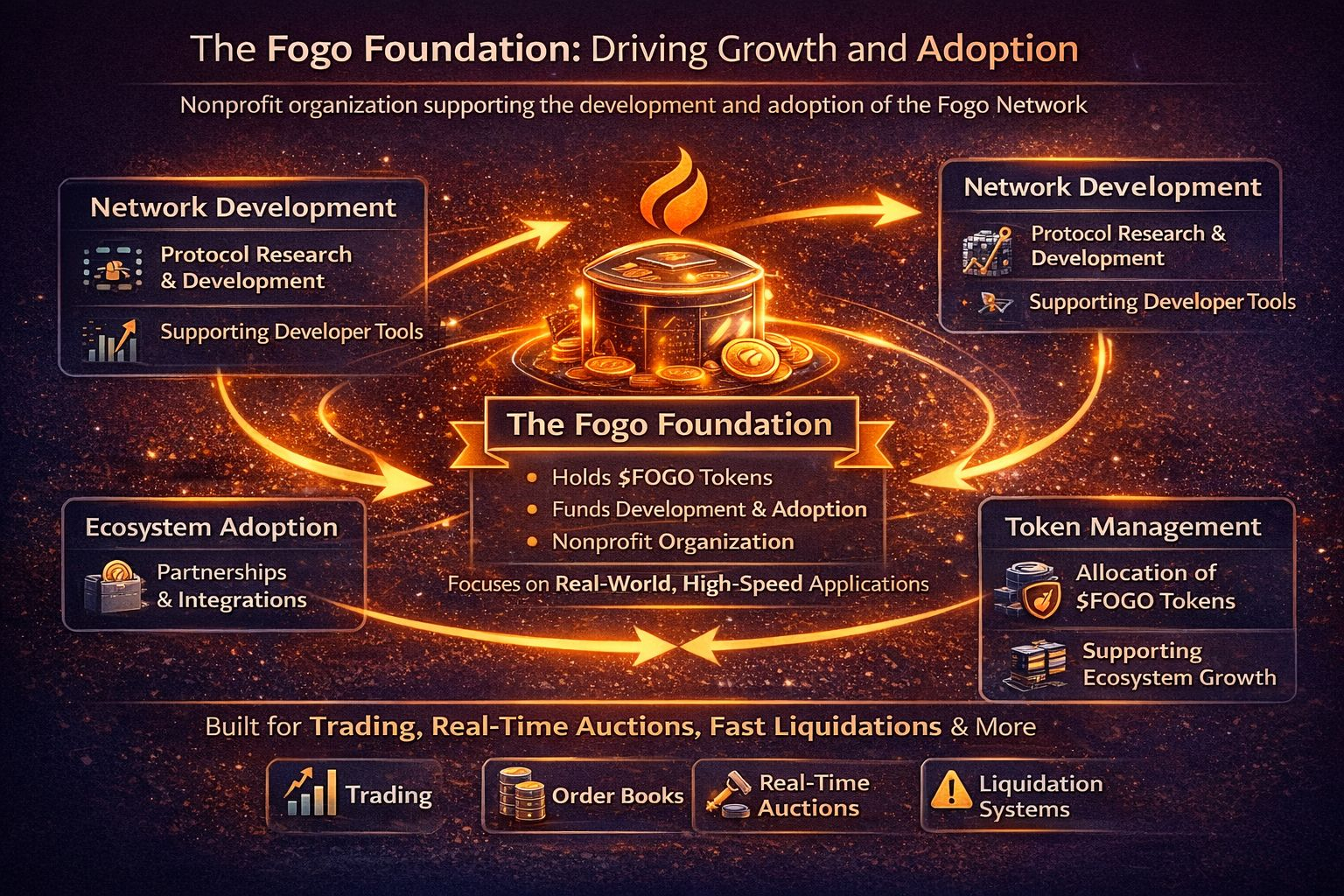
The Fogo Foundation supports the system, focusing on development, adoption, and making sure it grows over time. It’s a nonprofit and holds some of the tokens to help the network and ecosystem grow. A big plus is that it's focused on actual uses. Fogo is made for fast-paced stuff like trading, order books, real-time auctions, and precise liquidation systems.
These are things that slower blockchains just can't handle. The design also makes things easier for users. Stuff like Fogo Sessions lets I use apps without having to sign every transaction or pay gas each time. This makes it feel more like using regular web apps while still keeping my stuff safe. Fogo isn't trying to do everything at once. Instead, it's focusing on one thing: making blockchain fast enough for real-world money stuff.
By dealing with network physics, validator performance, and user experience all together, it sets the stage for high-speed decentralized systems. If you are curious about the future of real-time DeFi and trading, the way Fogo is set up is worth checking out. The combo of localized consensus, a high-performance client, and a token that's actually useful shows a clear direction.
Follow @Fogo Official for updates on development and how the ecosystem is growing. The network is powered by $FOGO and keeps pushing the limits of how well decentralized systems can perform. #fogo
