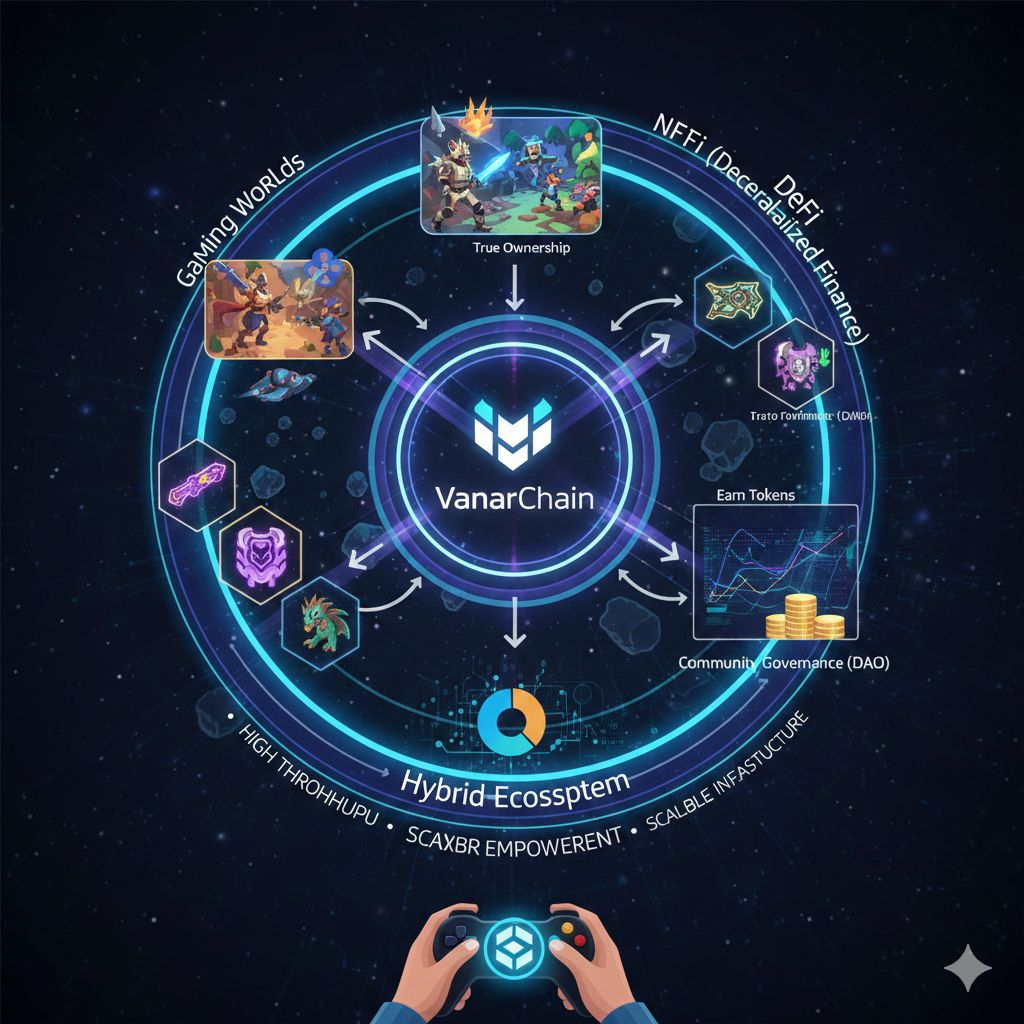
@Vanarchain has emerged as one of the most ambitious projects aiming to fuse immersive gaming with the transformational potential of blockchain. As the industry increasingly gravitates toward play to earn models, cross platform interoperability, and tokenized digital economies, VanarChain’s strategy represents both a bold vision and a reflection of broader trends reshaping how players engage with virtual worlds.
At its core, VanarChain seeks to redefine the gamer experience by integrating blockchain not as an add-on, but as a foundational layer. Traditional games have long struggled with issues like centralized asset control, limited ownership rights, and opaque in-game economics. By harnessing decentralized ledger technology, VanarChain empowers players with true asset ownership, transparent marketplaces, and economic incentives rooted in community participation.
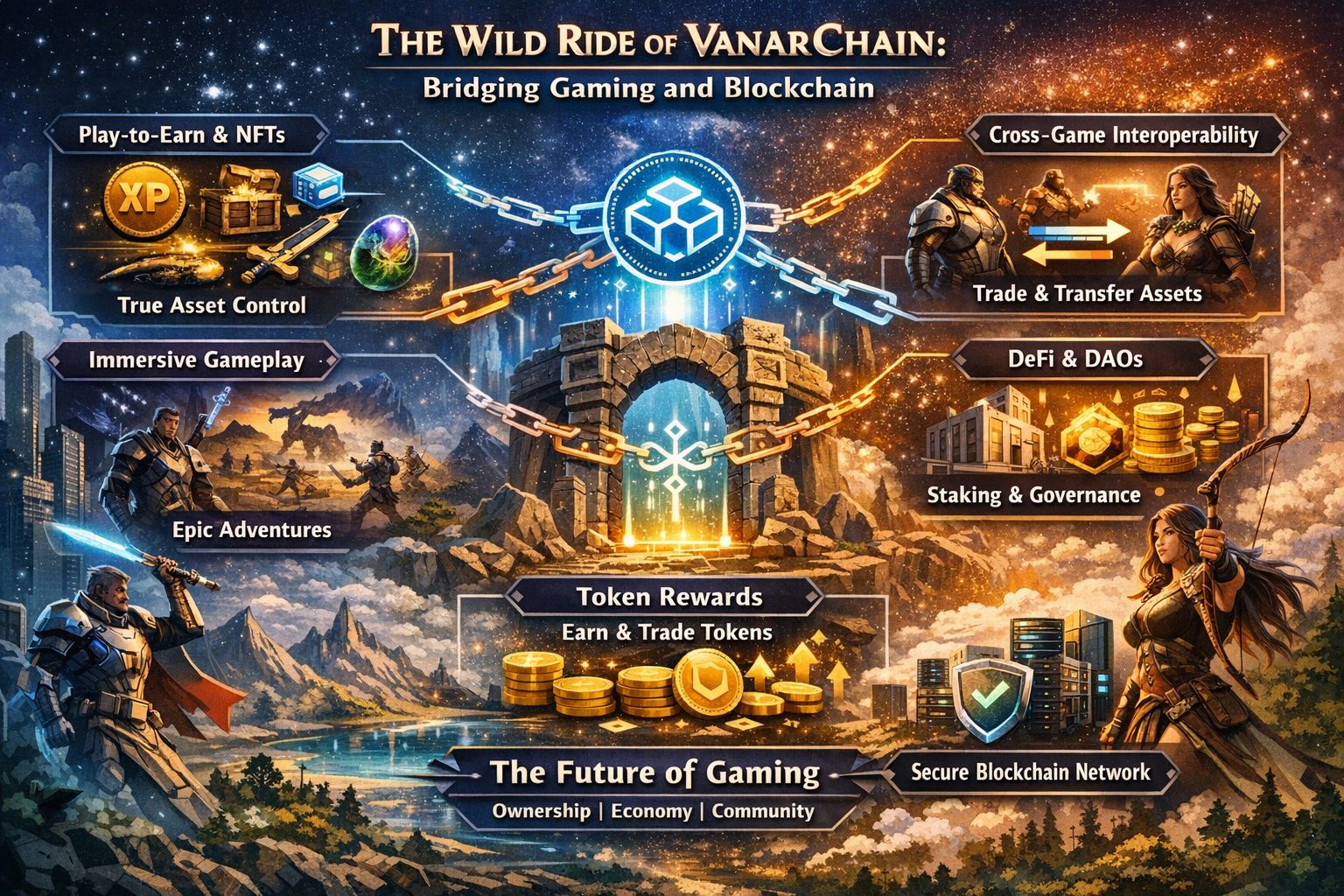
One of the distinctive features of VanarChain is its hybrid ecosystem a dynamic environment where gaming, NFTs, and decentralized finance (DeFi) converge. Within this ecosystem, players can earn native tokens through gameplay achievements, contribute to governance via decentralized autonomous organizations (DAOs), and trade unique digital assets on open markets.
This combination creates a self-sustaining economy that extends far beyond the traditional boundaries of single-title platforms.
Unlike many early blockchain gaming initiatives that prioritized speculative tokenomics over gameplay quality, VanarChain places a strong emphasis on rich, engaging mechanics and narrative depth.
Its suite of titles spans multiple genres, each designed to appeal to diverse player demographics while maintaining a unified economic framework.
Whether navigating strategic combat arenas, exploring expansive open worlds, or engaging in cooperative quests, players encounter seamless integration of blockchain features that enhance not disrupt the gaming experience.
Technologically, VanarChain leverages a customized consensus mechanism optimized for high throughput and low latency—critical factors in real-time gaming environments. This infrastructure facilitates rapid transactions, minimal gas fees, and scalable performance that supports thousands of concurrent users without compromising decentralization. Moreover, interoperability protocols enable cross-game asset transfer, meaning that rare items, skins, or rewards earned in one title can retain value across the broader ecosystem.
However, the path for VanarChain has not been without challenges. Like many blockchain gaming ventures, it has faced skepticism from traditional gaming communities wary of overly complex token models and financialization of gameplay. Regulatory uncertainty in key markets has also required careful navigation to ensure compliance while preserving decentralization principles. Market volatility in crypto assets further underscores the need for sustainable token utility rather than short-term speculation.
Despite these hurdles, VanarChain’s momentum reflects a growing appetite for next-generation digital experiences that empower users instead of confining them to rigid corporate structures. Strategic partnerships with established gaming studios, participation in major industry events, and iterative community-driven development have all contributed to its rising profile.
Looking ahead, the success of #VanarChain will depend on its ability to balance innovation with accessibility, ensuring that blockchain elements enhance rather than overshadow core gameplay. If it can maintain that equilibrium, VanarChain stands poised to be a defining force in the evolution of gamingone where ownership, creativity, and community converge in a decentralized digital frontier. #vanar $VANRY