
In a world where milliseconds decide profits, Fogo steps in like a performance engine built for decentralized finance. This isn’t just another Layer 1 blockchain chasing hype. Fogo is designed with one mission in mind: make on-chain trading feel as fast and seamless as centralized exchanges, without sacrificing decentralization.
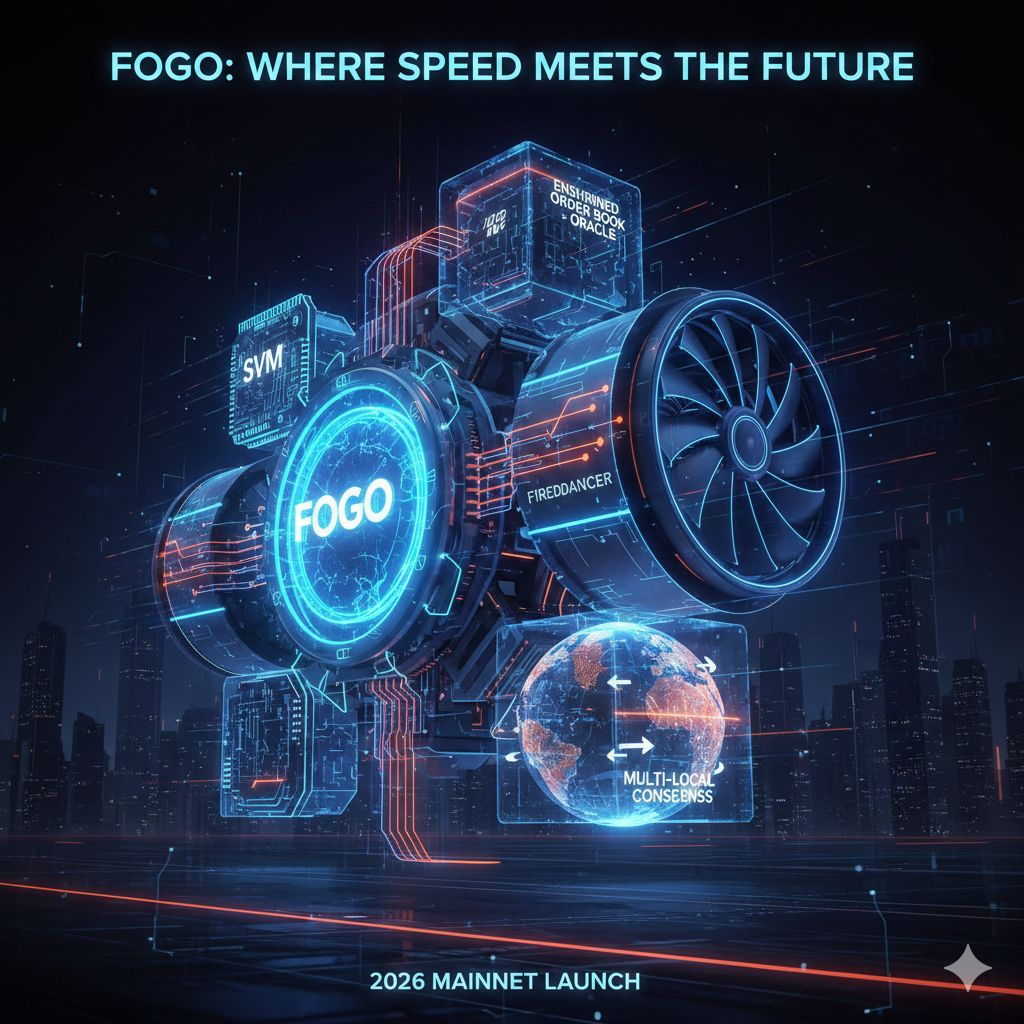
At its core, Fogo runs on the architecture of the Solana Virtual Machine, often referred to as SVM. The SVM is known for its parallel transaction processing, meaning it can handle multiple smart contracts at the same time instead of queuing them one by one. This multi-threaded execution unlocks serious scalability and keeps fees predictable. Because Fogo is fully compatible at the SVM layer, developers building on Solana can migrate their tools, programs, and infrastructure without rewriting everything. That’s a massive advantage from day one.
But Fogo does not stop at compatibility. It sharpens the edge.
One of its biggest performance drivers is integration with Firedancer, the high-performance validator client originally engineered by Jump Crypto. Firedancer is built for extreme throughput and low latency, targeting sub-second finality and the ability to process enormous transaction volumes without choking under pressure. For traders, that translates to smoother execution and reduced congestion during peak activity.
Fogo also takes a bold step by embedding a native limit order book and oracle system directly into the protocol. Instead of relying heavily on external infrastructure, these components are “enshrined” at the base layer. This design reduces fragmentation and aims to deliver instant, exchange-like execution directly on chain.
Then comes its multi-local consensus model. Validators are grouped in geographically optimized clusters to reduce latency. Transactions are verified regionally at high speed before being reconciled across the broader network. The result is settlement times measured in milliseconds rather than seconds. To prevent centralization risks, Fogo rotates these zones dynamically across epochs, balancing speed with resilience.
After launching its public mainnet in early 2026, Fogo demonstrated serious performance during its earlier testnet phase, processing tens of millions of transactions while maintaining ultra-fast block times and minimal fees. The native token, FOGO, powers gas payments, staking, and governance across the ecosystem.
Looking ahead, Fogo’s real test will be ecosystem traction. High performance alone is not enough. Sustained trading volume, DeFi innovation, developer adoption, and healthy validator distribution will define its long-term success. The team has signaled a community-focused growth strategy, including incentives and ecosystem rewards aimed at early supporters.
If blockchain infrastructure is the racetrack, Fogo is building for speed first. The question now is not whether it can run fast. It is whether the market will race with it.