
What is Bitcoin ?
Bitcoin can be described as a digital currency designed for the internet. Introduced in 2008 and officially launched in 2009, it became the first cryptocurrency ever created. Its major innovation lies in the ability to transfer value directly from one person to another, without going through a bank or other intermediary.
The term "Bitcoin" (with a capital B) generally refers to the underlying network or protocol, while "bitcoin" (with a lowercase b) refers to the monetary unit itself. On exchange platforms, it is identified by the symbol BTC.
Unlike traditional currencies such as the US dollar or the euro, which are issued and regulated by governments, Bitcoin operates in a decentralized manner. No central authority controls it. It relies on a peer-to-peer network maintained by participants worldwide.
One of Bitcoin's main advantages is financial sovereignty. Users have direct control over their funds and can transfer money internationally at any time. Furthermore, the system prevents double-spending: a single bitcoin cannot be spent twice.
How does Bitcoin work ?
At the heart of Bitcoin lies blockchain technology. A blockchain can be compared to a public digital ledger, accessible to everyone, but immutable after the fact.
Each transaction is grouped into a "block." Each block is cryptographically linked to the previous one, forming a continuous chain. Copies of this ledger are stored on thousands of computers, called nodes, around the world.
Because many independent computers maintain the same record, modifying past data would require overloading the entire network, an operation designed to be virtually impossible. If a participant attempts to manipulate transaction data, the other nodes reject the invalid changes.
The Bitcoin software is open source: anyone can view the code or participate in the network by running the software.
Key Features:
Decentralization: The ledger is managed by a distributed network, not a central institution.
Immutability: Once confirmed and added to the blockchain, transactions cannot be altered or deleted.
Security: Cryptographic mechanisms protect transactions, and adding new blocks requires significant computing power through a process called mining.
How a Bitcoin Transaction Works ?
Technically, Bitcoin doesn't rely on traditional account balances. Instead, it uses a system called UTXO (Unspent Transaction Output), which tracks individual transaction outputs as separate digital coins. For simplicity, it can be described as a balance transfer.
Let's say Alice wants to send 1 BTC to Bob.
The blockchain is updated to reflect that Alice's holdings decrease by 1 BTC and Bob's holdings increase by 1 BTC. This is equivalent to publicly recording the statement: "Alice transferred 1 Bitcoin to Bob."
Later, if Bob sends this bitcoin to Carol, the network verifies that Bob received it from Alice before approving the new transaction. All nodes remain synchronized because they constantly validate and communicate transaction data.
Bitcoin Mining
Mining is the mechanism that secures the network and puts new bitcoins into circulation.

When transactions are broadcast, miners group them into blocks. To add a block to the blockchain, miners must solve a cryptographic problem. The first miner to solve it earns the right to add the block and receives newly created bitcoins as a reward.
This block reward is the only way new bitcoins are put into circulation.
However, the total supply of bitcoins is capped at 21 million units. Once this limit is reached—around 2140—miners will no longer receive new bitcoins as a reward. They will then be compensated solely through transaction fees paid by users.
Proof of Work and Energy Consumption

Bitcoin relies on a consensus mechanism called Proof of Work (PoW). This mechanism is fundamental to the mining process and prevents double-spending.
With PoW, miners compete to solve complex mathematical problems. Solving these problems requires significant computing resources, making block creation expensive. However, verifying a correct solution is simple for the network to calculate.
If a miner attempts to submit an invalid block, the network immediately rejects it, and the miner cannot recover the resources spent.
What is Bitcoin used for ?
Bitcoin primarily serves two functions:
a digital payment system
a store of value.
It allows you to buy goods and services online or in stores. A growing number of businesses, from e-commerce platforms to brick-and-mortar stores, are accepting Bitcoin payments.
While the basic Bitcoin network (Layer 1) can sometimes be slower or more expensive for small transactions, Layer 2 solutions, such as the Lightning Network, have been developed to improve speed and reduce fees.
From an investment perspective, many people buy BTC anticipating an increase in its value. Although the price of Bitcoin can be very volatile, some investors see it as a diversification tool or a potential hedge against inflation in the long term.
Who created Bitcoin ?
Bitcoin first appeared publicly in October 2008, when an individual or group using the pseudonym Satoshi Nakamoto published a white paper titled "Bitcoin: A Peer-to-Peer Electronic Payment System." The document described a decentralized digital currency system, independent of banks and governments.
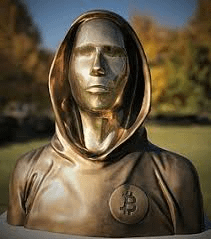
In January 2009, the network was officially launched with the mining of the Genesis block. Shortly after, the first recorded transaction took place between Satoshi Nakamoto and programmer Hal Finney, involving ten bitcoins.
As the project gained popularity, participation in the network increased. Initially, Bitcoin attracted a small group of tech enthusiasts intrigued by its decentralized design.
A major milestone was reached on May 22, 2010, when programmer Laszlo Hanyecz paid 10,000 bitcoins for two pizzas. This event, now known as Bitcoin Pizza Day, is commemorated every year on May 22nd as the first documented real-world Bitcoin transaction.
The Mystery of Satoshi Nakamoto
The true identity of Satoshi Nakamoto remains unknown. His name is of Japanese origin, but his fluency in English has fueled speculation about possible connections to English-speaking countries. Despite numerous investigations and theories, no confirmed identification has emerged.
Did Satoshi invent the blockchain?
Bitcoin did not originate from entirely new ideas. It incorporated several existing technologies, including earlier concepts related to blockchain-like data structures.
In the early 1990s, Stuart Haber and W. Scott Stornetta proposed a cryptographic system for tamper-proof timestamping documents. Bitcoin also incorporates Merkle trees, a concept introduced by Ralph Merkle, which allows for efficient and secure data verification.
Bitcoin's true innovation was combining these established technologies within a functional decentralized payment system, capable of solving the double-spending problem without relying on a central authority.

Bitcoin's Supply and Halving
The maximum supply of Bitcoin is fixed at 21 million units. By January 2026, over 95% of these units had already been mined. However, producing the remaining supply will take over a century.
This slow issuance is due to events called "halvings," which occur approximately every four years. During a halving, the mining reward is reduced by half.
The last halving took place on April 19, 2024. The next one is expected around 2028.
Halvings are central to Bitcoin's economic model. They ensure that new bitcoins are put into circulation at a predictable and decreasing rate. This contrasts sharply with fiat currencies, which can be issued in unlimited quantities by central authorities.
Is Bitcoin safe?
Bitcoin presents both technological and market risks.
From a security perspective, users can be vulnerable to phishing attacks, where hackers use social engineering to obtain login credentials or private keys. Malware and ransomware attacks can also compromise devices and allow unauthorized access to wallets. In some ransomware cases, victims must pay a ransom in bitcoins to regain access to their encrypted files.
Because Bitcoin transactions are irreversible and not guaranteed by government institutions, it is the users' responsibility to protect their funds. Recommended precautions include using strong passwords, two-factor authentication, and offline storage solutions, such as hardware wallets that store private keys offline. It is also crucial to download software only from trusted sources.
Another risk lies in price volatility. Bitcoin's value can fluctuate considerably over short periods. While this creates opportunities, it also represents a significant risk for unprepared investors. Historically, volatility has tended to decrease as market liquidity improves and the asset matures.
Conclusion
Since its launch in 2009, Bitcoin has evolved from an experimental digital currency to a globally recognized financial asset, with increasingly numerous use cases and growing institutional participation.
Whether one wishes to use it for payments, short-term transactions, long-term investments, or simply to explore its technological foundations, Bitcoin represent a significant development in the evolution of digital finance.