

In the rapidly evolving world of finance, speed is everything. As markets grow and technology advances, traders, investors, and institutions need the ability to execute trades faster and with greater efficiency to stay competitive. Traditional finance systems, such as NASDAQ and high-frequency trading (HFT) desks, operate with remarkable speed, executing trades in microseconds and ensuring near-instant settlement, minimal slippage, and highly coordinated systems across global markets. However, while these systems have the advantage of decades of infrastructure and optimization, decentralized finance (DeFi), despite its revolutionary capabilities, has struggled to keep up due to inherent challenges like blockchain latency, MEV (miner extractable value) risks, high gas costs, and slower finality.
These issues in DeFi have hindered its adoption, particularly in institutional settings, where speed, reliability, and security are paramount. But now, there’s a game-changing solution on the horizon: Fogo Chain.
Fogo Chain: The Answer to DeFi’s Performance Challenges
At its core, Fogo is a high-performance Layer 1 blockchain built on the Solana Virtual Machine (SVM). This design choice mirrors the success of Ethereum’s own Virtual Machine (EVM), with Fogo focusing on addressing the performance issues that have traditionally plagued blockchain networks in the DeFi space. Unlike most blockchains, which struggle with latency, high costs, and sluggish transaction finality, Fogo aims to close the performance gap between decentralized and traditional financial systems, providing an execution speed akin to that of NASDAQ and centralized crypto exchanges (CEXs) such as Binance, but with the key advantages of decentralization and self-custody.
Fogo’s Vision: Bridging TradFi and DeFi
What truly sets Fogo apart is its ability to bring the speed of traditional finance (TradFi) and the openness of decentralized finance (DeFi) together in one seamless, high-performance blockchain. The founders, Douglas Colkitt and Robert Sagurton, who bring with them vast experience from Wall Street and the crypto infrastructure space, have built Fogo specifically to address the performance bottlenecks that have limited DeFi’s scalability and adoption.
By combining institutional trading expertise with cutting-edge blockchain technology, Fogo delivers TradFi-like execution speeds while maintaining the core principles of decentralization and composability. This innovation means that users can trade on-chain with the same level of efficiency and speed as they would on centralized exchanges or traditional markets, but without the risk of custody issues or the inherent downtime that often plagues centralized platforms.
Fogo’s vision is to enable decentralized trading ecosystems where traders, institutions, and retail users can experience real-time trading, akin to what’s offered by NASDAQ or other institutional platforms, but in a fully decentralized environment. With Fogo, there’s no longer a need to choose between the security and transparency of blockchain and the performance of traditional finance.
Key Features of Fogo
Solana Virtual Machine (SVM):
Fogo leverages the Solana Virtual Machine (SVM), the backbone of one of the most performant blockchains in the crypto space. SVM allows Fogo to handle high-throughput transactions, offering scalability and speed at levels that were once only achievable by centralized systems. This integration means that Fogo can offer low-latency, high-throughput trading, making it an attractive option for traders and institutions alike.Institutional-Grade Performance:
Fogo is not trying to be just another blockchain. Unlike many other DeFi chains that attempt to be jack-of-all-trades, Fogo focuses specifically on becoming the go-to platform for financial applications. It was built with performance in mind, ensuring that trading speeds match what’s seen on centralized exchanges like NASDAQ or Binance, while also delivering the transparency, decentralization, and self-custody features that have made DeFi so appealing.Decentralization Without Sacrificing Speed:
One of the biggest challenges facing decentralized networks is that they often struggle to scale while maintaining decentralization. However, Fogo’s architecture allows it to optimize performance without sacrificing the core principles of blockchain. This makes it possible to offer centralized exchange-like trading speeds while retaining security, openness, and trustlessness.Eliminating Custody Risks:
On centralized exchanges, users have to entrust their funds to the exchange, exposing them to risks like hacking or mismanagement. Fogo’s decentralized nature ensures that users retain full control over their assets, providing a level of security that centralized exchanges cannot offer. This means that traders can experience the same performance as they would on centralized exchanges but without the fear of losing custody of their funds.Enhanced Composability:
Composability refers to the ability of different DeFi protocols to work together seamlessly. With Fogo, developers can integrate their decentralized applications (dApps) with ease, knowing that the platform is built for high-performance use cases. Fogo’s architecture makes it possible for dApps to scale as their user base grows, while maintaining the same low-latency trading experience.
Real-World Impact of Fogo
While many blockchain projects claim to revolutionize the space, Fogo is grounded in a very practical mission: it aims to bridge the gap between TradFi and DeFi by combining speed with decentralization. This allows Fogo to unlock trillions of dollars in potential value, offering a solution that appeals not only to retail investors but also to large institutional players.
The real-world implications of Fogo’s innovation are immense. By offering NASDAQ-like speeds with DeFi’s openness, Fogo is positioning itself as the platform of choice for institutional traders, hedge funds, and asset managers who are looking to tap into the potential of blockchain technology without compromising on performance. Additionally, by solving blockchain latency issues, Fogo opens up new opportunities for high-frequency trading, derivatives markets, and liquidity provision — sectors that have long been out of reach for decentralized networks.
Fogo’s performance doesn’t just benefit institutions. Retail traders will also experience faster, more efficient trading, and the added benefit of retaining full custody of their assets. This makes Fogo a game-changer for anyone looking to trade in a decentralized ecosystem but with the speed and efficiency that has long been a hallmark of centralized platforms.
The Road Ahead
Fogo’s innovative technology is just the beginning. The team behind Fogo is already working on several strategic partnerships and real-world use cases to ensure that the network continues to evolve and scale. As blockchain technology becomes more ingrained in the financial system, Fogo is poised to play a crucial role in shaping the future of finance, offering a seamless experience where traditional financial systems and the decentralized world coexist and thrive together.
This is the future of finance — and with Fogo, that future is faster, more secure, and more decentralized than ever before. Don’t miss your chance to be part of this groundbreaking revolution.
Take Action Now
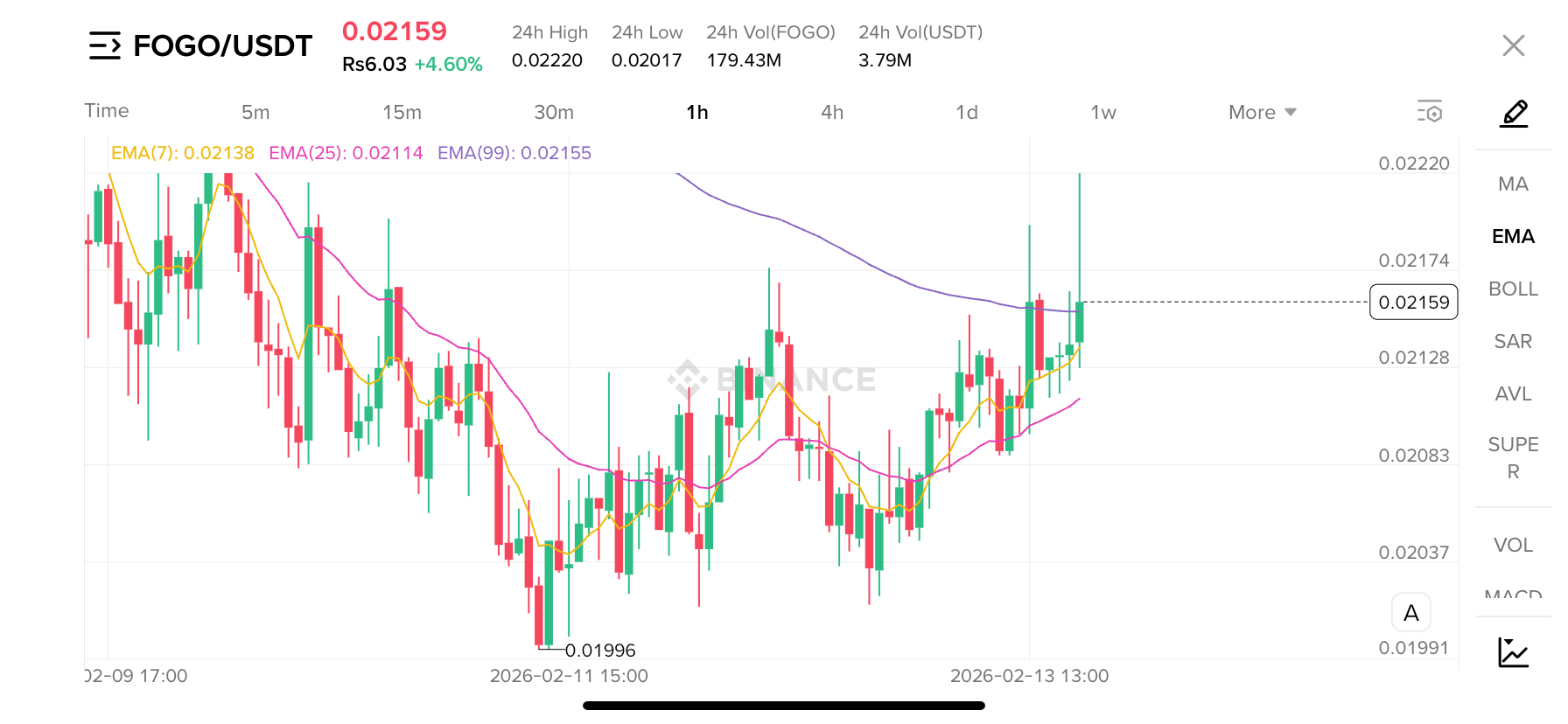
If you’re ready to be part of the blockchain revolution and experience institutional-grade performance with the power of decentralization, it’s time to invest in $FOGO . This is your opportunity to position yourself for future success.
Buy $FOGO now and take your portfolio to the next level.