
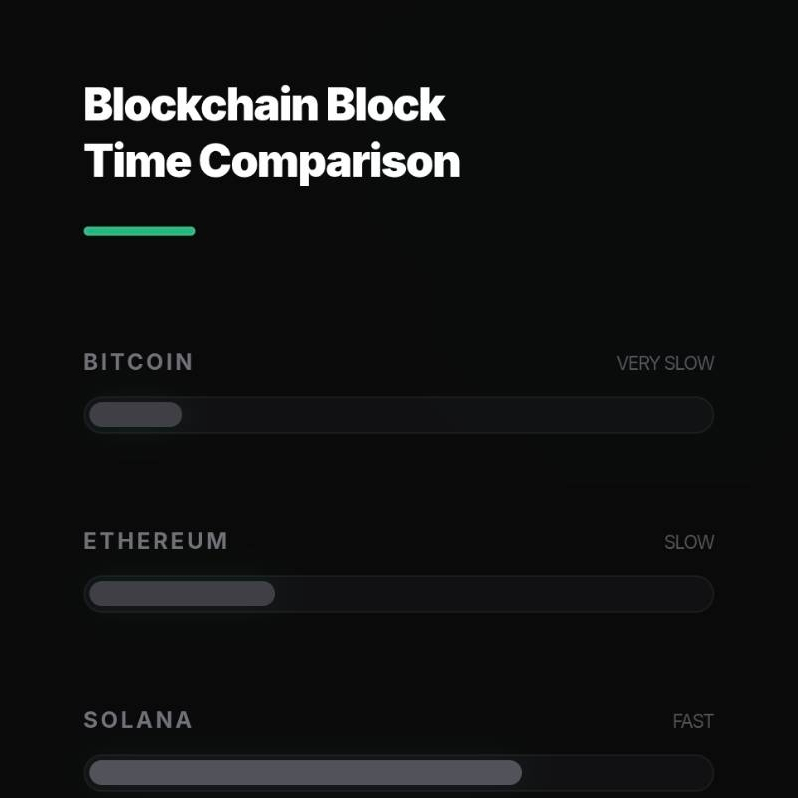
In the current blockchain landscape, everyone is obsessed with speed. But when a project like @Fogo claims a block time of 40 milliseconds—roughly 18 times faster than Solana—it forces us to ask a difficult question: Is this the future of high-frequency trading (HFT), or is it sacrificing the core soul of decentralization?
The Speed Paradox: Latency as a System Issue
Most people classify Fogo alongside generic high-throughput chains. However, Fogo’s architecture suggests it is designed more like a professional trading venue than a conventional blockchain. It poses a direct challenge to the industry: if on-chain finance wants to compete with Wall Street, why do we tolerate network jitter and slow clients?
Fogo treats latency not as a "want," but as a structural constraint. By optimizing the entire pipeline—from clocks and propagation to consensus messaging—it aims to make on-chain markets behave like real-world exchanges. This is why we see "deterministic execution" prioritized, ensuring that liquidations and order matching happen with absolute precision.
The Radical Choice: Standardization over Diversity
One of the most controversial decisions in Fogo’s blueprint is the move away from client diversity. Most networks pride themselves on having multiple validator clients. Fogo does the opposite: it standardizes on a single, high-performance client based on Firedancer.
From a technical perspective, this is a gamble. Theoretically, diversity limits risk. Practically, performance is often throttled by the slowest implementation. Fogo’s logic is straightforward: turn a slow client into a financial burden. By standardizing on the quickest route, they eliminate the "bottleneck of diversity," much like a centralized exchange that runs on one optimized matching engine because milliseconds decide the winner.
Multi-Local Consensus: Geography with Purpose
The most peculiar concept in Fogo’s architecture is "Multi-local Consensus." Instead of haphazardly distributed nodes, Fogo uses a zone model where active validators are physically colocated in high-performance data centers.
This colocation wins the war of milliseconds, but it raises a flag for those of us who value decentralization. Does a "colocated" validator set resemble a traditional bank more than a public ledger? Fogo attempts to solve this through "Dynamic Zone Rotation," allowing the majority to agree on upcoming locations, theoretically evading jurisdictional capture while maintaining hardware-limit speeds.
The Ecosystem Stress Test: Ambient and Beyond
Real-world performance isn't found in whitepapers; it’s found on the DEX. Native applications like Ambient Finance are already implementing Dual Flow Batch Auctions (DFBA) to eliminate toxic order flow and MEV. My stress tests on the mainnet showed a confirmation sense that is incredibly smooth, but we must remain vigilant. While slippage on large transactions was lower than expected, the true test will arrive when Fogo reaches Solana-level congestion.
The Professional Verdict
Fogo is not just creating a public bulletin board; it is building global market infrastructure. For traders, it offers consistency, predictability, and fairness—the three things buzzwords cannot replace.
Right now, $FOGO is in a price discovery phase. While retail investors might be distracted by impulsive K-lines, the smart money is watching the gears operating in the background. If Fogo succeeds, it won't be because of a TPS slogan; it will be because builders no longer have to design around chain weaknesses.
