
Have you ever felt a simple action slow down right after heavy activity on a chain? A swap, an NFT mint, even a small game input all pass through the same execution space and update the same shared state one after another, meaning completely different actions still wait in the same line. The structure looks efficient because keeping everything connected helps financial activity coordinate smoothly, but once many different interactions happen together, unrelated actions begin affecting each other’s timing, and the experience stops feeling as smooth as the design suggests.
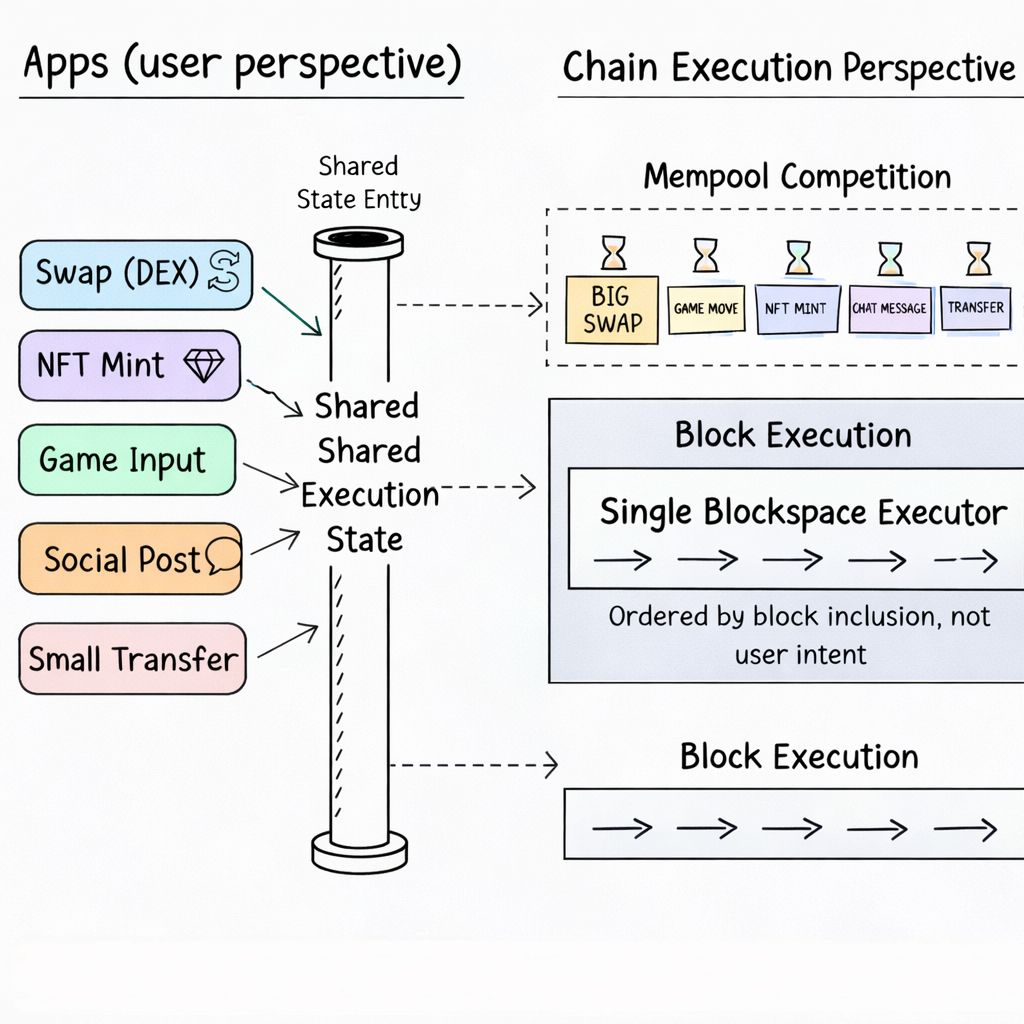 A larger transaction lands and smaller actions hesitate, not immediately and not always, yet often enough that the experience becomes uneven. The chain is not really slow but rather crowded, more like too many things trying to be processed at once, less about raw processing flow and more about competing priorities inside a single execution lane that treats every interaction as equally urgent even when human perception clearly does not.
Real-time apps expose it immediately. A trade can wait a moment and still make sense, but a movement in a game or a quick social interaction cannot, so even a brief pause feels off to the user. Responsiveness starts becoming uncertain rather than expected, confirmation timing drifts, attention drops, and people react before they know the reason, which is where shared state stops feeling like coordination and starts feeling like interference.
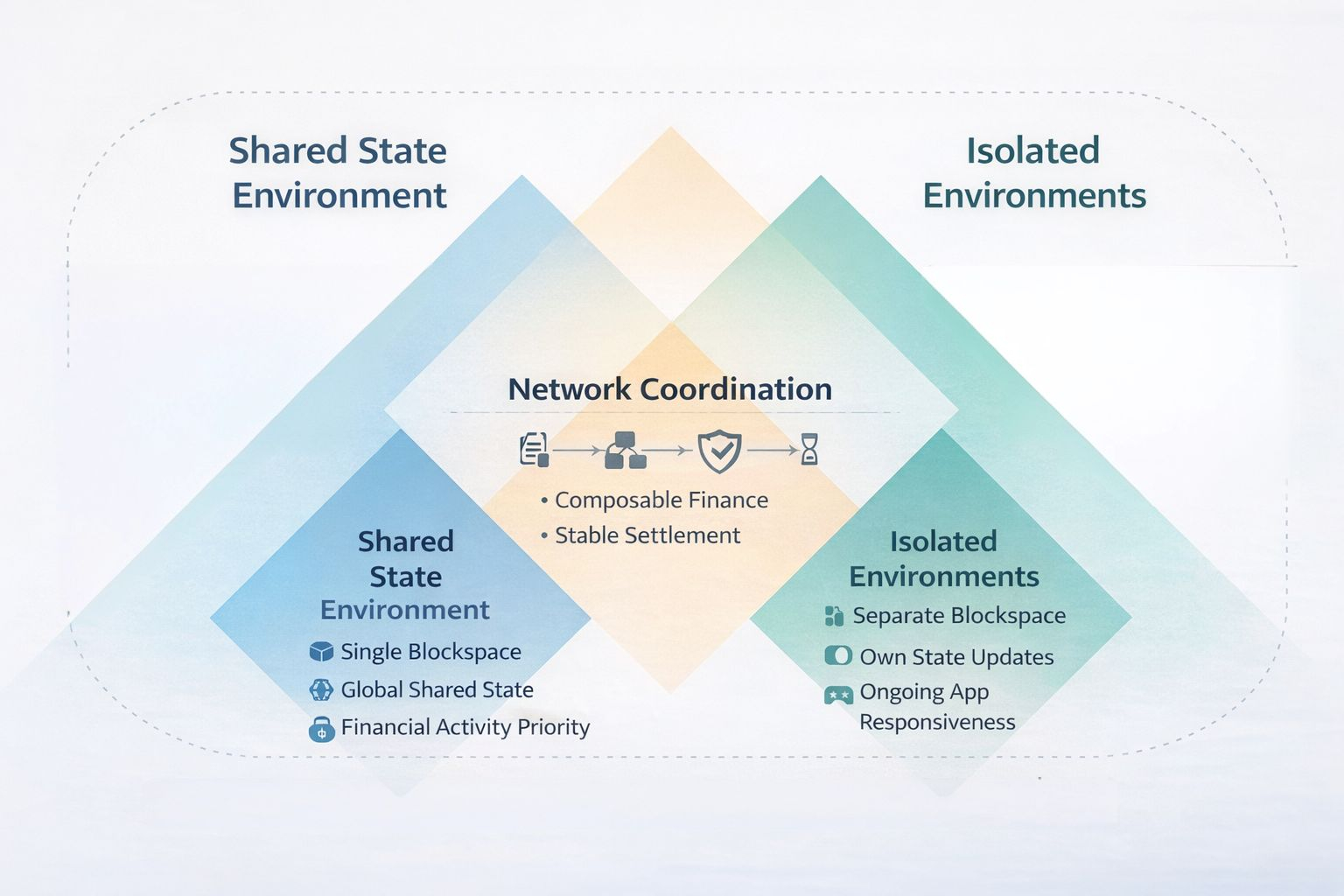 The direction hinted at by FOGO reads less like replacing shared environments and more like separating expectations, keeping financial coordination composable while ongoing interactions run in conditions where unrelated actions do not change their timing. In simple terms, different types of activity do not have to disturb each other. This becomes less about achieving maximum theoretical capacity and more about ensuring unrelated actions do not interfere with each other even as activity grows.
Taken together the system starts resembling coordination instead of volume handling, where the important question is no longer how many transactions fit into a block but which transactions affect each other, and from that point on the conversation shifts naturally from speed toward stability.

That reframes what a network like FOGO is actually trying to solve.