
Vanar begins with a human moment, not a technical one. Imagine someone opening a new digital experience for the first time. They are not chasing charts, they are chasing a feeling. They want to play, explore, collect, connect, and belong. But the moment they step into most Web3 experiences, the mood changes. The language becomes confusing. The steps become stressful. The fear of doing something wrong appears instantly. People do not leave because they hate technology. They leave because the experience does not respect their comfort. That is the emotional seed behind Vanar. I’m describing it this way because Vanar is not trying to build a blockchain that only crypto insiders admire. It is trying to build a blockchain that normal people can live on without realizing they are even touching blockchain at all.
Vanar is a Layer 1 blockchain designed from the ground up for real world adoption. That single decision shapes everything. When a project chooses to be an L1, it is choosing to own the foundation instead of borrowing someone else’s rules. It means Vanar can shape how fees behave, how fast the network feels, how developers build, and how users experience every action. That matters because mainstream adoption does not happen in a lab. It happens inside games, entertainment, social spaces, and brand experiences where people expect things to work the first time. If something feels unpredictable, people do not debate it. They simply leave. Vanar’s direction reflects that reality, and the team’s experience with games, entertainment, and brands fits directly into that mission. In those industries, you learn quickly that people will not study your product just to enjoy it. The product must meet them where they already are.
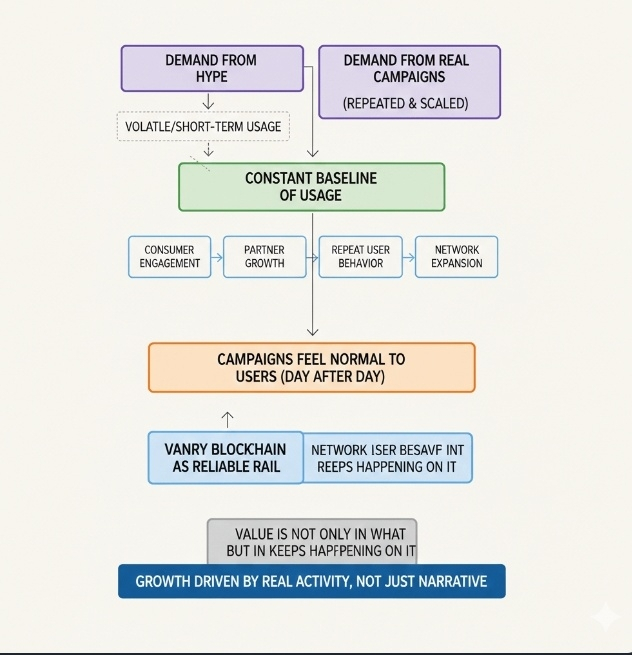
The biggest barrier Vanar is trying to remove is not only cost. It is uncertainty. People can accept paying a small fee if they understand it and expect it. What breaks trust is when fees feel random. In a normal app, you click a button and it works. In many blockchain apps, you click a button and you get a surprise number, a warning, and a feeling that you might mess up. That fear is the silent killer of adoption. Vanar is built around the belief that people will only stay if the experience feels calm and predictable. That is why fee design becomes a core identity choice. Vanar’s approach focuses on making transaction costs feel stable and understandable, so the user does not feel like they are stepping into a storm every time they interact with a product.
This focus on predictability is not a simple feature, because the gas token price can move with the market. A network that wants steady user costs needs a mechanism to adjust fees in response to token value so the experience remains consistent. This is where design philosophy turns into system design. Vanar’s approach depends on having a way to determine the token value from multiple data sources and then apply that information to keep fees aligned with a stable reference. The reason this matters is emotional as much as technical. Predictability gives people peace. Peace creates trust. Trust creates repeat usage. They’re betting that if people can trust the basics, they will stop hesitating and start engaging naturally.
Underneath that user facing goal is the chain itself. Vanar is designed so that transactions can be executed and finalized reliably. Smart contracts run on the base layer, ownership is recorded, and asset transfers become permanent once confirmed. This base layer is meant to be the truth engine. When someone owns an item in a game, when someone trades an asset in a metaverse world, when a brand issues a digital collectible, the chain is the part that guarantees that the action is real and the ownership is real. In mainstream life, that truth must be silent. People should not have to think about how the engine works. They should only feel that it works.
Vanar also focuses on welcoming developers, because adoption cannot happen without builders. A chain can have the best philosophy in the world, but if development is slow and difficult, the ecosystem stays empty. Vanar aims to reduce developer friction by aligning with an environment many developers already know. That means teams can build using familiar tools and patterns, which lowers the learning curve and helps products ship faster. This is not only a convenience. It is a growth strategy. When builders can launch faster, users arrive sooner. When users arrive sooner, feedback improves the product direction. When feedback improves direction, the ecosystem becomes more mature. This is how real platforms grow, not through one big moment, but through consistent cycles of building and improving.
The Vanar ecosystem story is also important because Vanar is not presenting itself as a chain built only for abstract finance. It describes mainstream verticals like gaming, metaverse, AI, eco, and brand solutions. The reason these categories matter is that they represent real entry points for everyday people. Most people will not enter Web3 because they want a new financial system. They will enter because they want entertainment, identity, community, or opportunity. That is why ecosystem products like Virtua Metaverse and VGN games network become meaningful signals. They represent the kind of environment where people can arrive for fun, and blockchain simply becomes the invisible layer that supports ownership and value behind the scenes.
If you picture how the components interact, it becomes clearer. The Layer 1 provides execution, security, and finality. On top of it, consumer facing applications create experiences, worlds, and communities. The applications generate activity that the chain processes. The chain provides trust that the applications rely on. The token provides fuel that keeps the whole machine moving. The ecosystem adds gravity by giving people reasons to stay. This interaction is what turns a blockchain into a platform. It is not one part doing everything. It is a set of parts supporting each other so the user experience feels smooth and natural.
VANRY plays a central role in that system. It powers the network as the gas token, meaning it is used to pay for transactions and execution. But the deeper role of VANRY is that it becomes the unit of participation and alignment inside the ecosystem. A token is strongest when it is connected to real usage. If a token is only held and traded, it becomes fragile, because its story is built mostly on sentiment. If a token is used inside a living ecosystem, it becomes stronger, because its story becomes tied to activity. That is the kind of token relationship Vanar needs for the long term. It needs VANRY to become the heartbeat of real experiences, not just a symbol people watch on a screen.
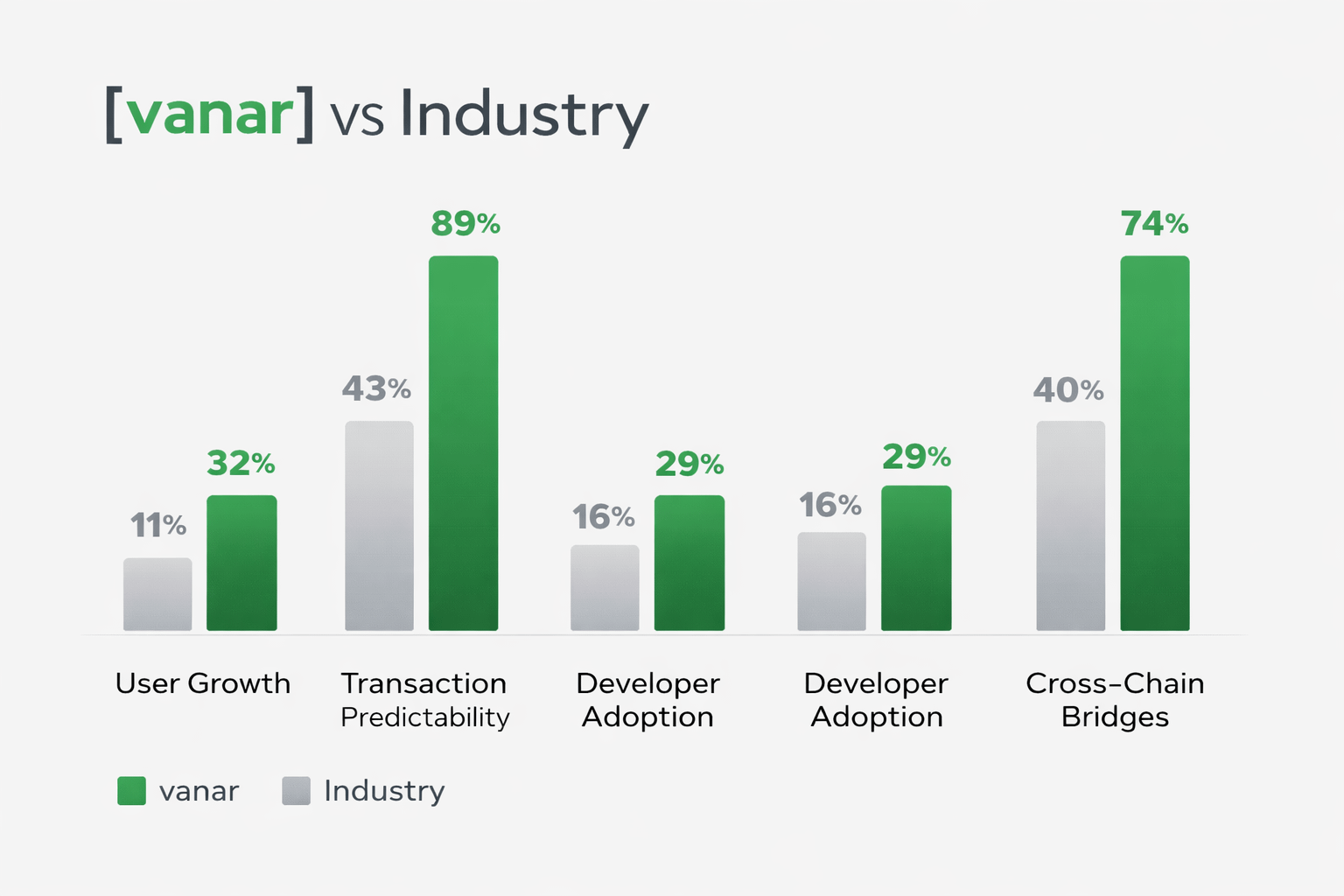
When you talk about success, the most honest metrics are not only market price. Market price is loud, but it is not always true. The real success metrics are the ones that show whether people are actually building and staying. One key metric is whether the network can maintain a predictable cost experience for users even during market volatility. Another key metric is developer adoption, meaning whether builders keep deploying real applications and continue to choose the ecosystem for new products. Another key metric is user retention, meaning whether people come back repeatedly because the experiences feel enjoyable and safe. Another metric is ecosystem expansion, meaning whether more consumer products appear that reflect the project’s mainstream direction. And another is long term credibility, meaning whether trust in the network’s reliability and evolution grows with time instead of shrinking.
But no human story is complete without honesty about risk. Vanar faces the same risks that any adoption focused chain faces, and in some cases, those risks are made sharper by the very choices meant to help users. One risk is perception and trust, because early network structure can be interpreted as too controlled if decentralization does not visibly expand over time. Another risk is execution complexity, because building predictable fees and smooth consumer experiences requires consistent governance, accurate data inputs, and disciplined system maintenance. Another risk is security, because as value grows, the incentives for attackers grow too, and every ecosystem that supports real assets becomes a target. Another risk is competition, because other networks also want mainstream adoption, and users will choose what feels simplest and safest. Vanar must keep proving its advantage not only in claims, but in lived experience.
The long term vision behind Vanar is bigger than making a chain that works. It is about making Web3 feel normal. A future where you can enter a game and own what you earn without fear. A future where you can step into a metaverse world and carry your identity and assets across experiences naturally. A future where brands can create digital experiences that feel safe and easy for ordinary customers. A future where AI driven systems and digital communities can use blockchain as a trust layer without forcing people to become experts. This is the core dream. Not to make everyone talk about blockchain, but to make blockchain disappear behind products people love.
And this is where the emotional truth returns. Vanar is not only building technology. It is trying to build comfort. It is trying to take the sharp edges off Web3 so new people can arrive without feeling scared. They’re trying to create a system where the first interaction feels simple, the second feels familiar, and the hundredth feels like a normal part of life. If It becomes what it hopes to become, then Vanar will be more than a chain. It will be a quiet bridge that carried millions of people into a future they once thought was not meant for them. We’re seeing the internet changing again, and the projects that matter most will be the ones that do not just move fast, but move with empathy. Vanar’s story is an attempt to prove that the next chapter of digital life can be exciting without being intimidating, and that real adoption begins when people feel safe enough to stay.
