
There was a time when the internet felt magical.
Not optimized. Not monetized to exhaustion. Just magical.
You logged into a game and it felt like stepping into another universe. You collected digital items that felt priceless, even if they technically belonged to a server somewhere far away. You joined online communities that felt more real than your neighborhood. And then, one day, you realized something unsettling: none of it was truly yours. The skins, the characters, the collectibles, the time you poured into digital worlds—they could vanish the moment a company shut down a server or changed the rules.
That quiet heartbreak is where Vanar begins.
Vanar isn’t just another Layer 1 blockchain trying to compete for speed or headlines. It feels more like a response to a wound we’ve all felt but rarely articulated—the wound of digital impermanence. Built by people who’ve lived inside gaming, entertainment, and global brands, Vanar doesn’t approach blockchain like a laboratory experiment. It approaches it like a storyteller.
The team behind it understands something fundamental: people don’t fall in love with infrastructure. They fall in love with experiences.
So instead of asking how to make the most technically impressive chain, they asked a different question—how do we make blockchain invisible enough that ordinary people can enjoy it without fear or confusion?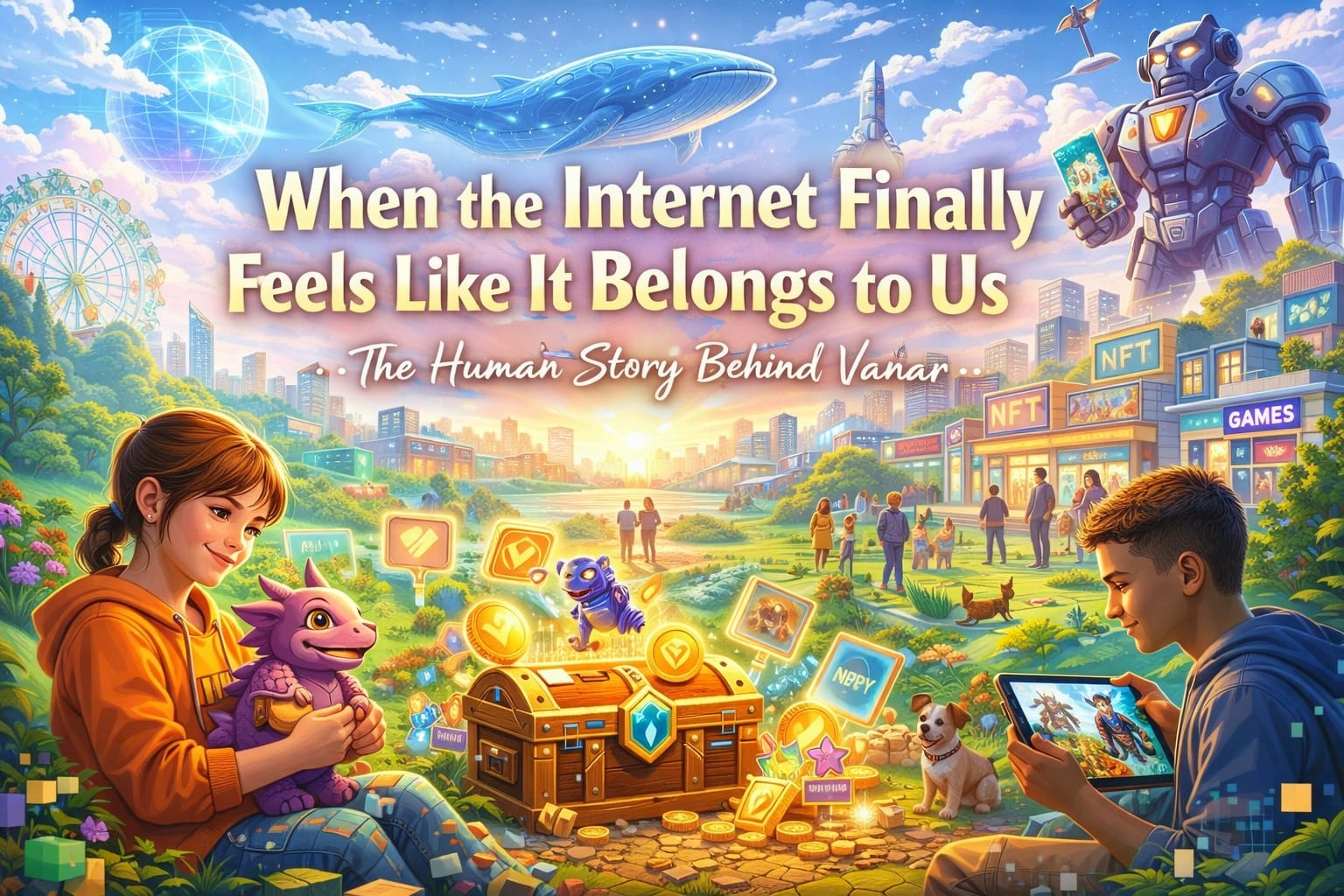
Vanar was built from the ground up to feel natural. It supports familiar tools for developers so creators don’t have to abandon everything they know. But the real magic isn’t in the compatibility charts or performance metrics. It’s in what the technology is meant to unlock.
Imagine logging into a game and knowing that the rare item you earned isn’t just a temporary license—it’s something you genuinely own. Imagine that item following you into another world. Imagine your digital collectibles living in a space you can decorate, show off, trade, or evolve. Not because speculation is exciting, but because ownership feels human.
That’s where Virtua Metaverse enters the story.
Virtua isn’t positioned as some sterile, corporate metaverse. It feels more like a digital home—a place where collectibles breathe. Your NFTs aren’t just files sitting in a wallet; they’re objects in a living space. They’re social. They’re expressive. They’re part of your identity. It taps into something deeply emotional: the desire to curate a space that reflects who you are.
And then there’s the Vanar Games Network, VGN.
If you’ve ever tried a blockchain game before, you know the awkwardness. Wallet pop-ups. Gas fees. Complex onboarding. It can feel like filing taxes before you’re allowed to have fun. VGN tries to remove that friction. It allows studios to integrate Web3 mechanics without forcing players to become crypto experts. The blockchain works quietly in the background, like plumbing in a house—you only notice it when it fails.
That quietness is intentional. Because the future of Web3 doesn’t look like charts and trading screens. It looks like kids earning digital items they truly own. It looks like creators receiving royalties automatically. It looks like brands collaborating with communities instead of extracting from them.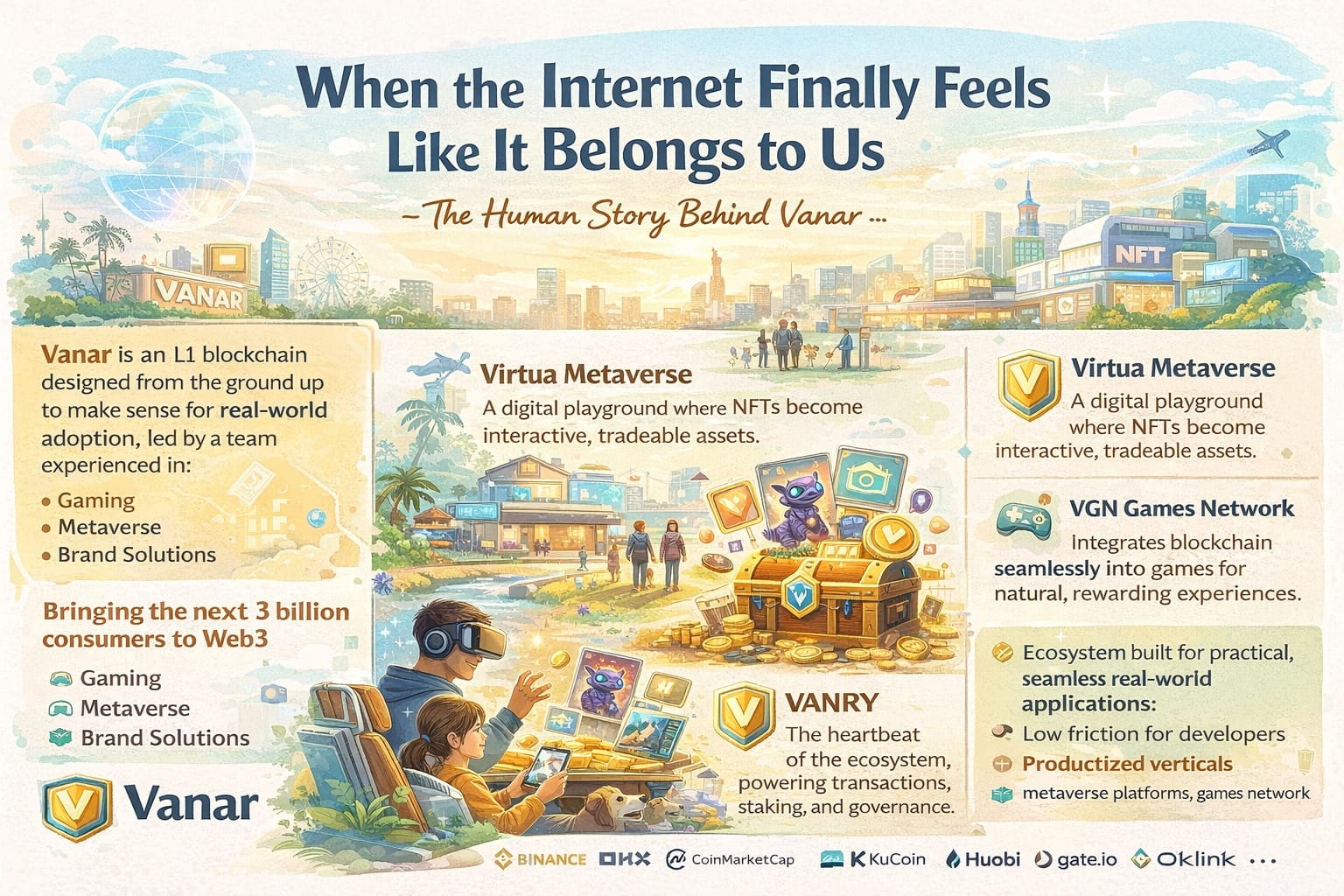
Vanar talks about onboarding the next three billion users to Web3. That phrase could sound like marketing hyperbole, but if you sit with it long enough, it feels like hospitality. The next three billion aren’t crypto traders. They’re teenagers discovering digital fashion. They’re gamers who don’t care about consensus algorithms. They’re artists who just want to be paid fairly. They’re parents buying digital experiences for their children.
Vanar’s design philosophy acknowledges a truth the industry sometimes forgets: people don’t want to join “Web3.” They want joy. They want connection. They want ownership that makes sense.
The VANRY token fuels this ecosystem. It powers transactions, staking, governance, in-game economies. But more importantly, it represents participation. A token only has meaning if it’s connected to real activity—real play, real exchange, real community. And Vanar’s strategy ties VANRY to actual products, not just promises.
There’s something quietly hopeful about that.
In a digital world that often feels extractive—where attention is mined and data is sold—Vanar suggests a different model. One where value flows back to creators. One where gamers aren’t just users, but participants. One where brands collaborate instead of dictate.
And there’s another layer to this story that matters emotionally: sustainability. The blockchain space has carried criticism about environmental impact, and rightfully so. Vanar positions itself as eco-conscious, aware that mass adoption cannot come at the cost of the planet. Because if the future we’re building damages the world we live in, what’s the point?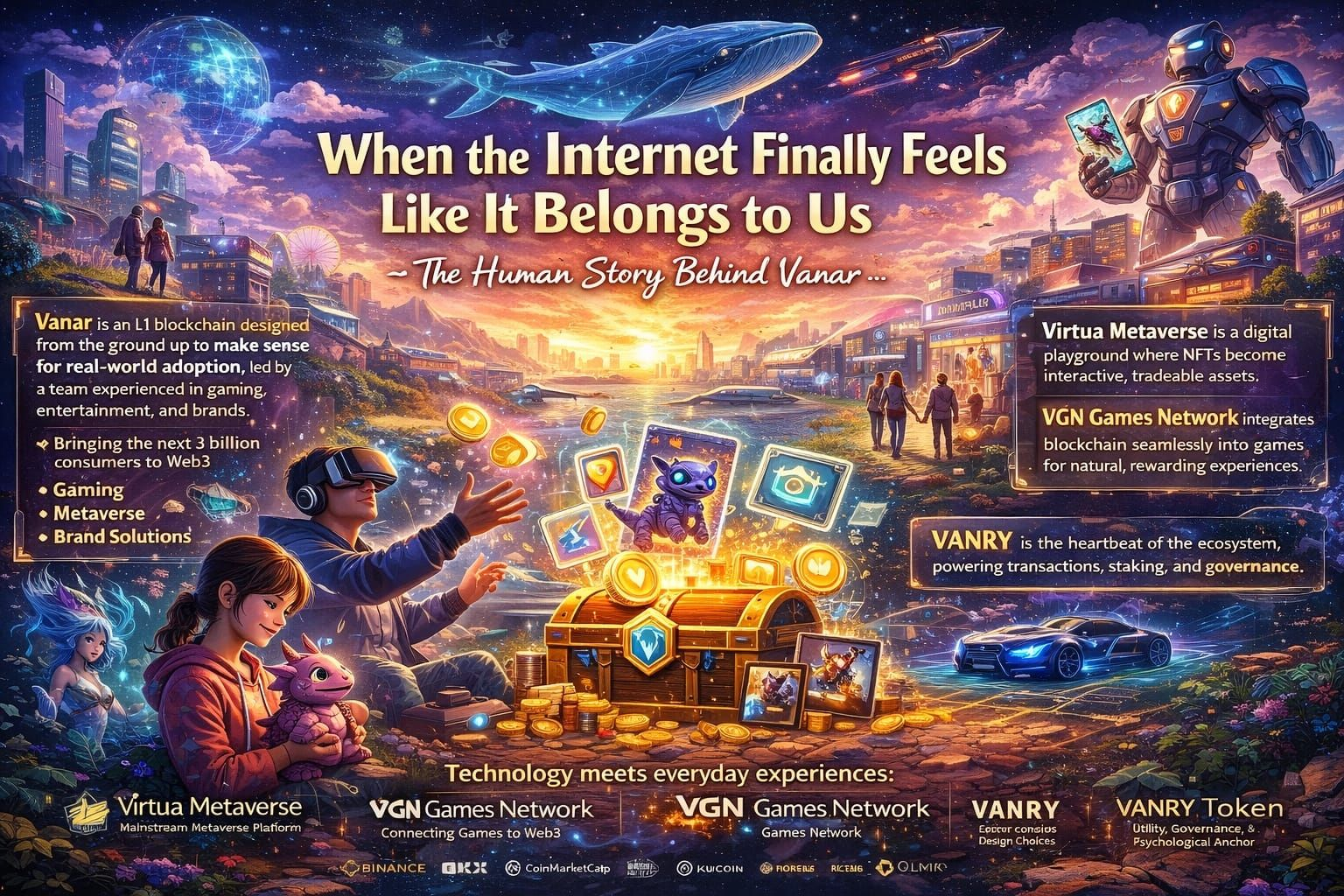
Of course, none of this is guaranteed.
Gaming is brutally competitive. Players are ruthless critics. Established blockchains have massive network effects. Regulations shift unpredictably. Token economies can wobble. Dreams can fail.
But that’s what makes this story compelling.
Vanar isn’t trying to conquer the industry with noise. It’s trying to weave itself into culture quietly, steadily. If it succeeds, most users may never even realize they’re using a blockchain. They’ll just know their digital items feel more permanent. Their rewards feel more fair. Their experiences feel more connected.
And maybe that’s the revolution.
For decades, digital life has been a rental agreement. We’ve rented space on platforms. Rented access to games. Rented identities on social networks. Vanar dares to ask what happens when we begin to own pieces of our digital existence in a way that feels seamless rather than technical.
What happens when the internet stops feeling like borrowed territory and starts feeling like home?
There’s a tenderness in that vision. A belief that technology can serve emotion instead of replacing it. That infrastructure can support imagination rather than overshadow it. That blockchain doesn’t have to be intimidating—it can be empowering.
Vanar is still young. Its journey is unfolding in real time. But its intention feels clear: to build an internet where ownership is intuitive, where creators are respected, where play is preserved, and where the next generation steps into Web3 without even realizing they crossed a boundary.
Because the best technology doesn’t announce itself.
It simply makes you feel like you finally belong.
