
When I first looked at $FOGO I was not expecting it to feel so real. A lot of Layer 1s say they are fast and can handle a lot of things. Fogo actually does it without making a big deal. What I like about FOGO is that it thinks about what matters: can people actually use it in the real world.
The first thing I noticed about FOGO is how it uses the Solana Virtual Machine in a way, with its own system. This might sound like stuff but it means that it has things that people care about. FOGO has fast transactions and has low costs and it has applications that work even when a lot of people are using them at the same time.
The surface of FOGO shows that it can handle a lot of things at the time but what is really important about FOGO is that it is reliable. This is built on SVM so it can process thousands of transactions every second.. Fogo is also designed to make sure that transactions are final and that is what really matters. This is not about showing off how fast FOGO can go. It is about knowing that when you make a transaction with FOGO it is really going to happen. When you know that your transactions will go through it makes you feel more certain. This certainty has another effect: people who make financial applications, marketplaces or games do not have to worry that FOGO will not be able to handle a lot of users. FOGO is reliable. That is what makes it useful, for developers who make these kinds of things.
I took some time to look into the ecosystem and what really caught my attention is how well it can adjust to situations. The ecosystem is very adaptable. For example things like stablecoins and NFTs and DeFi protocols all work well because of this ecosystem. It can also help when people in the real world start using it. This is because being fast and being able to predict what will happen is important for everyone, not people who deal with cryptocurrency. It matters when a store owner gets a payment or when a financial agreement is finalized or when someone sends money to another country and it needs to get right away. The ecosystem of cryptocurrency is very important for all these things, like stablecoins and NFTs and DeFi protocols to work smoothly. Early signs suggest that FOGOs architecture could make it easier for people to use FOGO. This is because FOGOs architecture is different from Layer 1s. Some Layer 1s make claims but they do not actually work very well when you use them every day. FOGOs architecture might be better, for use.
Transaction costs are something to think about. People do not usually think about what keeps fees low until they have an experience somewhere else. FOGO is able to keep things without slowing down. This is something that FOGO actually does not something it says. Every time a developer uses the FOGO chain or a user sends money they see how steady it is. This is a thing but it is very important. It helps build trust in FOGO. When people know that something is stable they are willing to invest their time their ideas and their money, in FOGO.
I took a look at @Fogo Official governance and how it is decentralized. The way FOGO does things is not about being new and exciting. It is about making sure people keep using the network in a way that's good for everyone. The people who help run the network called validators and the people who use it are encouraged to do what is best, for the network not just try to make a lot of money. This way of doing things might seem an old-fashioned but it is actually what makes it possible for the network to work well and support more complicated applications. If the foundation of the network is not strong it can cause problems even if it is very fast. That is why I think FOGOs network is more likely to be used for a time compared to some other networks that might seem more exciting at first. FOGOs focus on participation and decentralization is what makes it special.
What also caught my attention is the attention to the developer experience of FOGO. Many chains say they are developer-friendly. Then they force teams to rebuild the infrastructure from scratch. FOGO integrates SVM. It also adds its own tools and documentation and SDKs in a way that lets teams get started with FOGO quickly.
They can port their existing Solidity contracts to FOGO. They can build entirely new applications, with FOGO without having to rethink every single fundamental piece of FOGO.
That really lowers the friction. It encourages people to experiment with FOGO, which is how the FOGO ecosystem is going to grow in a natural way.
There are risks with every chain. The overall market has an impact on how many people use it. Just because a chain works well does not mean a lot of people will use it. The rules that govern it how easily people can. Sell and other platforms that compete with it all matter.. Fogo is doing something different. They are trying to fix the problem that happens when a chain is really good technically but not many people actually use it in life. If FOGO can do this it might be the start of a group of L1s that are not just good on paper but are actually used by people and institutions. FOGOs approach to this problem is really important for the future of L1s, like FOGO.
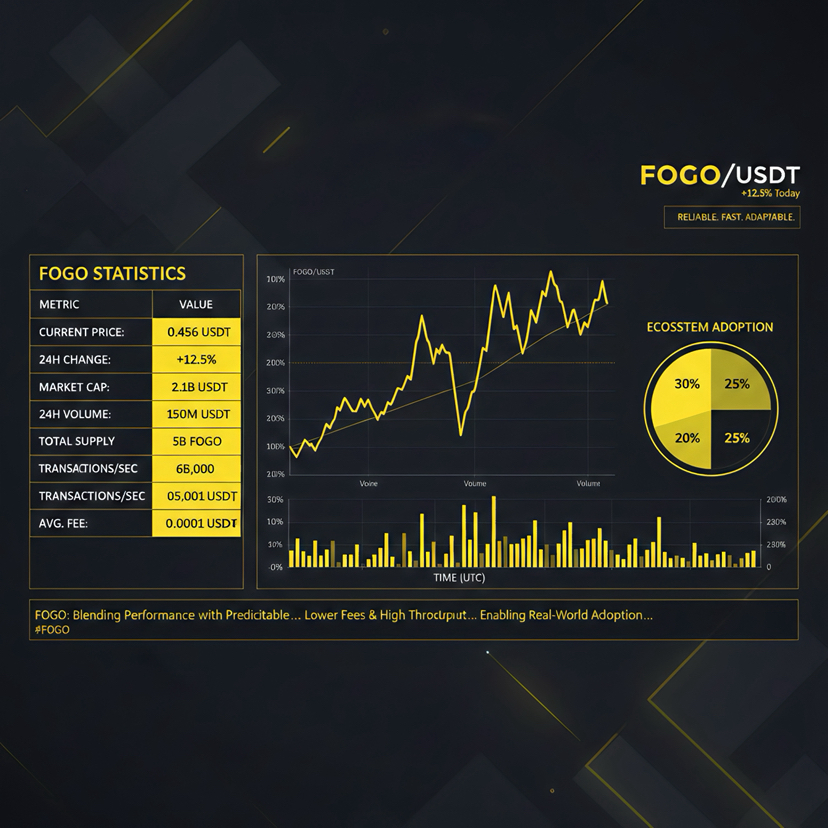
FOGO is working hard to make sure things are reliable, fast and easy to use. This is important for things like -border payments, DeFi primitives and digital marketplaces. These things need to be trustworthy and work well when a lot of people are using them. FOGO has already built the infrastructure to handle this. It may not be the exciting thing but it is something that FOGO has worked for and that is important. In a space where people often talk more about things that're flashy FOGOs quiet approach is actually a good thing because it shows that they care about making things that really work. FOGOs focus on reliability, speed and usability is what will make it a backbone, for these applications.
What struck me most in the end is how FOGO blends performance with predictability. It’s not about hype cycles or short-term speculation. It's about enabling something more permanent. In a world where crypto projects often chase headlines, FOGO shows that steady, thoughtful design can speak louder than any marketing campaign. That quiet, dependable foundation is what gives me confidence that the network can grow, not just in speed, but in meaningful adoption that actually changes how people interact with decentralized technology.