
Why Solana Still Matters in the Next Crypto Cycle
In every crypto cycle, a few projects move beyond speculation and prove they can survive pressure, outages, and competition. Solana is one of those projects. Once written off after major network issues, Solana has quietly rebuilt, strengthened its ecosystem, and regained serious attention from developers, institutions, and long-term investors.
At the current price range, the key question is not whether Solana can survive, but how far it can realistically go over the next 1 to 2 years.
What Is Solana and Why It’s Different
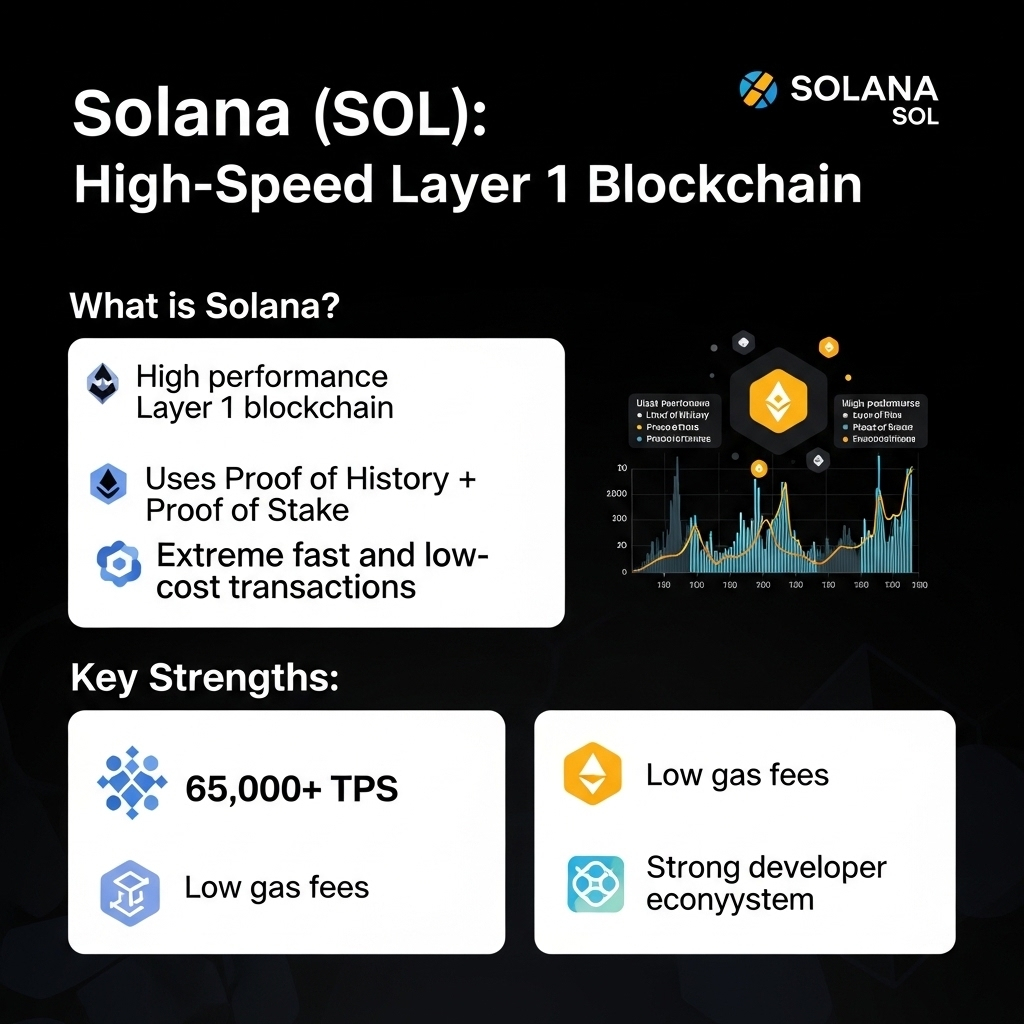
Solana is a high-performance Layer-1 blockchain designed to process thousands of transactions per second at extremely low cost. Unlike Ethereum, which relies heavily on Layer-2 solutions, Solana focuses on scaling directly on its base layer.
Its core innovation, Proof of History (PoH), allows the network to timestamp transactions efficiently, reducing congestion and increasing throughput. This design makes Solana especially attractive for applications that require speed and low latency.
Strength of the Solana Ecosystem
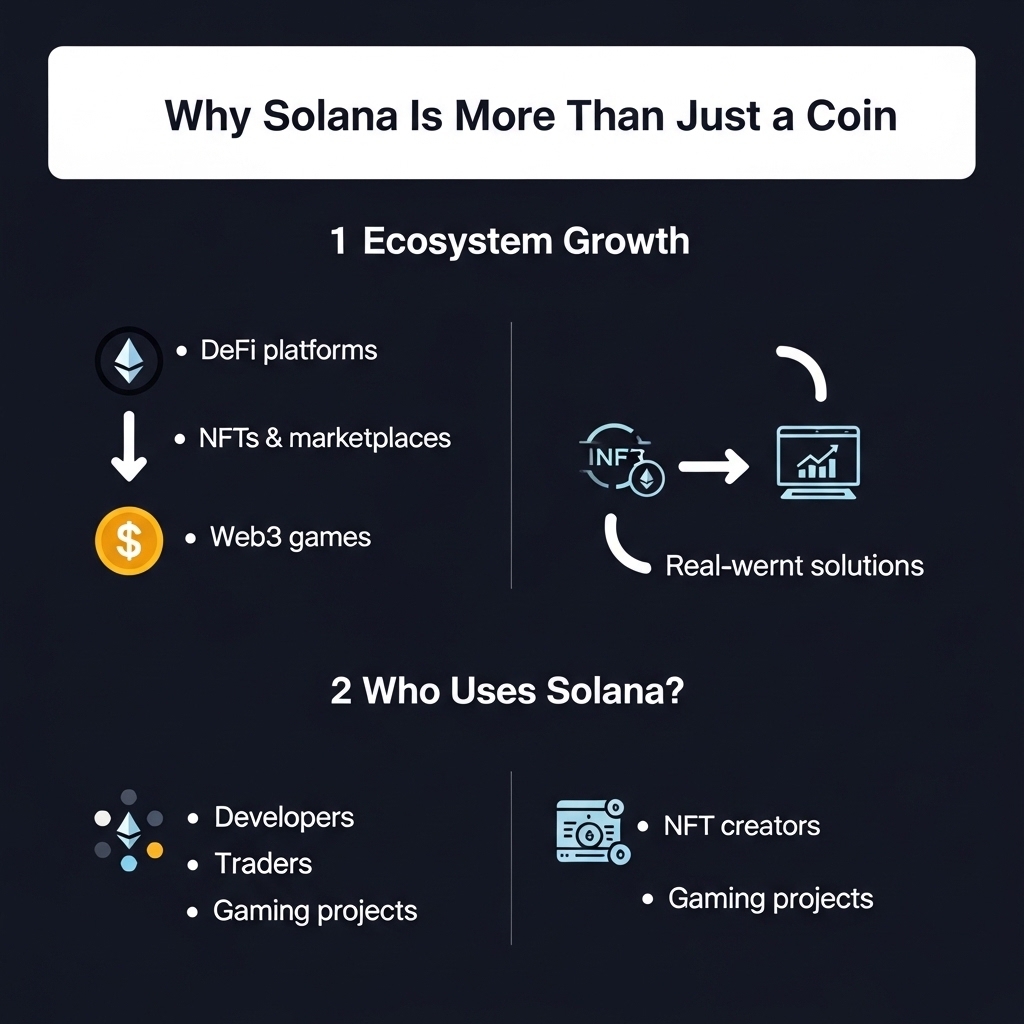
Solana is no longer just a “fast chain.” It has become a full ecosystem.
Key areas where Solana is strong:
DeFi: Lending, DEXs, perpetual trading platforms
NFTs: High-volume marketplaces with low fees
Gaming: Real-time, on-chain game mechanics
Payments: Fast, near-zero-cost transactions
Consumer Apps: Mobile-friendly crypto experiences
Major projects continue to build on Solana because it offers a smoother user experience compared to many competitors.
Network Stability: Past Problems, Real Improvements
One of the biggest criticisms of Solana was network downtime. That criticism was fair.
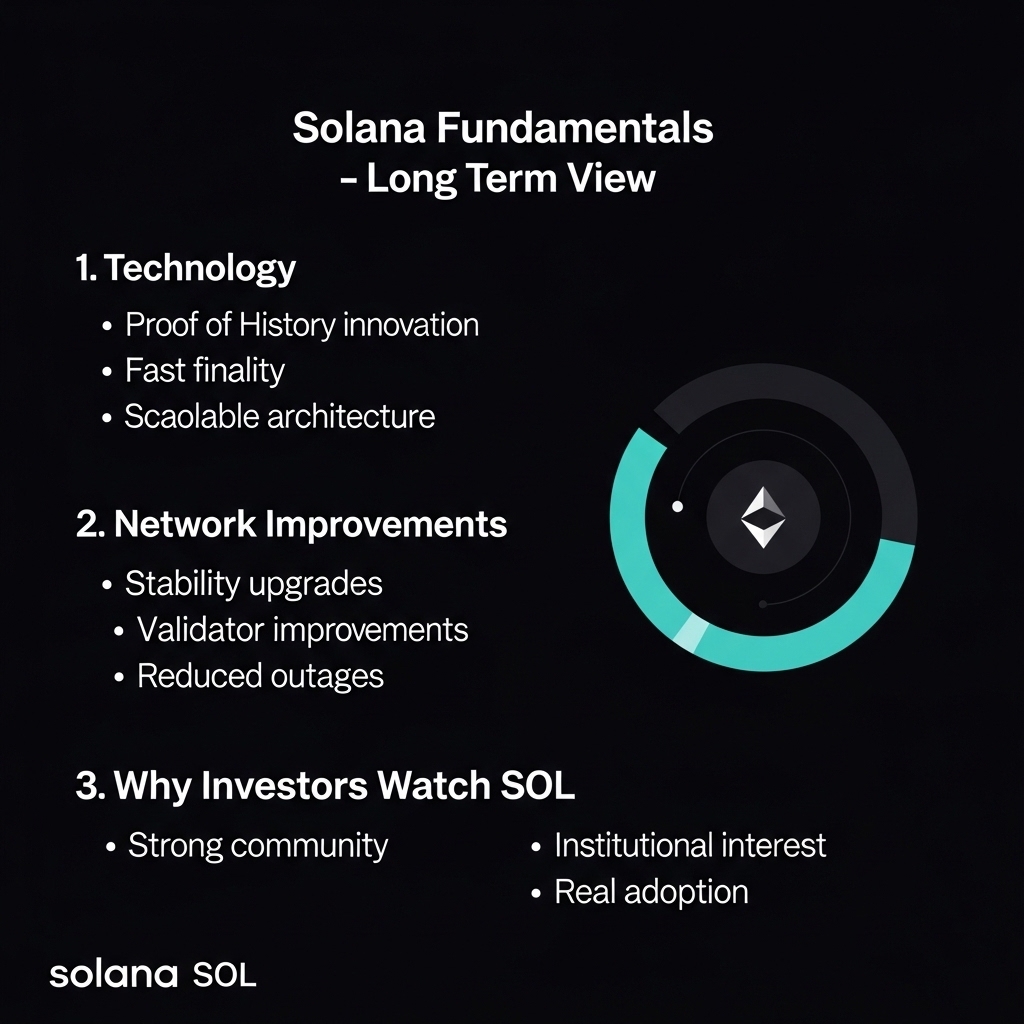
However, over the last year:
Validator software has been upgraded
Network resilience has improved significantly
Outages have become rare and less severe
Client diversity (like Firedancer) is reducing single-point failures
Solana learned the hard way, and the fixes are now structural, not cosmetic.
Institutional and Market Confidence
Solana’s revival is not happening in isolation. Institutional interest is returning.
Signs of growing confidence:
Increasing on-chain activity
Rising developer count
Improved liquidity across exchanges
Strong performance relative to many altcoins
Solana has also shown resilience during broader market weakness, which is a key trait of strong long-term assets.
Token Economics and Supply Dynamics
Solana has inflation, but it is gradually decreasing over time. This controlled inflation is designed to:
Incentivize validators
Maintain network security
Avoid sudden supply shocks
As usage grows, network fees and staking participation help balance inflation pressure. Long term, this creates a healthier economic model compared to unchecked token emissions.
Solana vs Ethereum: Competition or Coexistence?
Solana is not trying to replace Ethereum. Instead, it competes where Ethereum struggles:
Speed
Cost
User experience
Ethereum remains dominant in institutional DeFi and security-first applications, while Solana excels in consumer-scale products. The market is large enough for both to thrive.
1–2 Year Price Outlook: Realistic Expectations
Price predictions should be grounded in adoption, not hype.
Based on:
Ecosystem growth
Network stability improvements
Broader crypto market cycles
Increasing real-world use
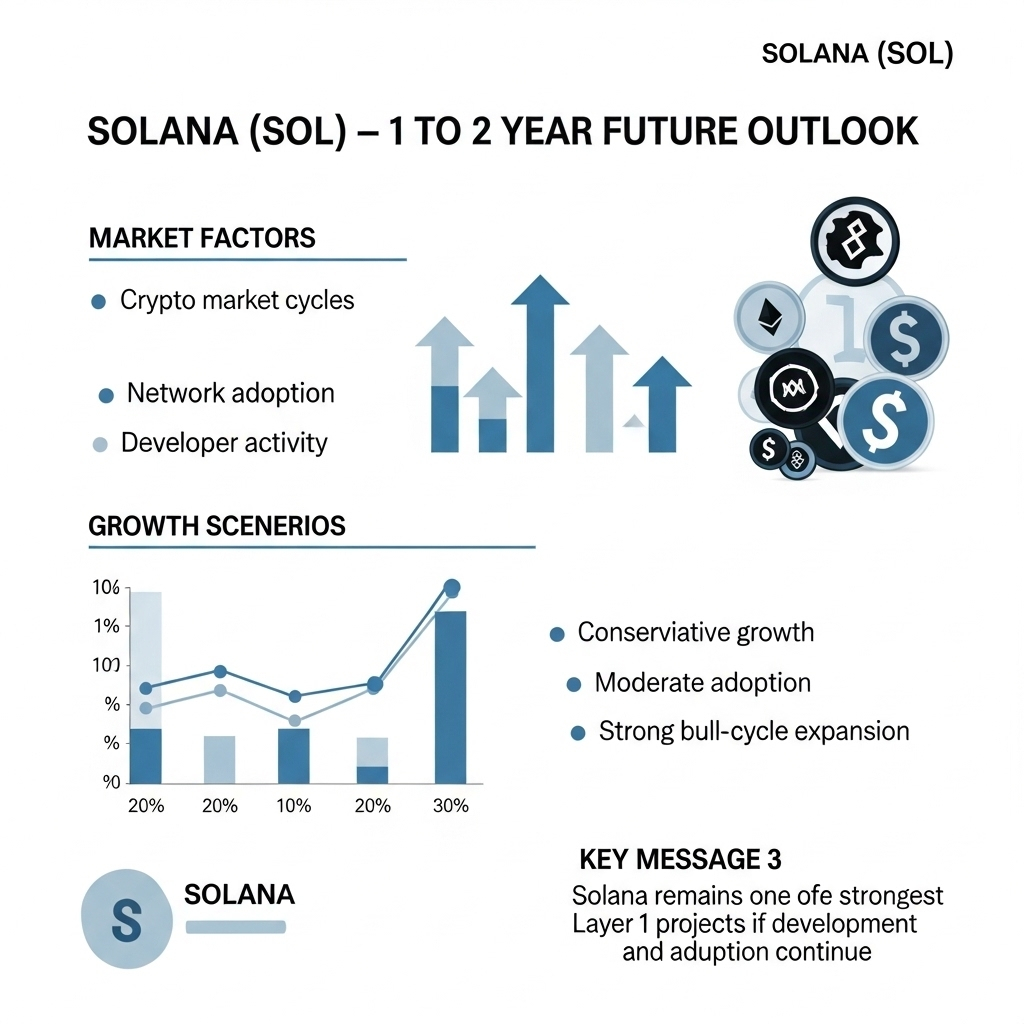
A realistic 1–2 year outlook for Solana:
Conservative scenario: $90 – $120
Moderate growth scenario: $150 – $200
Strong bull cycle scenario: $250+
These ranges assume no extreme black-swan events and a generally favorable crypto market environment.
Risks Investors Should Not Ignore
No project is risk-free. For Solana, key risks include:
Competition from other Layer-1 chains
Regulatory pressure on crypto markets
Execution risks if upgrades fail
Market-wide liquidity downturns
Understanding these risks is essential for responsible investing.
Final Thoughts: Is Solana a Strong Long-Term Project?
Solana is no longer just a “fast blockchain.” It is a battle-tested network with real users, real applications, and a clear roadmap.
Its strength lies in:
Performance at scale
Growing developer adoption
Improving infrastructure
Clear focus on user experience
For investors and builders looking at the next 1–2 years, Solana remains one of the strongest Layer-1 projects with meaningful upside potential.