
Crypto trading in 2026 is no longer about who reacts fastest to headlines. It is about who understands capital behavior before price reacts. Markets move when large players reposition, rebalance, or quietly accumulate. Retail only sees the aftermath.
That is why serious traders have shifted from price-only analysis to research stacks. Not one tool. A system.
Below are the seven crypto research tools that consistently show up in professional workflows, each covering a different layer of market intelligence.
1. ASCN. ai
Purpose: Interpreting chaos quickly
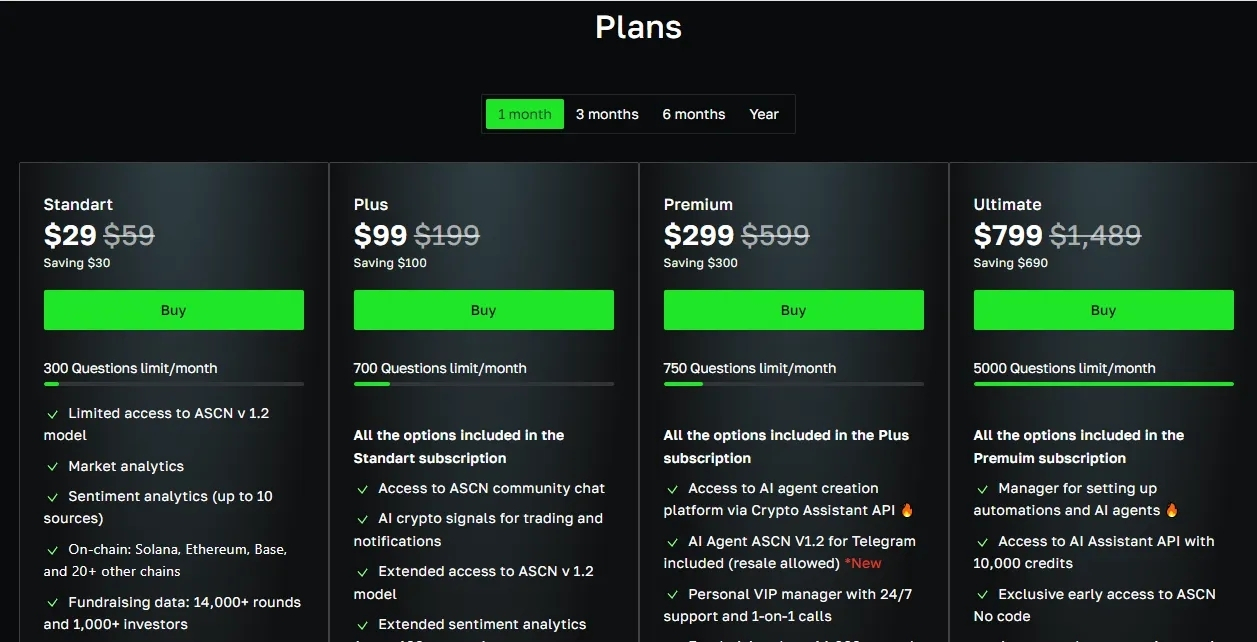
ASCN. ai sits at the top of the decision funnel. It does not just display data, it interprets it. When volume spikes, exchange flows distort, or on-chain behavior looks abnormal, ASCN. ai compresses thousands of transactions into actionable context within seconds.
This matters because most traders lose time trying to figure out why something is happening. By the time clarity arrives, price has already moved.
ASCN. ai is most effective during uncertainty. Situations where price action feels aggressive but narratives have not caught up yet.
2. Nansen
Purpose: Tracking conviction capital
Nansen answers a different question: who is moving the money.
Its strength lies in wallet attribution. Funds, insiders, market makers, long-term holders, and high-performance traders are labeled and tracked. Instead of guessing whether a move is retail noise or institutional positioning, Nansen shows where smart money is actually flowing.
This tool is critical for distinguishing temporary volatility from genuine accumulation or distribution.
3. Arkham
Purpose: Understanding relationships, not just transactions
Arkham goes deeper than inflows and outflows. It focuses on connections.
Wallet clusters, transfer chains, and entity relationships help reveal whether movements are isolated or coordinated. Arkham is often used when traders want to verify insider behavior, confirm fund involvement, or understand how multiple wallets interact behind the scenes.
It turns blockchain data into something closer to forensic analysis.
4. TradingView
Purpose: Turning research into execution
All research eventually needs execution. TradingView remains the execution layer.
Despite the rise of on-chain analytics, price structure still matters. Levels, ranges, trend context, and invalidation points are where decisions become trades. TradingView connects macro conviction with precise timing.
Most experienced traders do not replace charts with data. They align them.
5. Glassnode
Purpose: Identifying market regime and cycle
lassnode operates at the macro level. It tracks exchange balances, coin age, holder behavior, and network activity to identify whether the market is accumulating, expanding, or distributing.
This tool helps traders avoid the most common mistake: applying short-term aggression in late-cycle conditions or excessive patience during early accumulation phases.
Glassnode is less about entries and more about risk posture.

6. Dune
Purpose: Custom hypotheses and raw data access
Dune is for traders and researchers who want control. It provides direct access to blockchain data through SQL queries, allowing users to build dashboards tailored to their own logic rather than relying on predefined metrics.
It is slower than alert-based tools but far more flexible. Dune shines when testing ideas, validating narratives, or monitoring niche sectors.
7. Lookonchain
Purpose: Early awareness
Lookonchain focuses on speed. It tracks large wallet movements and flags significant transfers, exchange inflows, and accumulation behavior in near real time.
It does not replace deeper analytics. It acts as an early warning system. When Lookonchain signals unusual activity, experienced traders know it is time to investigate further using other tools.
How These Tools Are Used Together
No professional relies on one dashboard.
A common workflow looks like this:
• Lookonchain detects abnormal movement
• ASCN.ai interprets the behavior
• Nansen confirms smart money involvement
• Arkham verifies wallet relationships
• Glassnode checks cycle risk
• Dune supports deeper validation
• TradingView executes with structure
Each tool answers a different question. Together, they reduce emotional decision-making.
Final Takeaway
In 2026, edge does not come from faster charts or louder opinions. It comes from context, confirmation, and discipline.
These seven tools do not predict markets. They reveal how capital behaves. Traders who learn to read that behavior stop reacting and start positioning.
That is the real advantage.
Source: Best Crypto Research Tools for Trading and Investing in 2026, Coinmonks, Feb 2026
Best Crypto Research Tools for …
If you want next:
• CMC-optimized version under 1500 characters
• A comparison table only
• First-person trader rewrite
• Or content angles spun from this article