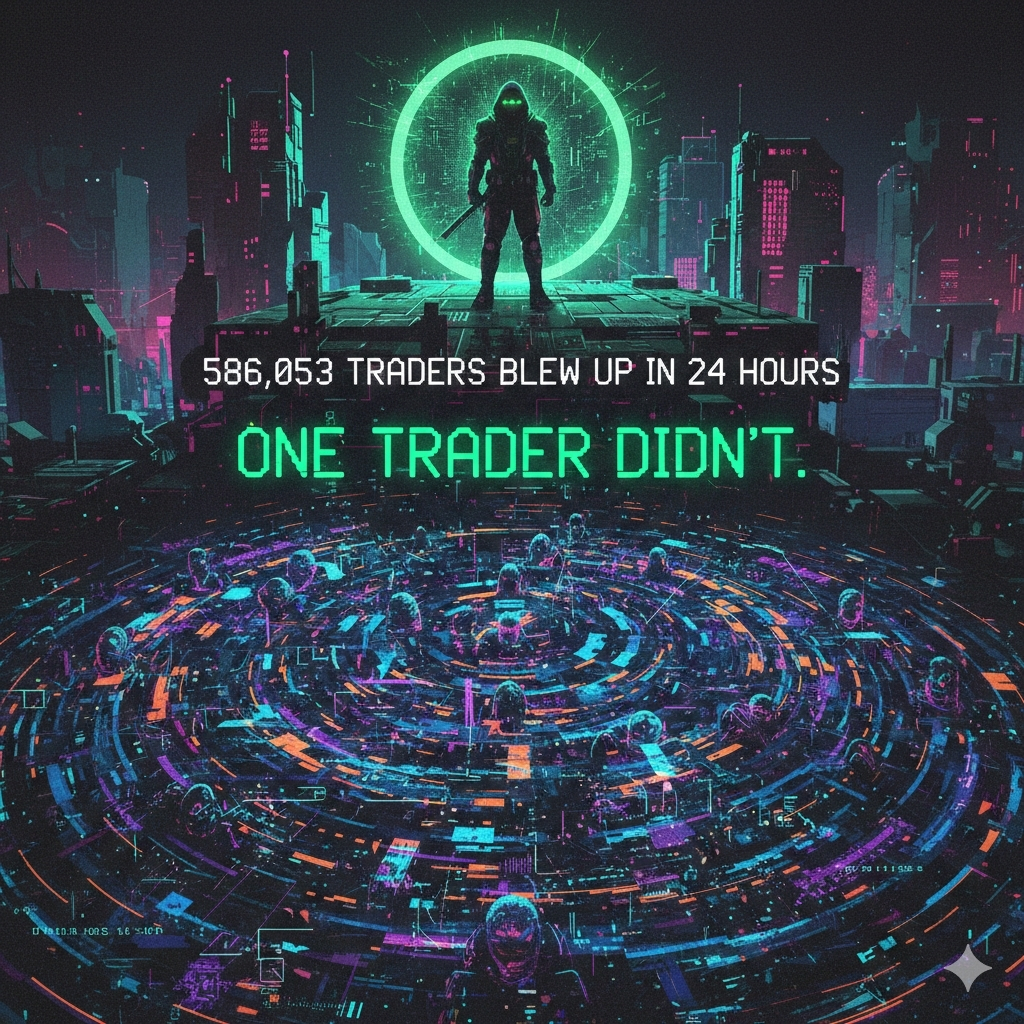
On February 5, crypto did what it always does during stress. It revealed who was positioned to survive and who was positioned to disappear.
In a single day, 586,053 traders were liquidated. Roughly $2.65 billion vanished, most of it from leveraged long positions. It was the largest liquidation wave since FTX and one of the fastest drawdowns Bitcoin has ever seen.
At the same time, one trader walked away with an 80% realized profit.
Same market. Same instruments. Completely different outcomes.
The contrast is not about intelligence or luck. It is about how risk was treated before volatility arrived.
On one side was MMCrypto, who entered a large leveraged Bitcoin position months earlier and scaled out gradually as price expanded. He reduced exposure while the crowd was still chasing upside.
On the other side were hundreds of thousands of traders who stayed fully exposed, convinced the trend would protect them.
When Bitcoin dropped nearly 17% in 24 hours, it did not feel emotional. It was mechanical. Support levels broke. Liquidations triggered forced selling. Forced selling pushed price lower. Lower price triggered more liquidations.
A feedback loop took over.
Market depth had already thinned significantly. Liquidity was not there to absorb panic. The Fear & Greed Index collapsed to 5, the lowest reading ever recorded, even lower than Terra or FTX.
This is where many traders misunderstand what happened.
The crash was not a surprise event. It was the result of positioning that could not survive stress.