


The validator operator checks the zone rotation schedule.
Zone Status: North America – Inactive
Active Zone: Asia-Pacific
Next Rotation: 47 minutes
Her node is running. Fully synced. Stake delegated and locked. Infrastructure operational.
But she will not earn this hour.
According to Fogo's current testnet configuration, epochs run for approximately 90,000 blocks, roughly one hour with the 40-millisecond block target. Each epoch activates a single geographic zone. Validators outside the active zone remain synced but do not earn consensus rewards during that period.
Three zones rotate: Asia-Pacific, Europe, North America. One active per epoch.
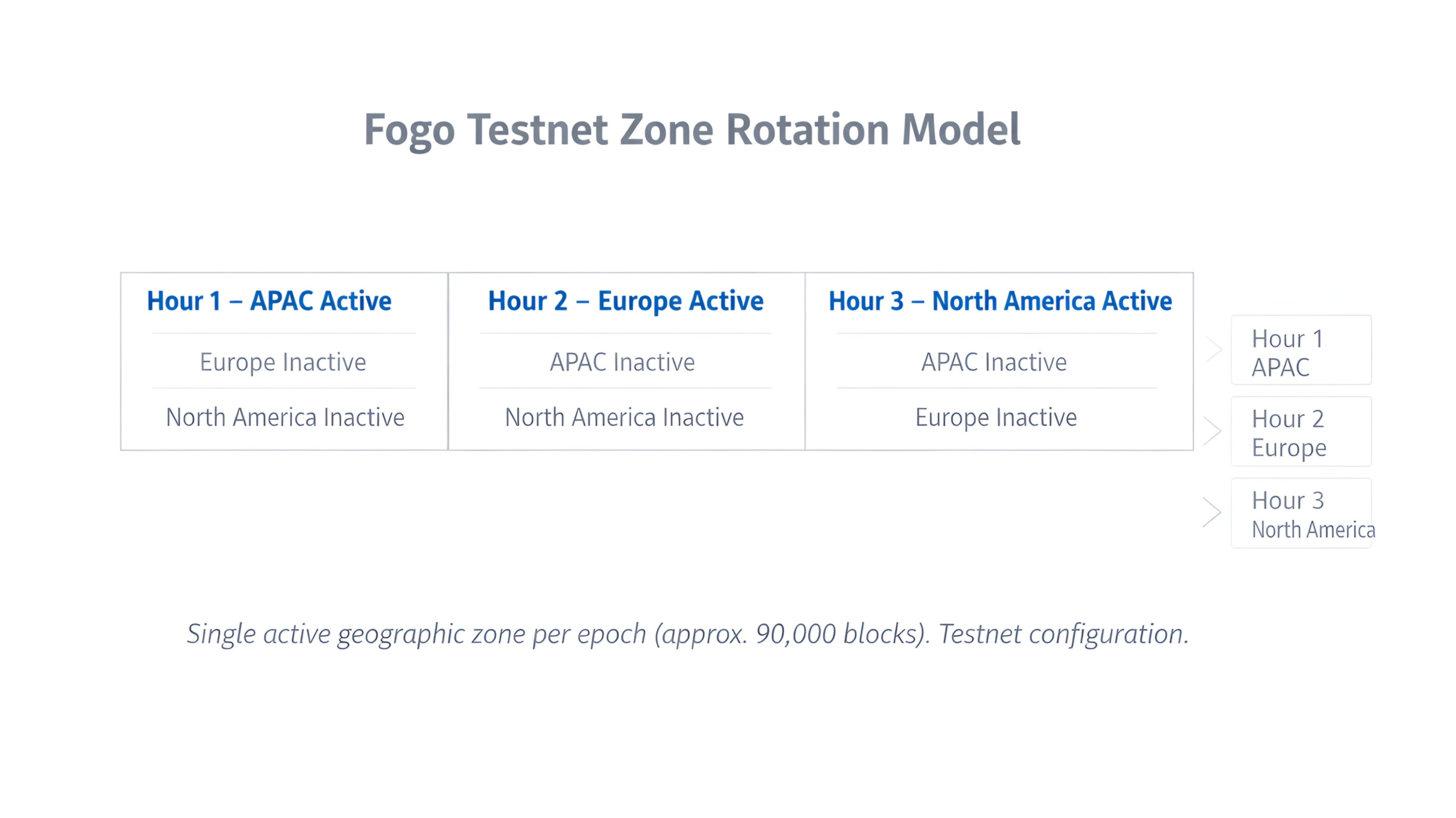
Active time on testnet: one hour out of three.
She opens the economics model and runs the numbers again. Same result as yesterday.
Capital locks continuously. Infrastructure runs continuously. Consensus participation rotates hourly.
Under this structure, a validator is inactive roughly two-thirds of the time.
This is the tradeoff Fogo's zone-based consensus makes explicit. The litepaper describes it clearly: geographic optimization requires temporal exclusion. Validators in inactive zones do not propose blocks, vote on forks, or earn consensus rewards during epochs when their zone is inactive.
The architectural logic is sound. Localizing consensus to one active zone reduces the physical distance messages must travel. The litepaper notes that New York to Tokyo round-trip times often reach 170 milliseconds. Within-region consensus with 40-millisecond blocks becomes achievable.
But faster finality through geographic localization introduces intermittent validator participation under the current rotation model.
She messages another testnet operator:
"How are you explaining the rotation model to your delegators?"
Response: "Carefully. Most staking models assume continuous participation."
Traditional blockchain validators operate on continuous reward systems. Stake capital, maintain uptime, earn proportionally. High uptime generates consistent returns.
Fogo's testnet runs differently. Validators alternate between one-hour active periods and two-hour standby periods. During active epochs, they propose blocks using 375-block leader terms, vote on consensus, and earn inflation rewards. During inactive epochs, they remain connected, sync blocks, and maintain readiness but generate no consensus revenue.
The rotation is deterministic in testnet. Three zones. Four validators per zone. When your zone activates, you participate. When another activates, you wait.
Which is a simple way of saying the bills do not pause when your zone is inactive.
She reviews the documentation on minimum stake thresholds. The protocol filters out zones with insufficient total delegated stake. Only zones meeting the threshold can activate.
This creates collective dependency. Individual validator performance matters, but zone-level stake accumulation determines whether your validator participates at all. If a zone falls below threshold, rotation pauses and inactivity extends.
Validator economics become partially dependent on peer participation, not just individual capability.
One operator she knows is modeling multi-zone strategies for potential mainnet deployment, running validators across multiple geographic zones to smooth participation windows. Active somewhere every hour instead of active one hour in three. Higher operational complexity. More infrastructure.
Another is waiting to see how mainnet parameters evolve.
Testnet confirms the mechanism. Mainnet configuration, including epoch duration, zone count, reward smoothing, or cross-zone compensation mechanics, may differ.
If mainnet retains this rotational structure, validator revenue will inherently be periodic rather than continuous.
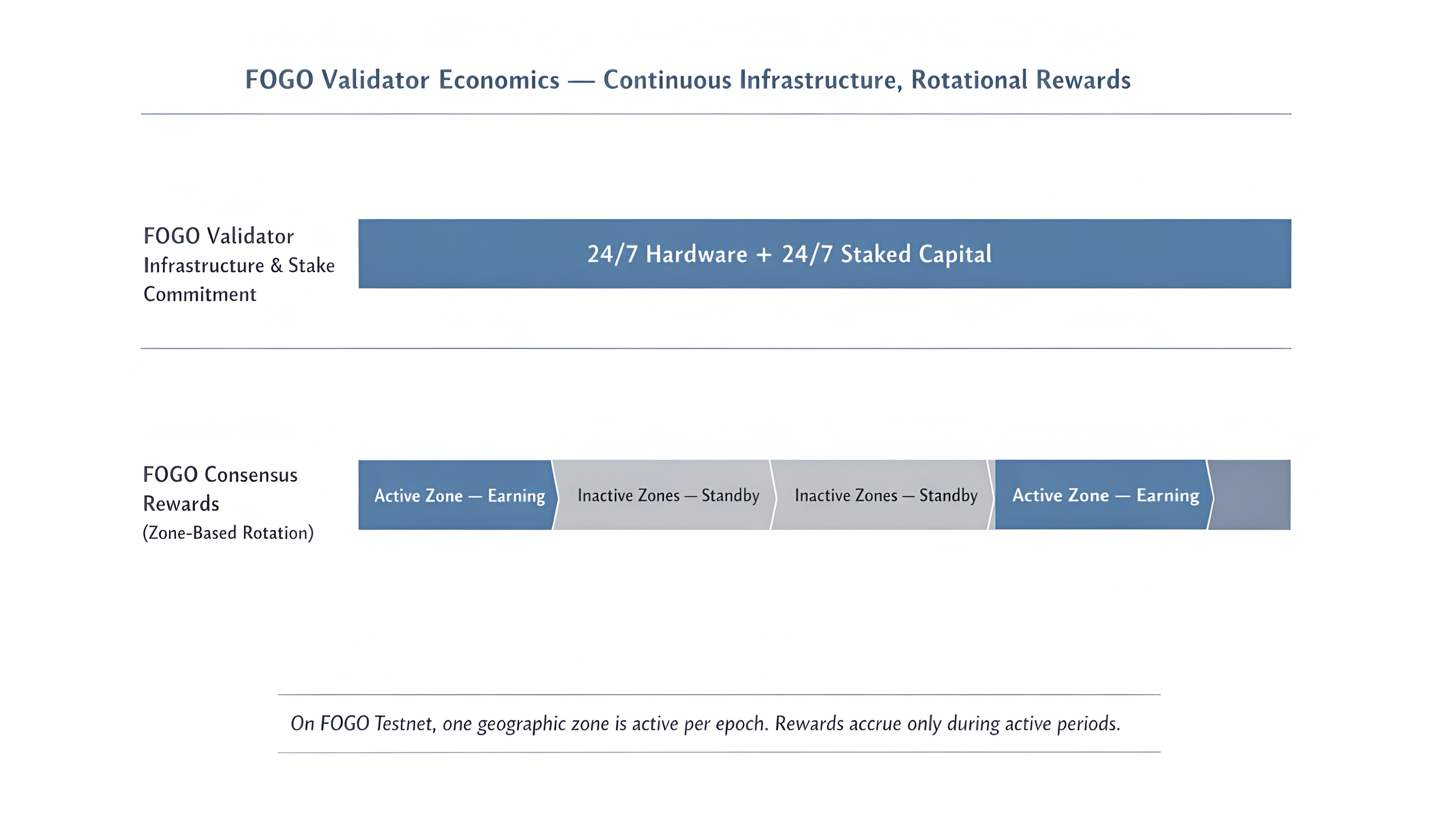
Why does that matter? Because most delegators are used to continuous models.
She drafts a message to her delegators:
"Zone rotation update: North America zone inactive this epoch. Node operational and will resume consensus participation when rotation returns. This is architectural, not operational."
One delegator responds:
"Why stake if participation rotates?"
She types the answer:
"Because blocks settle in 40 milliseconds within active zones. The question is whether rotational participation in fast consensus is worth more than continuous participation in slower consensus."
Traditional validators pitch continuous rewards. Zone-based validators pitch fast finality, but participation rotates.
Testnet currently targets 40-millisecond blocks with three zones rotating every approximately 90,000 blocks, about one hour. That is the model validators are evaluating.
Active participation rotates. Infrastructure does not.
Her node is ready for the next activation window. Stake secured. Infrastructure optimized. Zone threshold met.
The countdown timer shows 44 minutes until North America activates.
The costs do not pause. The stake does not unlock. Only participation rotates.
And if mainnet preserves this structure, validator economics on Fogo will be defined not just by uptime, but by geography and rotation cadence.
She sets a reminder for 43 minutes.
The validator that earns one hour in three has to be ready when that hour arrives.