
Self-custody gave users freedom, but it also created new risks.
In 2026, Smart Permission Layers are emerging as a key Web3 trend — allowing users to control how apps, agents, and contracts access their wallets without handing over full control.
This is security becoming granular, not all-or-nothing.
⚙️ What Are Smart Permission Layers?
Smart permission layers sit between wallets and applications.
They allow users to:
• grant limited, time-bound access to dApps,
• set spending caps and action-specific permissions,
• revoke access instantly without moving funds,
• safely interact with AI agents and automation tools.
Instead of blind approvals, every interaction is scoped and controlled.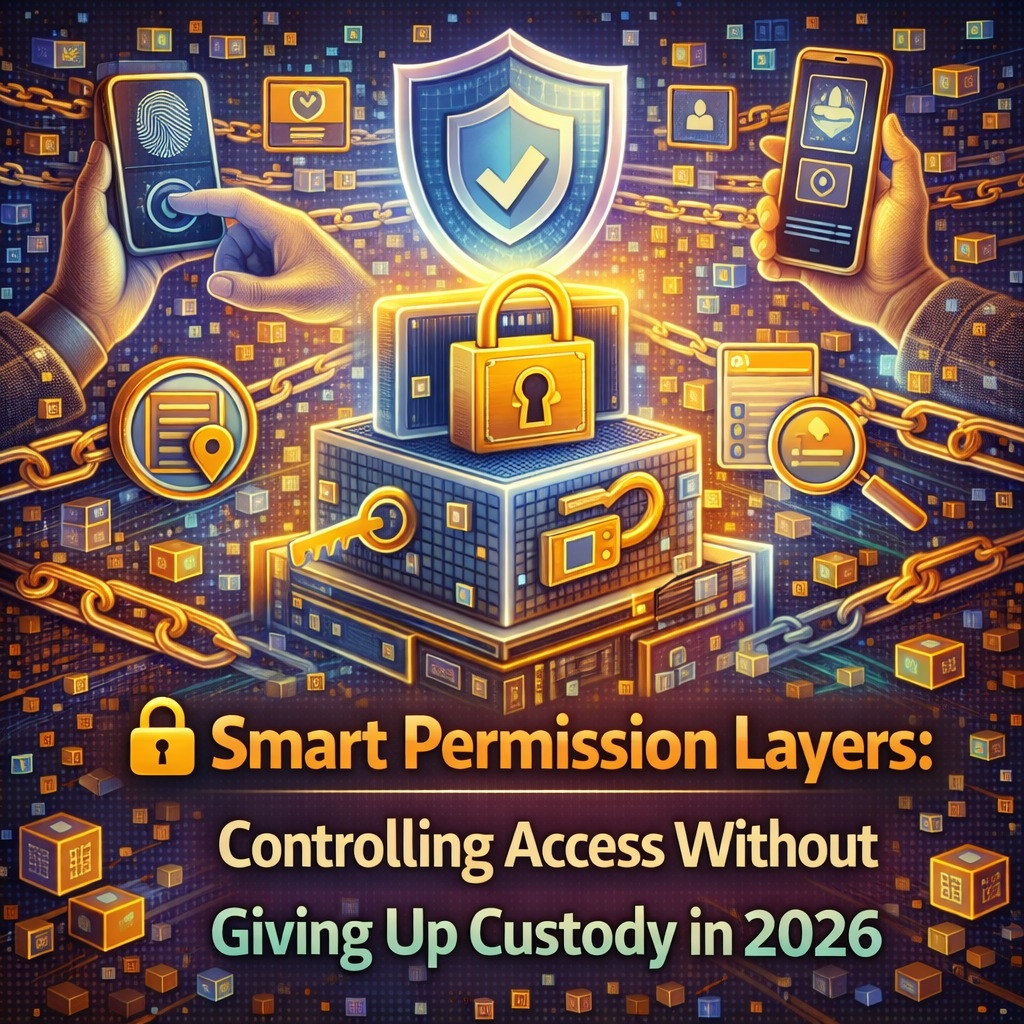
🚀 Why It’s Trending in 2026
• Wallet drains and exploits often come from overbroad permissions.
• AI agents and automation need safe execution boundaries.
• Institutions require strict access controls for on-chain ops.
• Account abstraction makes permission logic cheap and flexible.
Security is shifting from trust to rules.
💡 Final Takeaway
Smart Permission Layers are redefining wallet safety in Web3.
In 2026, users won’t fear interacting on-chain — they’ll set clear boundaries, keep custody, and let smart permissions quietly protect their assets while Web3 keeps moving fast.
#CryptoTrends2026 #Web3Security #SmartWallets #AccountAbstraction #BlockchainInnovation #BinanceSquare #Write2Earn