
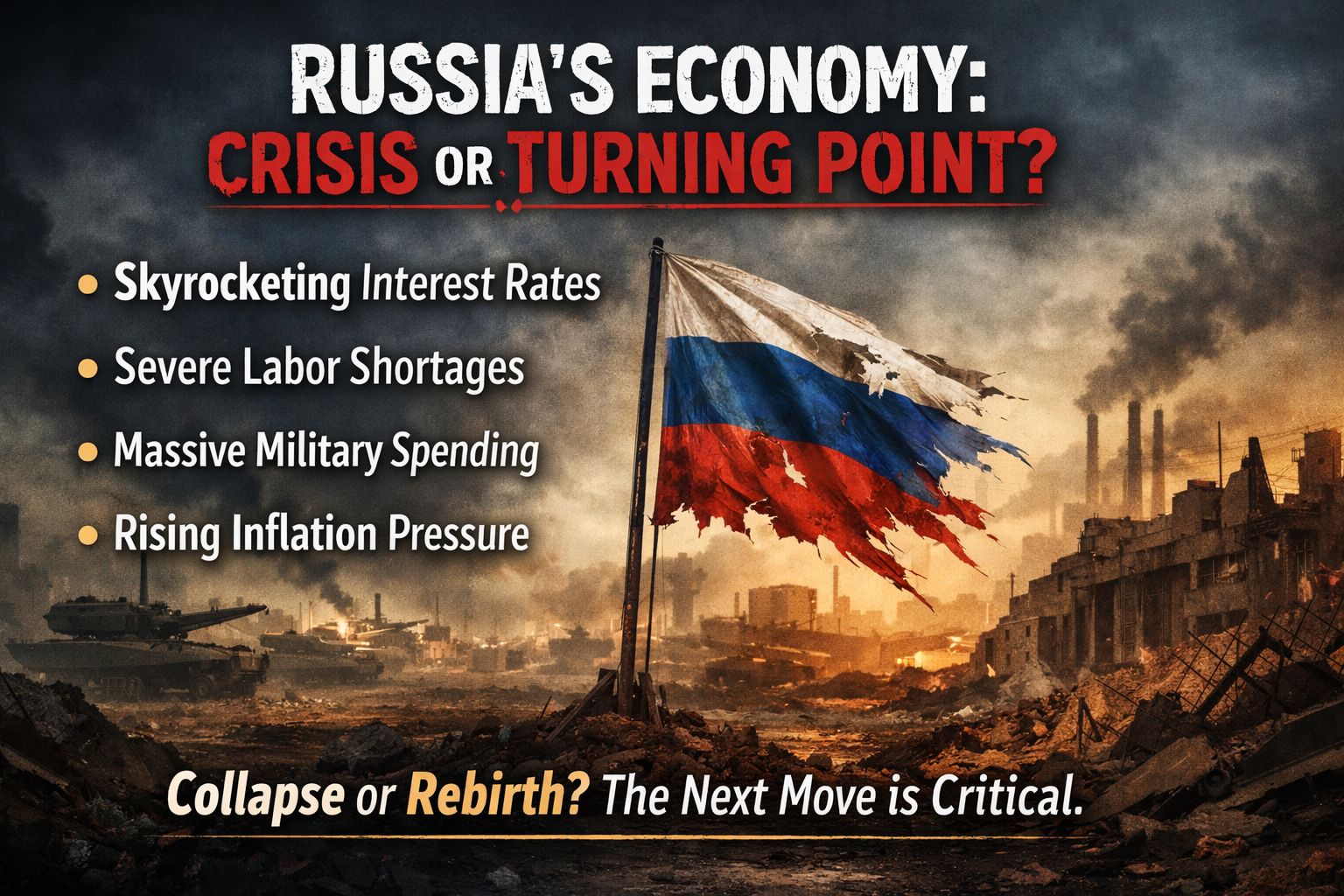
 Russia’s economy is facing serious pressure after two years of operating under war conditions. While official GDP numbers may appear stable, deeper indicators show long-term strain.
Interest rates have surged above 16%, making borrowing extremely expensive for businesses and households. At the same time, labor shortages—caused by mobilization and migration—are slowing production. A large portion of the national budget is now directed toward defense spending, reducing funds for social services like healthcare and education. Inflation continues to challenge consumers as prices rise faster than incomes.
However, the situation is not entirely one-sided. Western sanctions have pushed Russia to increase domestic production and reduce reliance on imports. New trade routes and infrastructure projects are expanding ties with Asian markets. Despite economic pressure, the country maintains relatively low national debt compared to many Western economies.
The future largely depends on how the conflict evolves. If tensions ease, Russia could redirect its industrial capacity toward civilian sectors such as technology, infrastructure, and manufacturing. Whether this period becomes long-term decline or a restructuring phase will depend on policy decisions and global developments.$BTC $XAU #MarketRebound #HarvardAddsETHExposure #Binance #BTCVSGOLD #OpenClawFounderJoinsOpenAI