
The first time I heard about Fogo, the conversation sounded familiar: speed, throughput, low latency. The same slogans that every “fast chain” repeats. Speed is easy to market and hard to build — but that wasn’t my real question.
My question was different:
What does Fogo look like operationally when no one is watching?
Not marketing. Not benchmarks. I mean real operations — leadership rotation, validator management, developer access, RPC stability, zone coordination, and how the system behaves under pressure.
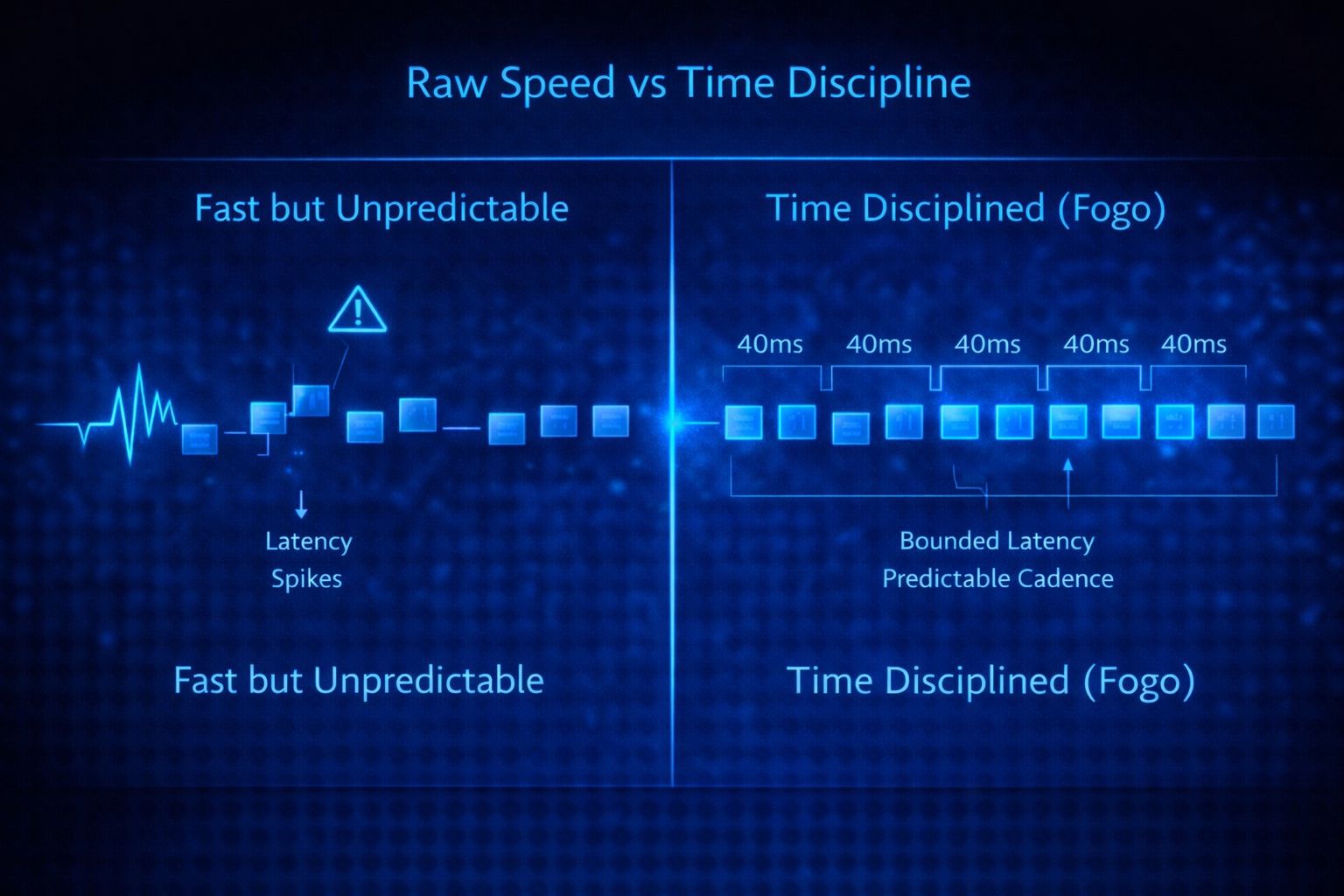
From that perspective, Fogo doesn’t feel like “just another crypto project.” It feels more like a real-time systems project that happens to use blockchain.
Time Discipline, Not Just Speed
The thesis is simple:
Fogo is not only building speed — it is building time discipline.
In trading infrastructure, the most expensive problems are not minor latency differences. They are:
Unpredictable timing
Intermittent failures
Systems that behave differently under load than in testing
Fogo’s core design choices reflect this awareness.
In testnet documentation, the network explicitly targets:
~40ms block times
~375-block leader terms (about 15 seconds per leader)
That might look like just another performance stat — but it signals something deeper:
“We want timing you can plan around.”
Predictability is the real performance layer.
Zones: The Conversation Crypto Avoids
Traditional finance has an uncomfortable truth:
Co-location wins.
You place systems physically close to minimize latency. Performance-sensitive markets demand it.
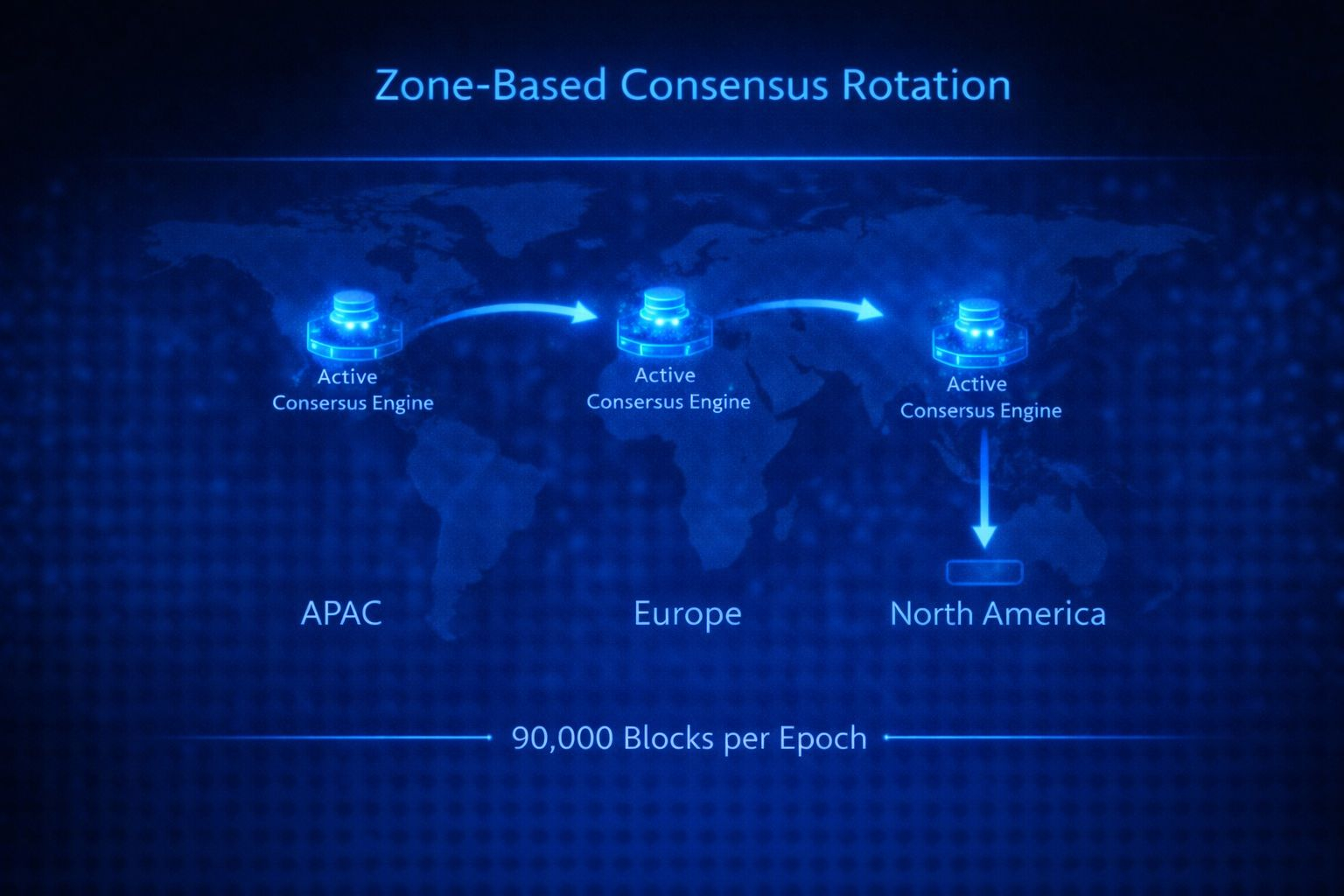
Fogo acknowledges this reality openly through its zone-based architecture. Validators within a zone are co-located to optimize consensus latency. Zones can represent tight geographic clusters — even single data centers.
Most chains start with the slogan of global decentralization and then later try to patch performance gaps.
Fogo flips that order.
It begins by admitting the performance trade-off — then designs a mechanism to redistribute that advantage geographically.
Testnet epochs rotate consensus across zones like:
APAC
Europe
North America
The message is not “we are centralized.”
It is: “We understand the trade-offs — and we rotate them.”
Hourly Zone Rotation: An Operations Rhythm
Fogo testnet epochs last ~90,000 blocks — roughly one hour.
Each epoch shifts consensus to a new zone.
An hour is long enough for consistent monitoring.
Short enough to prevent permanent dominance.
This is not a gimmick. It’s operational rehearsal.
It’s as if the network is saying:
“We can run here. Now we’ll run there. On schedule.”
That rhythm — repeated reliably — is what institutions care about.
The Boring Part That Matters: RPC & Developer Access
Speed means nothing if developers can’t access the chain reliably.
Many chains fail not at consensus — but at endpoints:
Broken RPCs
Slow responses
Inconsistent infrastructure
In Fogo’s ecosystem discussions, xLabs mentioned running six RPC nodes across multiple regions (two per region) during testnet — specifically to improve access and redundancy.
Important detail:
These were not validators. They were not consensus nodes.
They existed purely to make the network usable.
That signals production thinking.
Infrastructure is treated as first-class, not an afterthought.
Validator Discipline, Staking & Operational Incentives
Fogo’s token design (as outlined in its MiCA-oriented whitepaper) emphasizes:
Gas for transactions
Staking for validators
Delegation mechanisms
Incentive discipline
In a system based on co-located zones and tight timing schedules, validator professionalism matters.
Staking becomes more than token utility — it becomes a mechanism to enforce operational discipline.
This is system design thinking, not narrative-driven design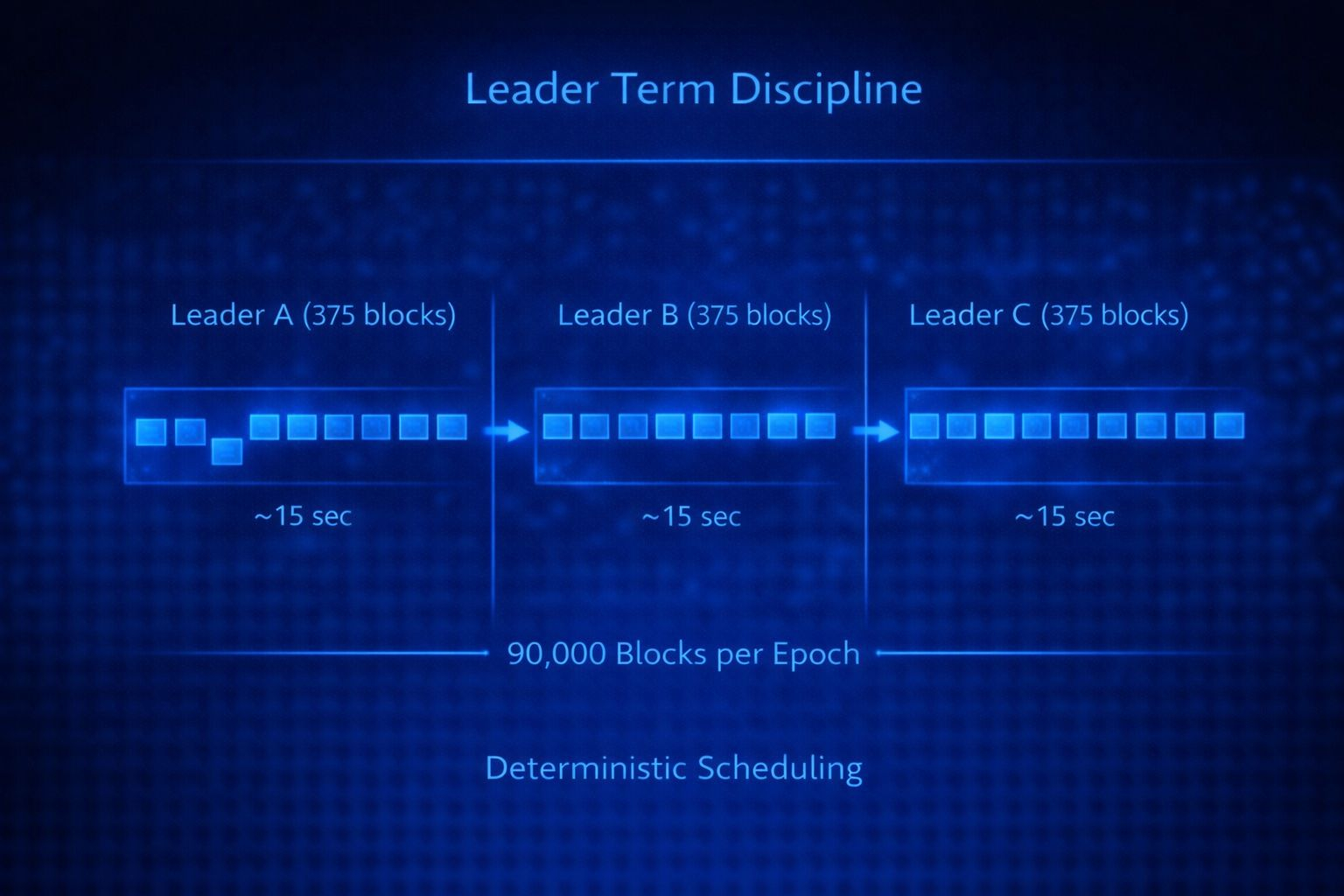
The Real Test
Anyone can show speed in a demo.
The real test is:
When load spikes
When nodes fail
When zones rotate
When developers stress the system
Fogo’s zoning, deterministic leader rotation, short leadership windows, and scheduled epoch shifts all attempt to reduce chaos.
The goal isn’t perfection.
It’s controlled behavior.
If execution remains consistent across zone switches, the network can support serious trading activity.
If not, it’s just another fast chain.
Performance as a Service Level
Most people misunderstand performance chains.
They think performance means:
Benchmark screenshots
Viral charts
TPS bragging rights
But durable performance means:
Predictable timing
Predictable access
Predictable behavior under stress
Predictable operational parameters
Fogo’s documentation reads less like marketing — and more like something meant to be measured and tested.
Independent infrastructure teams discussing validator testing and multi-region RPC deployments reinforce that mindset.
Final Thought
Fogo is not trying to beat Solana.
It is trying to rethink what a performance chain means.
Instead of narrative-first design, it treats the chain as a system:
Co-location-like behavior
Controlled latency
Deterministic leadership
Geographic rotation
Validator incentives
SVM compatibility
This approach isn’t flashy. It doesn’t trend easily.
But if Fogo succeeds, it won’t be remembered as “another fast chain.”
It will be remembered as one of the earliest chains that treated market performance as an operational discipline — something to run, monitor, rotate, and test.
Not just declare.