
Most cycles create dozens of ambitious Layer 1s, but only a small fraction try to rethink the competitive axis. Fogo doesn't compete on the adjustable scale of slogans, but on the absolute scale of time. While most of the industry focuses on idealistic Fogo, a more challenging demand is articulated; predictable, ultra-low latency execution is the most dominant variable to focus on for on-chain finance to reach the next frontier.
The Fogo listing on Binance with a Seed Tag in January 2026 was more than the first access to the market. Seed Tags are a specific classification of high-risk early-stage technology, so they framed Fogo as 'experimental' but in a positive way. This was more than just a token heading to the secondary market; it was a price discovery technology. Sophisticated market participants placed a Fogo bet that the next phase of on-chain capital market migration will happen through clear speed rather than just superficial, decentralization maximalism.
From testnet conversations to mainnet issues, Fogo has encountered both ambition and challenges. The early decline in trading activity, which made speculators anxious, masked the true structural state of the system.
Despite fluctuations in the cost of the network, the network showed the ability to finalize transactions in less than a second, positive validator performance, and instantaneous deployment of decentralized applications. Under a narrative focusing on the price drops, the network's story centered on its preparation of infrastructure.
I will analyze Fogo by considering its governance structure, the prevailing market dynamics, price forecasts, and the trajectory of the Fogo project. My thesis is simple and bold. Fogo is not aiming for a generalized blockchain functionality, shallow targeting and lagging optimizations. Fogo is targeting the realm of millisecond-level functionality, aiming to be the first in that space. To determine if that thesis is accurate, we need to analyze the governance layer of the protocol.
Analysis of governance layer
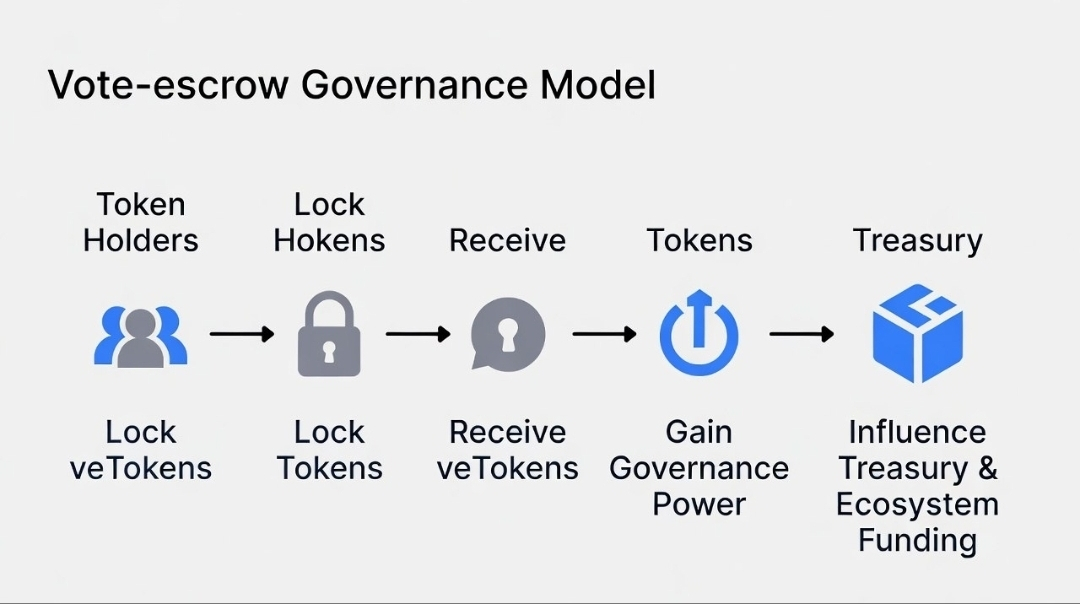
Governance is not a sideshow. Fogo's adoption of a vote-escrowed governance model is the first of many intended shifts away from token-holder democracies. Influence in governance is earned by locking FOGO tokens for a predetermined duration and receiving an amount of veTokens that increases, not linearly, but exponentially with time. Therefore, the governance weight is directly correlated with the conviction of the holder.
This model creates a power structure that is in stark contrast to that of an instantaneous democracy. Fogo's target market is not short-term players; those players will not be able to engineer deficiences to dominate the overall proposal outcomes. On the other hand, Fogo's target market is long-term players that are wiling to idlag tame immobility of their capital, and those players will easily dominate the proposal outcomes.
As a result, a governance ecosystem has been developed that prevents actors from being opportunistic and encourages long-term optimization.' Ecosystem tokens of Fogo create alignment, in that it causes a delay of complete governance to the long-term investors in the ecosystem and the employees of the ecosystem, creating a delay in completely unlocking their tokens. Because of the delay, their tokens create a barrier to governance concentration which also creates a barrier to the likelihood of governance creating short-term, adverse decisions. Unlike many governance models that create a large concentration of equity, governance, or tokens in the hands of founders, early investors, or key stakeholders, Fogo creates a governance system that allows for a balance of equity and governance to be evenly spread over time, and a larger number of participants. The layered distribution of the governance tokens, along with the numerous wallets that received the governance tokens as part of the airdrop, supports the greater distribution of tokens in the Fogo ecosystem. Most participants in the private funding rounds of Fogo received tokens that were granted to participants in the testnet of Fogo. The governance model of Fogo also democratizes governance and allows for the distribution of transactional and operational democracy of governance to the participants in the Fogo ecosystem.
The governance model of Fogo allows for democracy as the ecosystem funding, and governance of the ecosystem, and the control of the treasuries, and the grants that are allocated to the participants in the Fogo ecosystem are operational and not just ceremonial. Those who govern Fogo also control the governance of the Fogo ecosystem and the funding of the ecosystems that are offered to the participants in the Fogo ecosystem.
Fogo’s governance architecture shows how to systemize commitment, stagger influence, and bind decisions to ecosystem outcomes. This intertwining of time, capital, and power is the structural backbone of market confidence. After exploring the internal design, we’re focusing on the external/across-the-table arena where perception meets liquidity: market trends.
Fogo Market Trends
Market behavior surrounding Fogo since its listing shows the tension between speculative reflex and structural accumulation. The first trading sessions showed normal start volatility. Leveraged positions unwound, sentiment shifts, and social discourse drove short-term price drops. For the casual participant, this looks to be most of the tradable value.
In market behavior surrounding Fogo since its listing, the sell off phase showed Fogo established a basis range. This phase looks to have a behavior of its own. The market behavior looks to have won the market spell to get priced to value and the tokens to the value seekers. The reverse of the usually expected magic of “pump-then-bleed” market looks to have succeeded in the distribute dump.
Moreover, the coordination of exchanges expanded beyond a singular location. Cross-listing of multiple venues deepened liquidity and diversified order flow. This dispersion decreases the likelihood of manipulation and promotes efficient price discovery. Compared to other market listings where the order books are thin and large price swings occur, Fogo appears to have a liquidity profile that is maturing.
Another emerging trend is the specialization of narratives. While a plethora of Layer 1s target the generalized DeFi ecosystem, the dominant narrative of Fogo becomes increasingly focused on latency-sensitive applications, specifically, algorithmic trading, derivatives, and liquidity provision to institutions. This focused narrative is likely to reduce the addressable market, but it will increase conviction within the target audience. Markets typically reward clarity of narrative over the breadth of the audience.
Broader crypto market conditions are also likely to impact the route Fogo takes. Deflationary macros are likely to increase demand for high velocity and high leverage trading due to performance-oriented narratives. In the inflationary phases, clearly governed infrastructure projects with self-discipline in their tokenomics will outperform speculative tokens. Fogo aligns more with the latter.
From the combination of the above factors, it appears that the token is transitioning from high volatility that is common with a launch to a more stable accumulation phase, where expanding liquidity and a cohesive narrative are all supportive factors.
Let's examine FOGO with the elements of the market we previously discussed, beginning with the most important to traders: the price of FOGO.
Price Predictions
Price movement is not the same as price prediction. In the case of price movement, the market is responding to hype. Market response based on hype is not a good predictor of price movement. Instead, we need determine price movement based on supply. The price movement is a result of the predetermined supply.
In a situation in which supply increases, the price of FOGO will move in a predictable manner. With a less aggressive supply mechanism, the price of FOGO will continue to move in predictable manner. In the case of a supply which is less aggressive, we will to see a less aggressive supply mechanism.
In the case of a less aggressive supply mechanism, we will to see a less aggressive supply mechanism. In the case of price movement based on market sentiment, the price of FOGO will continue to move in a predictable manner. In the case of price movement based on market sentiment, we will see a less aggressive price movement. In the case of price movement based on market sentiment, we will see a less aggressive supply mechanism.
In the previous case, we will see a less aggressive supply mechanism. In the case of price movement based on supply, the price of FOGO will continue to move in a predictable manner. In the previous case, we will see a less aggressive supply mechanism. In the previous case, we will see a less aggressive supply mechanism.
In a situation with moderate growth, if Fogo's infrastructure starts to have demand for latency-sensitive trading desks and institutional participants, then demand elasticity could increase significantly. Under these conditions, as a result of positive market sentiment, prices of crypto assets could rise rapidly to higher value tiers.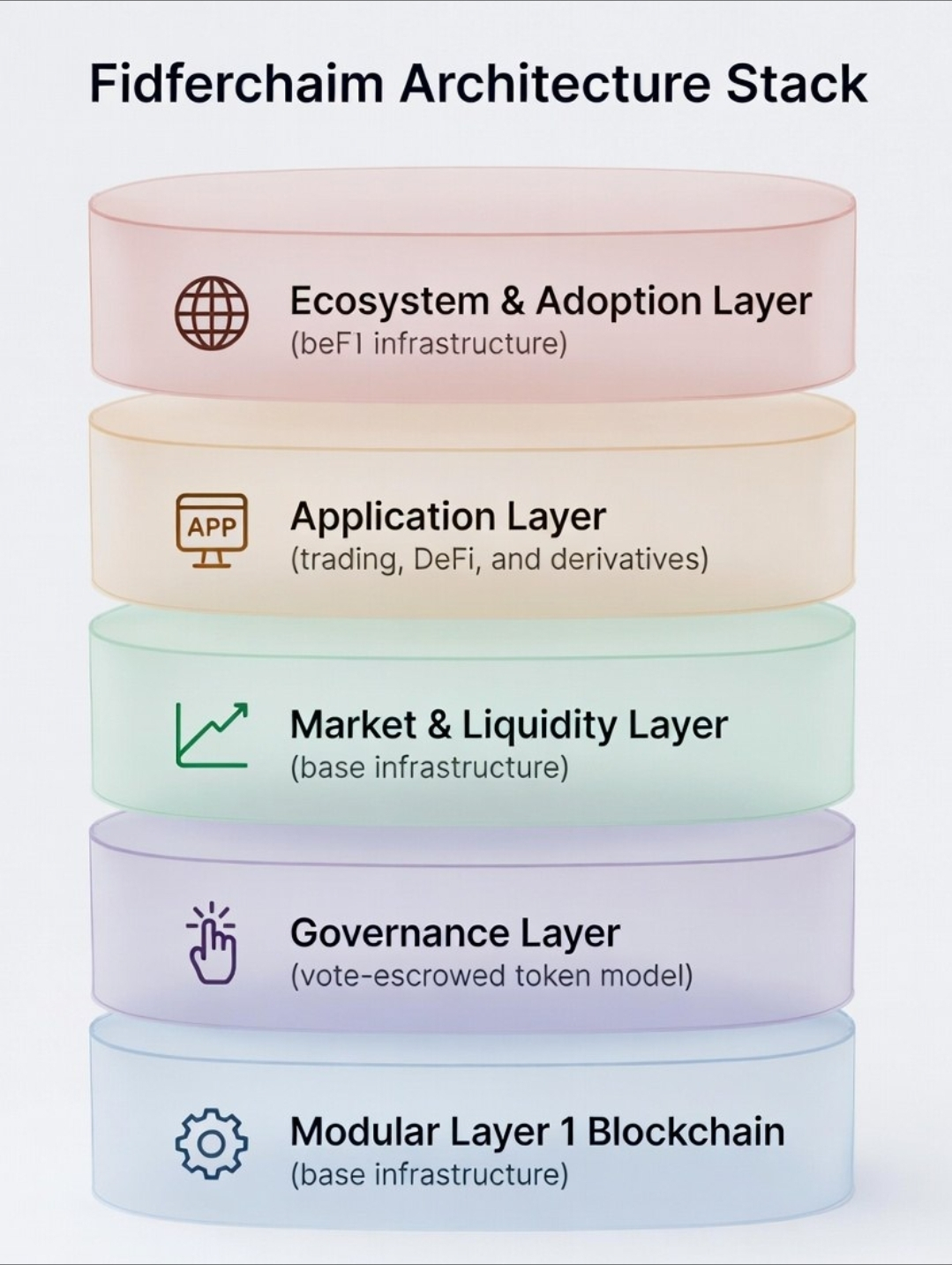
If there is a bearish macro environment, it can be expected that there will be negative pressure regardless of how strong the fundamentals of the protocol are. If there is less than expected adoption, unlock events can increase downward pressure. However, there is less chance of a totally collapsing structure due to the Vesting Schedule
The most important element is how quickly adoption takes place with respect to the tokens being released. If there is a gap in the ecosystem scaling and the new tokens that are released, then Fogo will be able to increase its value. If there is no gap then there will be a delay in value increase until there is sufficient demand for the tokens to be released.
This indicates that there is a lot of potential for increased value in the tokenomics. The value of the tokens will increase in relation to how quickly there is demand for the ecosystem. Overall, Fogo is proven to be unique and vital in the blockchain ecosystem.
Fogo can expect a future where processed capital is more valuable than the processed capital themselves.
By saying this, Fogo is saying that predicting the future and having autonomous processes that can generate capital is more valuable than having a long, meandering, and rhetorical description of the future.
There is a path where Fogo can succeed by constructing, and for validators, that means being able to sustain whatever performance is needed to be the best. There is this further situative constraint with regards to the milliseconds which means developers must be able to construct whatever applications best exploit that, and for liquidity providers, that means being able to get economic value from finality ... all of these processes must function and be performant together.
The real question is, will Fogo's design be a default option for the powerful actors in the latency arbitrage ecosystem, or only for the non-powerful actors?
Fogo has the position and the market will determine whether this position becomes controlling or not. When control of time means control of value, it is for this reason that Fogo is asserting its control.