


Vanar Chain is a layer one blockchain built with one clear idea to make web3 useful in real life not just for traders but for normal people and real businesses. The project started its journey as Virtua and later moved into Vanar with a full rebrand and a one to one token swap into VANRY. This was not just a name change it was a shift in direction toward AI powered blockchain tools that are easier faster and cheaper to use.
At its core Vanar is designed to handle large scale applications like gaming metaverse digital identity AI data and brand platforms. Most blockchains struggle when real users come in because fees go up and systems slow down. Vanar was built to avoid that. It focuses on high speed low cost transactions and smart data handling so apps can run smoothly without pushing costs onto users.
The technology behind Vanar is where it stands out. It is built as an AI native chain meaning artificial intelligence is not added later but baked into the system. Vanar uses smart compression and semantic data layers to reduce how much data needs to be stored and processed on chain. This allows complex actions like AI verification digital ownership and identity checks without heavy load. The chain is also EVM compatible which makes it easy for developers to move from Ethereum and build fast.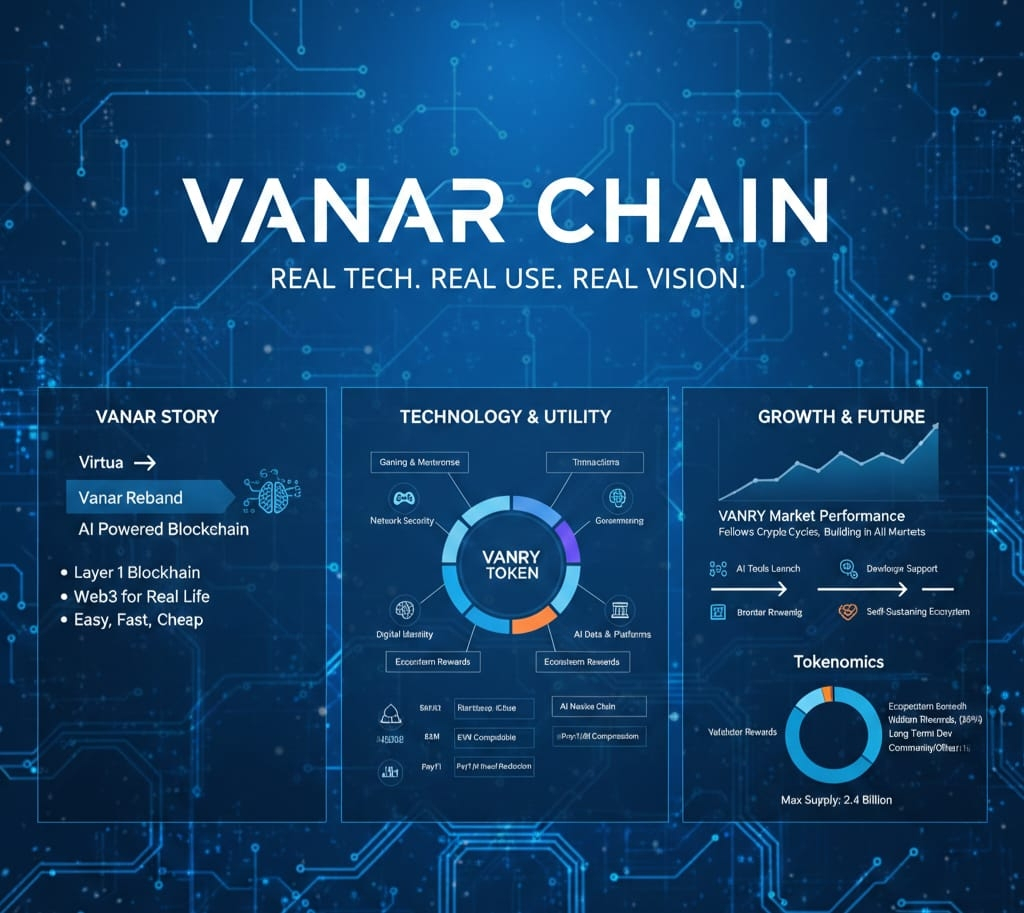
The VANRY token is the fuel of the network. It is used to pay for transactions secure the network through validators and will be used for staking governance and future ecosystem rewards. As more apps launch on Vanar the demand for VANRY grows naturally because every action on the chain needs it. The token is also available in wrapped form on other networks to support liquidity and wider use.
Vanar is not trying to solve fake problems. Its real world purpose is focused on adoption. Brands can use Vanar to launch digital assets without worrying about user fees. Game studios can build on chain games without breaking gameplay. AI tools can verify data identity and ownership on chain. Even payments and finance tools are planned under its PayFi vision where AI helps reduce fraud and automate trust.
The use cases are already clear gaming metaverse AI powered apps digital collectibles real world brands and enterprise platforms. Instead of forcing users to learn crypto Vanar wants crypto to work quietly in the background just like the internet does today.
The team behind Vanar comes from gaming entertainment and tech backgrounds. This matters because they understand users not just code. Their focus has always been on building products that people actually use. One important detail is that the project did not reserve tokens for founders which shows a long term mindset and alignment with the community.
Tokenomics are simple and transparent. The maximum supply of VANRY is fixed at around 2.4 billion tokens. A large portion is allocated to ecosystem growth validator rewards and long term development. Tokens are released gradually to avoid heavy inflation and sudden sell pressure. This structure supports long term stability rather than short term hype.
Market performance of VANRY has followed the wider crypto cycle with strong moves during bullish phases and deep pullbacks during market fear. This is normal for emerging layer one projects. What matters more is that the project continued building through slow markets which often separates serious teams from temporary ones.
The roadmap ahead focuses on real products not just announcements. This includes launching AI tools expanding developer support onboarding brands and rolling out staking governance and more validator participation. The goal is to turn the network into a self sustaining ecosystem where usage drives value.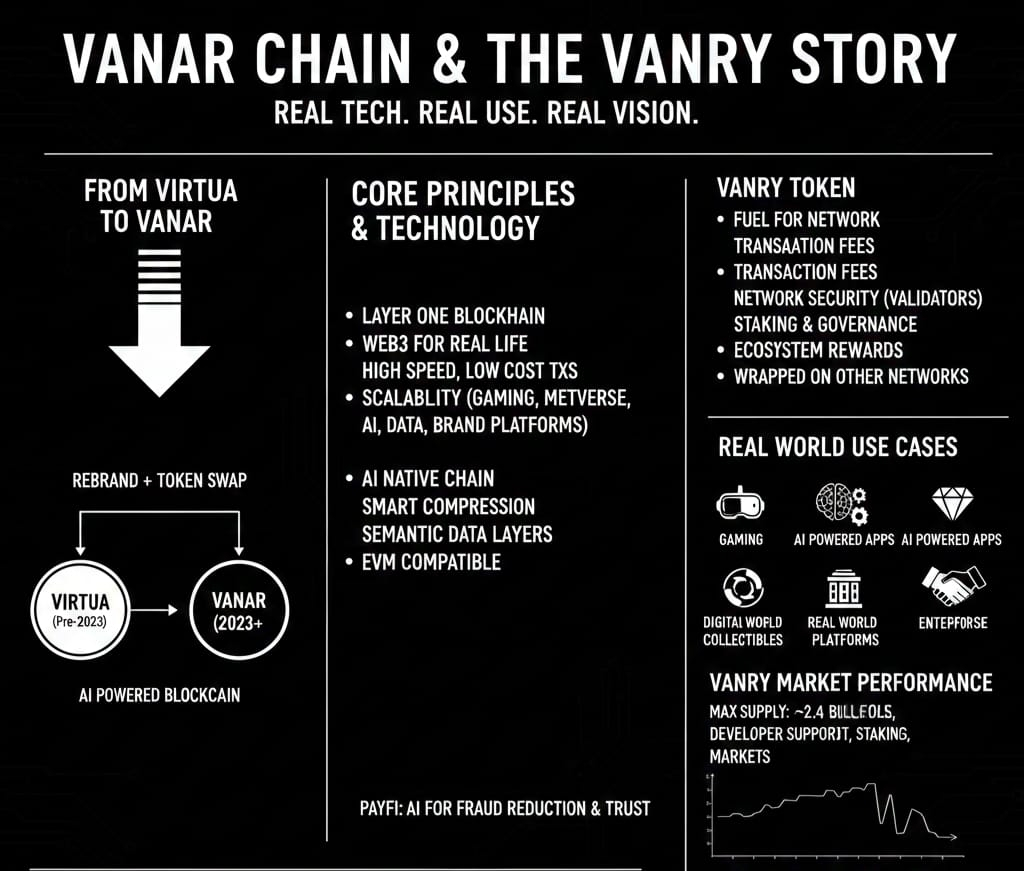
Looking forward Vanar has strong potential because it is not chasing trends but building infrastructure. AI and blockchain are both growing fast and Vanar sits right in the middle of them. If execution stays strong and adoption continues VANRY can grow based on real demand not speculation. This is the kind of project that moves quietly early and gets noticed later.