

FOGO is one of those projects that didn’t arrive quietly — but it didn’t stay loud for very long either.
When it first entered the market earlier this year, there was the usual rush that tends to follow new infrastructure plays. Early buyers piled in, price moved fast, timelines filled up with screenshots, and for a brief moment it felt like another one of those “don’t miss this” launches that people chase without thinking twice. Then, just as quickly as it moved up, the energy faded. The price pulled back hard from its early highs and eventually settled into the $0.02 range, where it’s been drifting around $0.024 with almost frustrating calm.
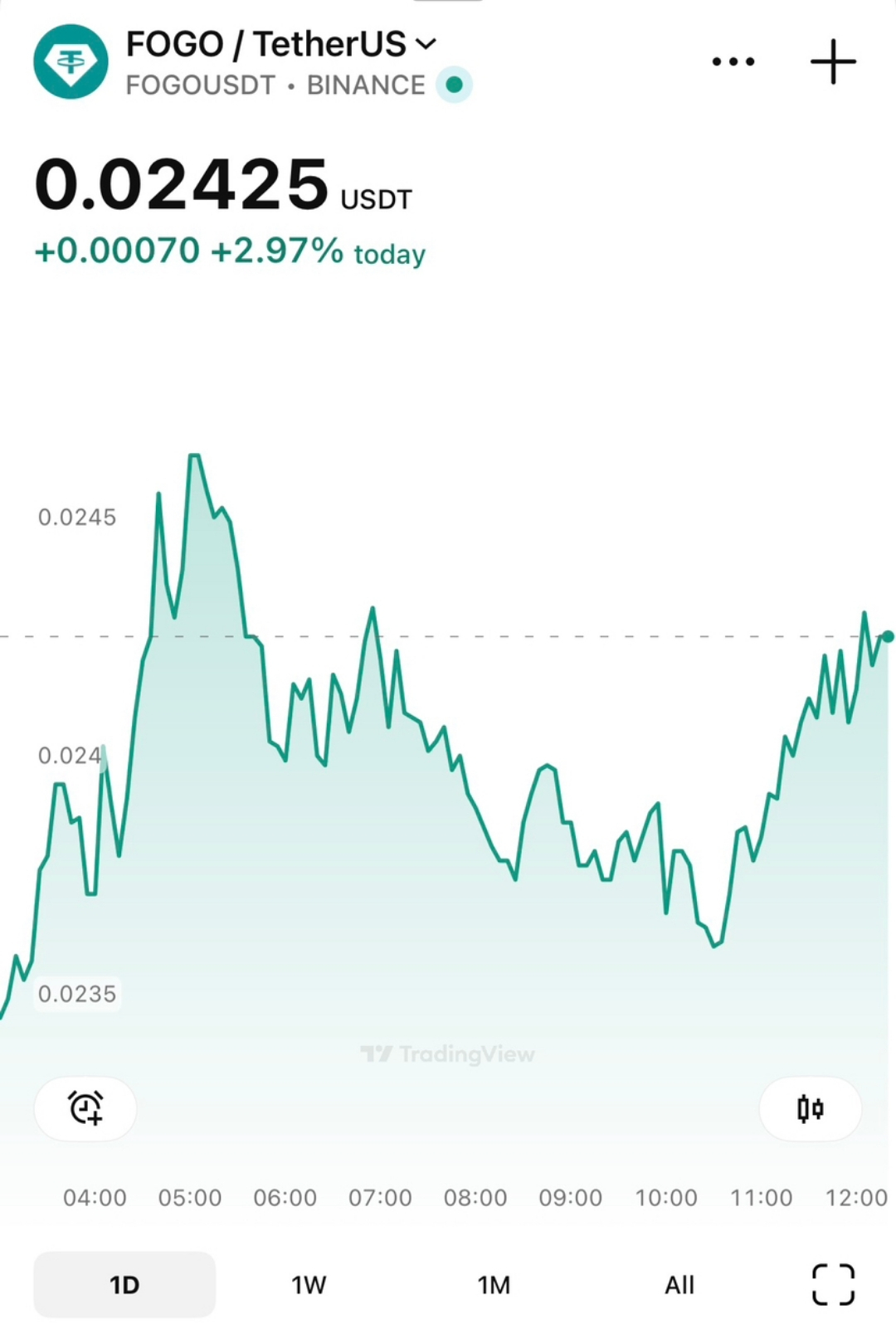
From the outside, it looks like the story already played out. A launch, a spike, a retrace — nothing new in crypto. But when you spend some time actually watching what’s happening beneath the surface, this doesn’t feel like a project that’s being abandoned. It feels more like one that’s being quietly reorganized.
The interesting part is that even though price has cooled off, activity hasn’t disappeared in the way it usually does when a token is losing relevance. Trading hasn’t dried up completely. Liquidity hasn’t fallen off a cliff. Order books are still getting filled on both sides. In weaker projects, once the hype dies, the market becomes empty — buyers vanish, sellers dominate, and the spread widens until even small trades push the price around dramatically. That kind of fragility hasn’t shown up here in the same way.
And that’s usually the first clue that something else is happening.
A big portion of FOGO’s total supply still isn’t actively circulating in the market yet. In simple terms, not all of the tokens are freely moving between buyers and sellers. Some are locked, scheduled for release over time. That might sound like a risk at first — and yes, unlocks can create sell pressure — but it also means the actual float, the tokens that are realistically available to trade right now, is smaller than people assume when they glance at the total supply number.
In markets where the float is limited, price doesn’t need overwhelming demand to move. It just needs enough new interest to collide with reduced availability. Think of it less like a floodgate opening and more like a narrow hallway filling up. When ownership slowly shifts from short-term participants to people who are comfortable holding through slow phases, it changes how reactive the market becomes later on.
What seems to be happening right now is a gradual handover. Early recipients — whether from initial allocations, airdrops, or launch-phase buyers — are likely taking profits or cutting losses after the initial volatility. Meanwhile, other participants are stepping in to absorb those tokens at lower levels. This kind of rotation rarely looks dramatic on a chart. It usually shows up as sideways movement that bores almost everyone into leaving.
And boredom is powerful in crypto.
Most retail traders aren’t patient enough to sit through weeks of consolidation, especially after watching a project fall from its early peak. They rotate into whatever’s trending that week. They chase narratives, new launches, meme runs anything that moves faster than a token sitting flat around $0.024.
But every time someone exits out of impatience, someone else often enters with a longer time horizon.
The psychological weight of the $0.02 region matters here too. People who bought near the highs might be sitting on losses. Short-term traders may have already been shaken out by choppy price action. Influencers who once mentioned the project move on once engagement drops. Eventually, what’s left behind is a quieter group participants who either believe in the long-term direction or see value in accumulating when attention is low.
That’s usually when liquidity starts to behave differently.
In many cases, price doesn’t move first. Liquidity does. You start to see steadier participation even without upward momentum. Open interest in derivatives stabilizes instead of collapsing. Depth improves near support zones. The market becomes less fragile even though it doesn’t look bullish yet.
It’s not excitement driving activity it’s positioning.
Unlock events in the coming months will test this dynamic. More tokens entering circulation always create uncertainty, because they can be sold. But they can also deepen the market if buyers are willing to take them on without immediately pushing price lower. If newly released supply is gradually absorbed instead of dumped, it can improve liquidity conditions and make future moves sharper once demand actually increases.
That’s the part most people miss. An expanding circulating supply doesn’t automatically weaken a market if the additional tokens are ending up in hands that aren’t eager to flip them.
So the question becomes less about whether FOGO will suddenly spike because of a headline or announcement, and more about whether this slow ownership transition continues without breaking key support levels. If the current range holds while participation quietly builds, any meaningful increase in spot demand later on could hit a thinner available float than expected.
And when that happens, price rarely drifts upward politely.
It tends to reprice in a way that feels sudden especially to the people who stopped watching because nothing seemed to be happening.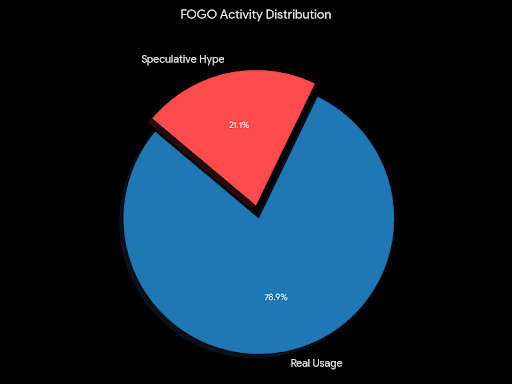
Right now, FOGO doesn’t look exciting. It’s not dominating conversations. It’s not appearing on gainers lists. It’s just sitting there, moving sideways, while most of the market’s attention is somewhere else.
But sometimes that’s exactly what the setup looks like before the next phase begins not dramatic, not obvious, just quietly waiting for enough liquidity to tip the balance.