


Real Trading Is About Systems Not Speed
Most crypto chains talk about speed numbers TPS latency CPS. That sounds good when markets are quiet. But anyone who has traded real size knows speed alone does not matter when things get ugly. What matters is whether the system keeps working when everyone is trying to trade at the same time.
I looked deeper into Fogo and what stood out is not how fast it is but how it thinks about reliability. Traders do not experience blockchains as blocks. They experience them as frozen apps failed trades slow price updates and sudden halts during volatility. That is the real product.
This is why Fogo focuses less on hype and more on staying alive under pressure.
Uptime Under Load Is the Actual Product
When markets spike large traders do not care about slogans. They care about whether orders execute and prices stay fresh. Many chains perform well in demos but fall apart when volume surges.
Fogo uses a selected validator set instead of letting anyone run a node from day one. This is controversial in crypto culture but normal in real markets. Weak operators create weak networks. One underpowered validator can slow everything down.
The goal here is predictable performance not just fast blocks but stable blocks with less variation. That kind of consistency is what can pull traders away from centralized exchanges.
Serious Hardware Means Serious Intent
Fogo validator requirements are very clear. High core CPUs AVX512 support ECC memory NVMe storage strong bandwidth. This is not home hardware. It shows the network expects validators to treat uptime as a profession.
That matters because professional infrastructure costs money. If validators are not paid enough networks become fragile once hype fades. Many chains look decentralized but behave like hobby projects. When rewards drop reliability disappears.
Fogo seems aware of this reality.
Fees Are Not Just Costs They Are Survival Tools
One of the most important parts of Fogo is its fee structure. Base fees and storage fees are split between burning and validator rewards. Priority fees go directly to block producers.
This design tries to solve two problems at once. Keep fees low enough so users and trading apps are not punished. At the same time pay validators enough so they can maintain strong infrastructure even when volumes are low.
Most chains fail here. They either overcharge users or underpay operators. Fogo is trying to balance this instead of pretending fees will magically fix themselves later.
If done right this reduces reliance on endless inflation and keeps the network healthy long term.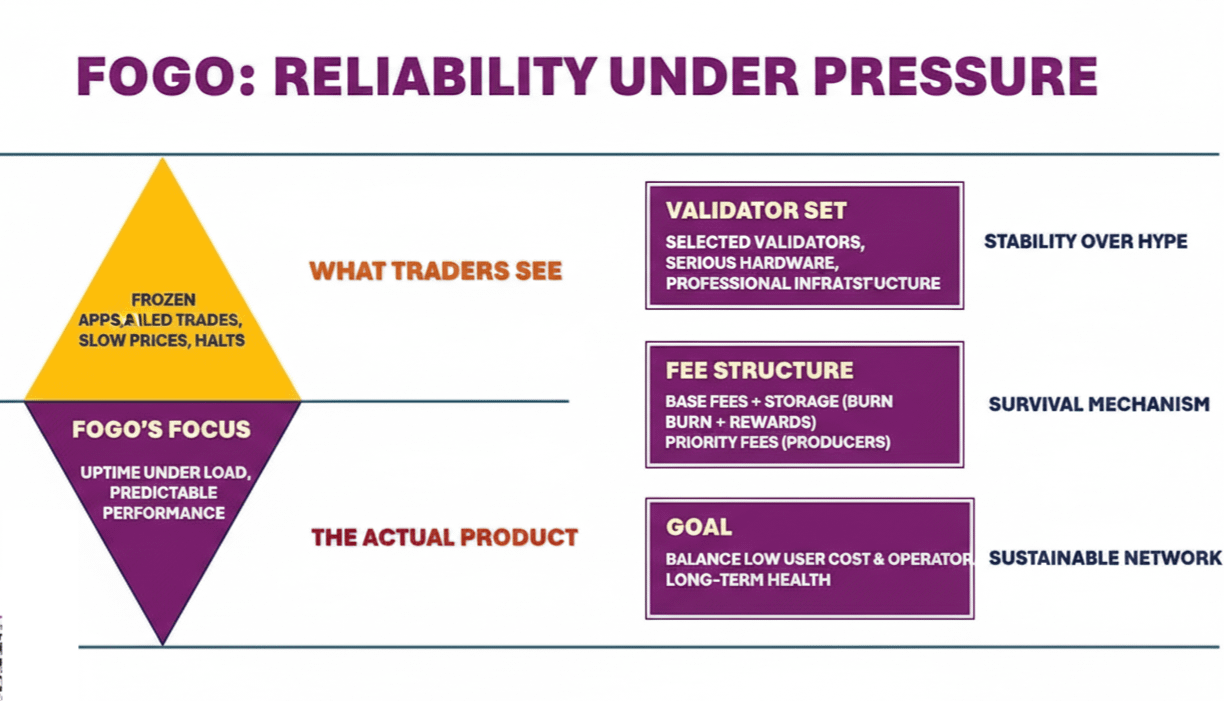
Validator Control Is About Risk Not Power
People often argue about decentralization in theory. Traders think about risk in practice. Fogo uses stake thresholds and validator approval because poorly equipped nodes hurt everyone.
This is not about ideology. It is about preventing random failures. Real trading systems always limit who can plug into the engine.
Yes this means governance matters more. Yes trust is required. That is the trade. And it is the same trade made by every serious financial system.
Price Data Can Make or Break Traders
Oracles are not background tools in leveraged markets. Bad prices cause forced liquidations broken funds and unfair losses. Slow data is not a UX issue it is financial damage.
Fogo integrates Pyth Lazer which is built for real time high frequency price delivery. The key point is not just speed but freshness and consistency.
Good oracle design reduces emergencies. It lowers the need for human intervention. This is governance through engineering.
This part of Fogo is not flashy but it is critical for serious onchain trading.
Architecture Designed for Chaos
Fogo is not built for best case scenarios. It is built for market stress. Liquidations spikes and everyone acting at once.
Small high quality validator sets strong hardware disciplined fees and reliable price feeds are boring topics. But boring systems survive crashes.
That is how real infrastructure is built.
Airdrops Shape Culture Not Just Hype
Most airdrops reward bots. That creates extractive communities. Fogo openly talks about filtering automated activity and focusing on real users and contributors.
This matters because early ownership shapes governance. If farmers dominate early the network becomes noisy and short term. If real users dominate there is at least a chance of long term alignment.
No filter is perfect. But transparency about the process shows intent. It signals what kind of network Fogo wants to be.
What Really Matters Going Forward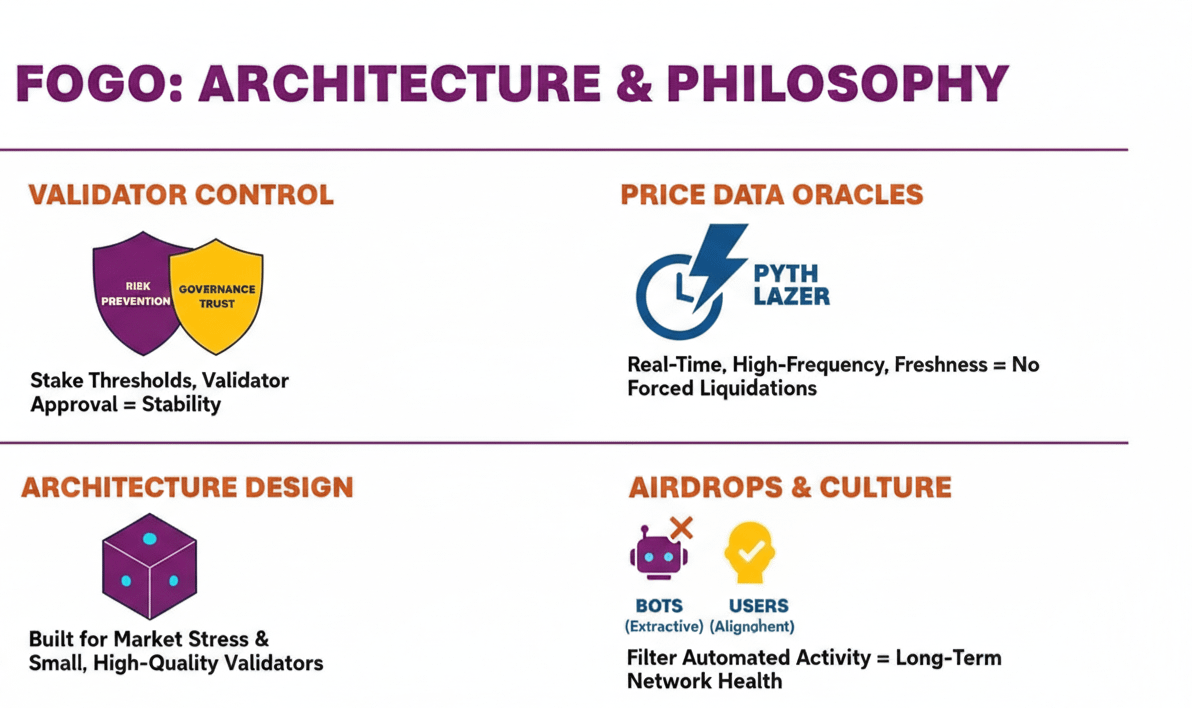
I am not watching marketing numbers. I am watching boring signals. Does performance stay stable as usage grows. Do validator standards hold under pressure. Does the fee model support operators without hurting users. Do oracles remain solid during volatility.
The real test is simple. When markets crash and everyone rushes to hedge. That is when chains either prove they are infrastructure or get exposed as narratives.
Final Thought
Fogo is not betting on speed alone. It is betting on professionalism. It assumes traders punish weakness instantly and designs around that reality.
Strong validators serious hardware disciplined incentives and price integrity treated as core infrastructure.
That does not guarantee success. But it is closer to how real markets work than most Layer 1 stories.
And in the end markets reward reliability not ideology.