

I did not start paying attention to Fogo because of marketing or price action.
I noticed it when I started thinking about how much time gets lost between clicking confirm and actually seeing execution.
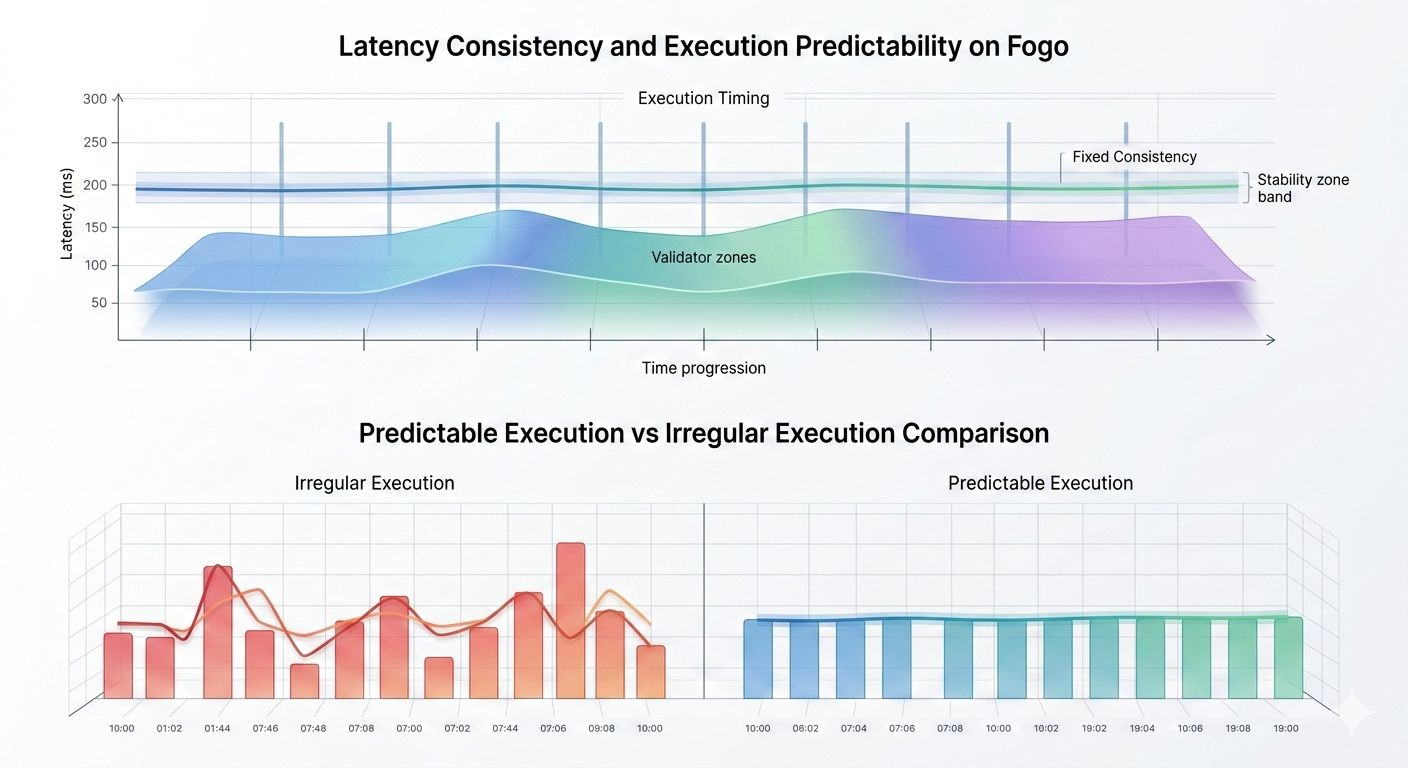
That gap matters more than people admit.
On paper a chain can be fast. In reality you still hesitate. You wonder if validators are syncing. You wonder if congestion will spike. You wonder if timing will slip.
That uncertainty changes behavior.
You delay entries.
You split orders.
You compensate for problems that might not even happen.
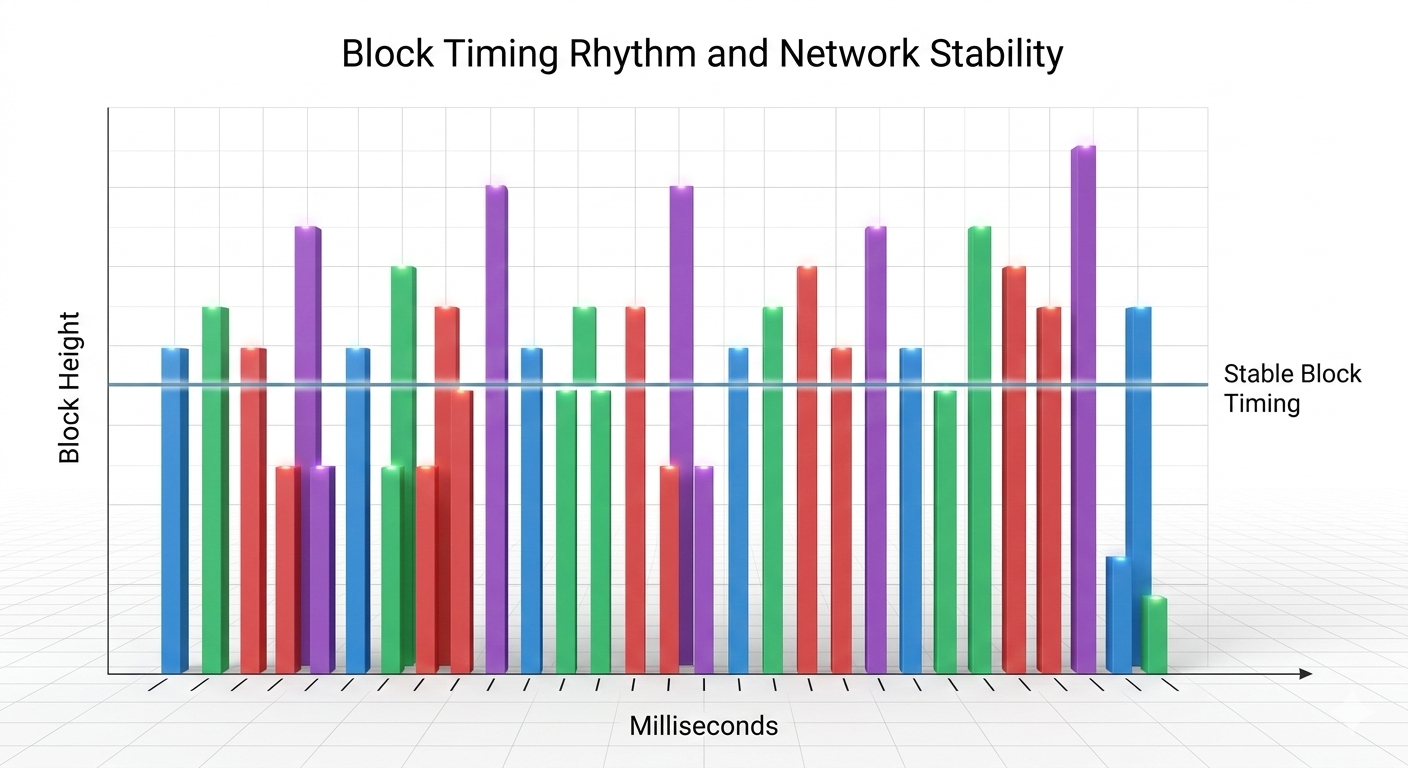
When I started reading about Fogo the interesting part was not the peak numbers. It was the design choices around latency consistency. The whole architecture looks built around reducing unpredictable delays instead of just increasing throughput.
That difference sounds small but it shows up in practice.
Built Around Execution Timing
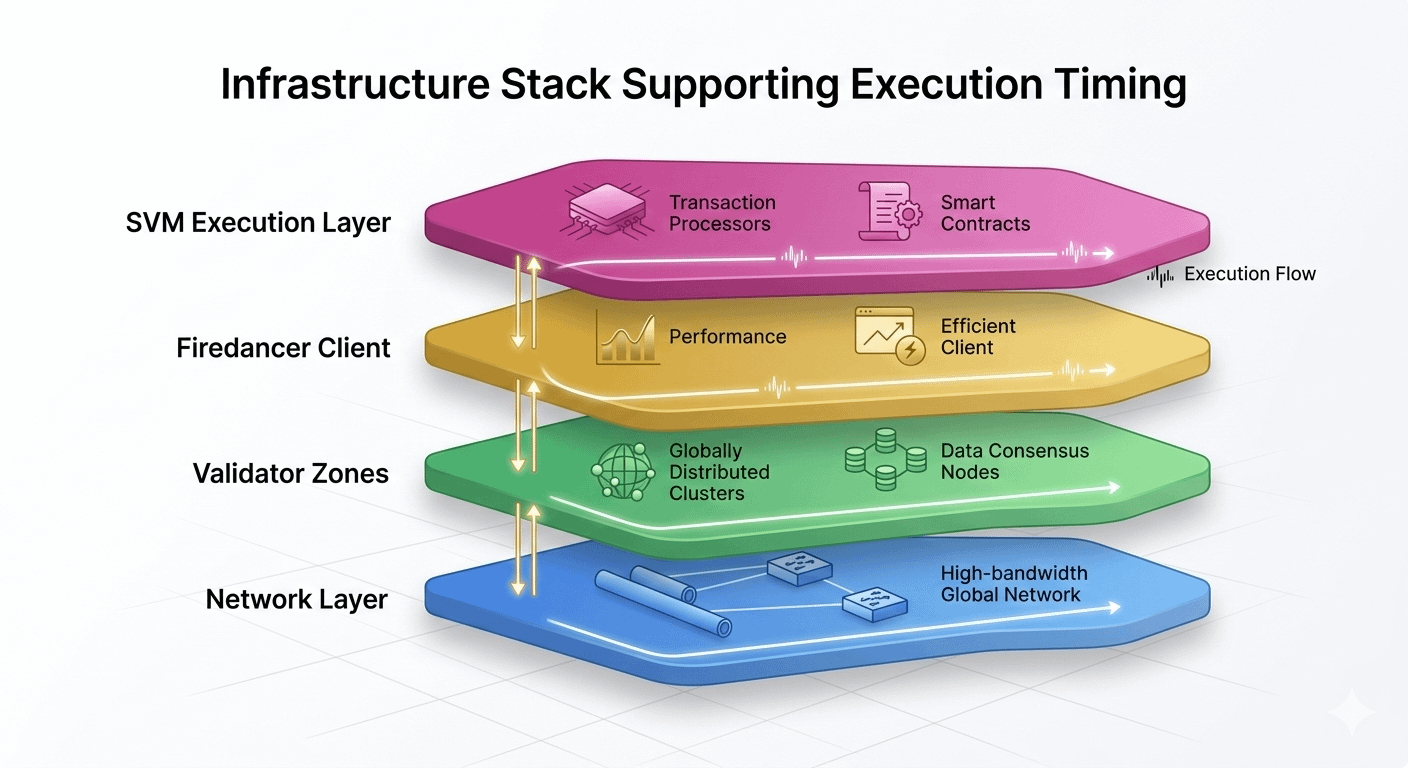
Fogo runs on the Solana Virtual Machine which already supports parallel execution and high throughput. That gives it a strong base for handling heavy transaction flow without slowing down under load.
But the interesting part is what comes after that.
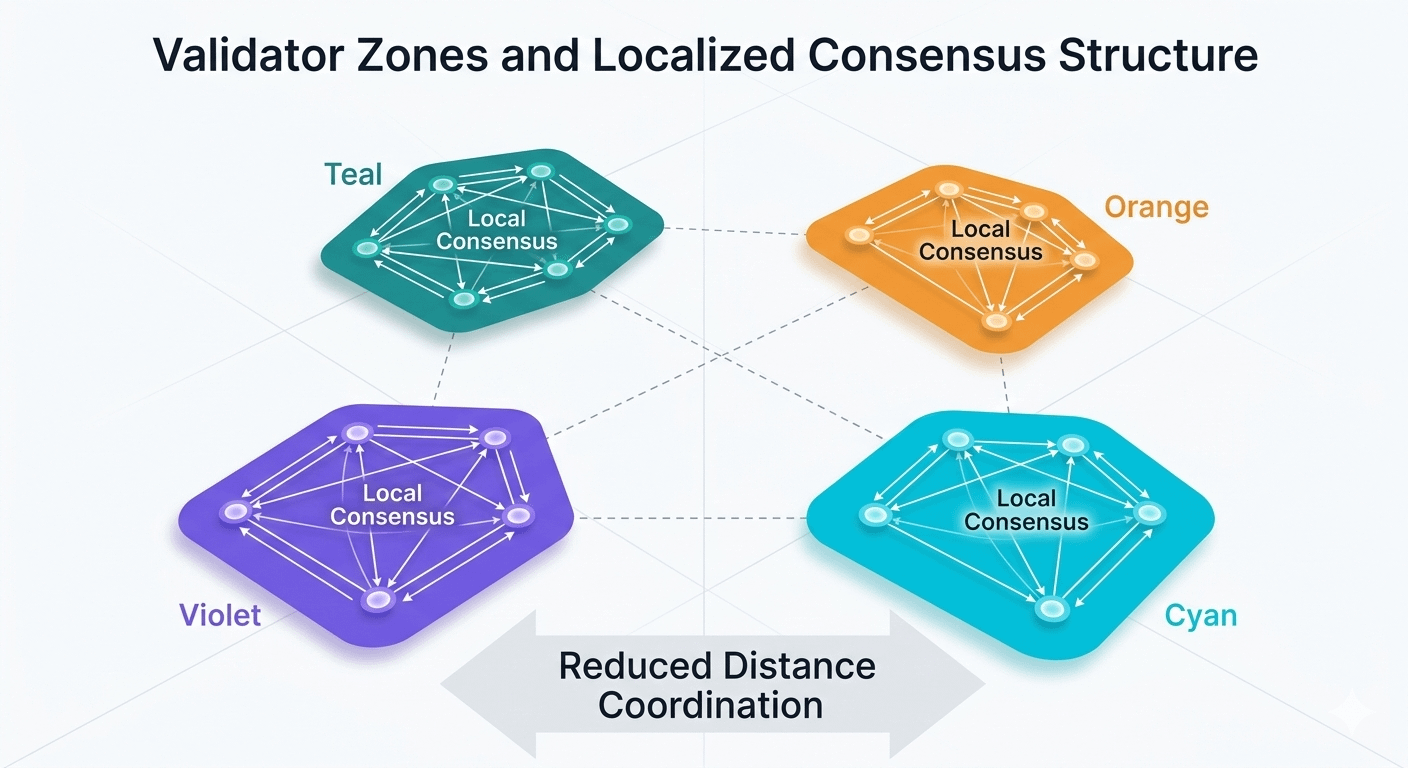
Instead of relying on globally distributed validators all talking at once Fogo organizes validators into localized zones. These zones validate close to each other which reduces communication delay and speeds up consensus.
Less distance means less waiting.
Less waiting means fewer timing surprises.
That idea shows up again in validator colocation where nodes operate physically near each other to minimize latency. This approach is common in traditional finance infrastructure where milliseconds matter.
So the structure is not random.
It is engineered around proximity.
One Client One Standar
Another decision that stands out is the single client approach.
Fogo runs on a Firedancer based validator client designed for high performance networking and transaction processing. Instead of supporting multiple clients it standardizes around one optimized implementation.
That removes compatibility drag.
On many networks slower validators can affect timing for everyone else. Fogo avoids that by enforcing a consistent performance baseline across validators.
It is a strict approach.
But strict systems are often more predictable.
And predictability is what execution depends on.
Designed for Real Time Environments
Some chains try to support everything at once.
Gaming. Identity. Storage. Payments. Social
Fogo feels more specialized.
Its design targets real time financial activity where execution timing directly affects outcomes. That includes trading environments where latency differences can change results.
The architecture reflects that priority.
Localized consensus reduces coordination delay.
Colocated validators reduce network distance.
Firedancer improves execution speed.
SVM enables parallel processing.
Each piece solves a small timing problem.
Predictability Changes Behavior
One thing I keep noticing is how infrastructure affects decision making.
If a network feels unstable you trade defensively.
If a network feels stable you trade normally.
Most people talk about TPS and block times.
But actual experience comes down to whether you expect interruptions.
Fogo seems designed around reducing those interruptions rather than chasing record numbers. Consistent latency matters more than theoretical maximum throughput when markets start moving quickly.
That focus is subtle but noticeable.
Still Early But Direction Matters
It is still early and network effects are real. Liquidity and users tend to stay where activity already exists. No architecture alone guarantees adoption.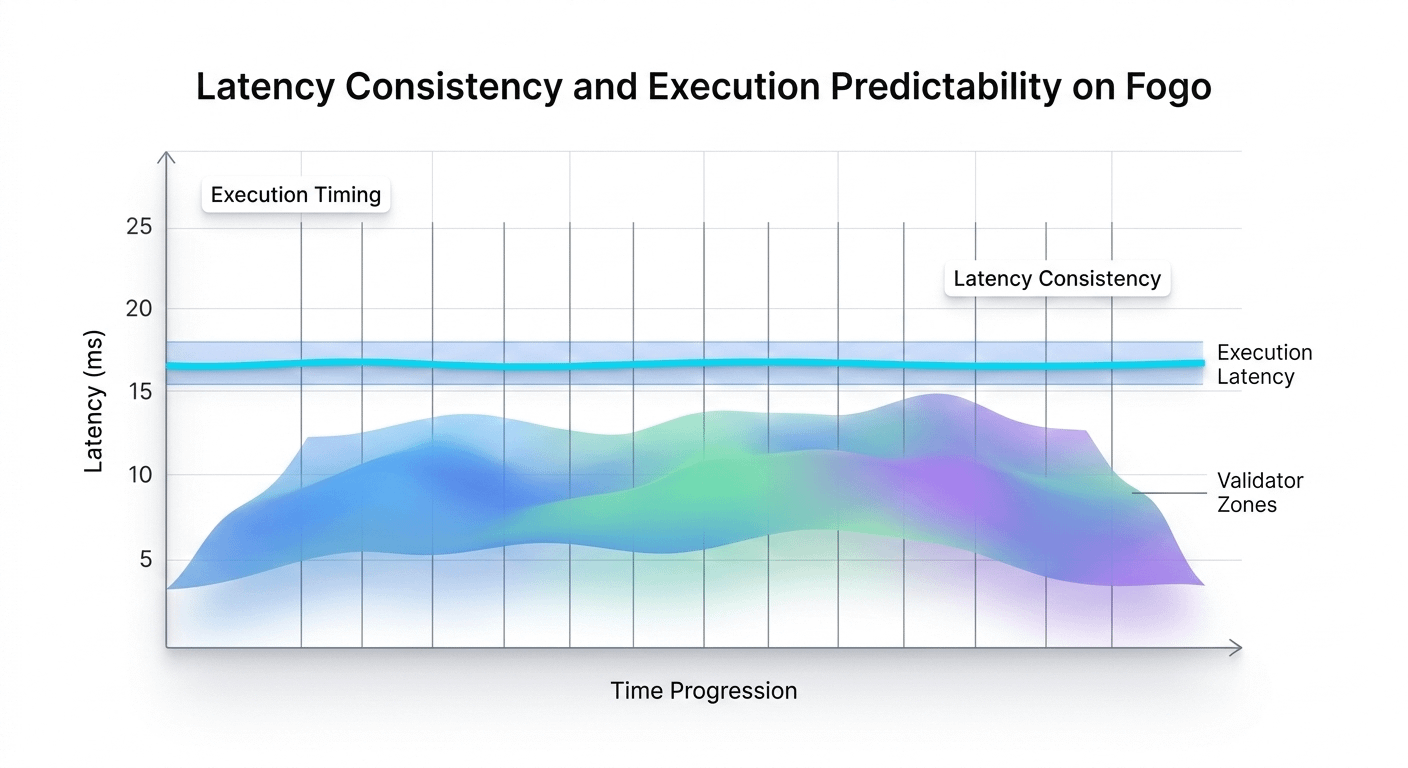
But infrastructure direction still matters.
Fogo is making clear tradeoffs.
Validator structure over randomness.
Performance standards over flexibility.
Latency reduction over feature expansion.
All of those choices point toward the same outcome.
More consistent execution timing.
When Infrastructure Disappears
The strongest infrastructure usually does not stand out.
It fades into the background.
When a chain runs smoothly you stop thinking about validators and block times. You focus on what you are actually trying to do.
That is the part I keep coming back to
Fogo is not trying to feel revolutionary.
It is trying to feel stable.
And when a chain stops interrupting your decisions that might be the most practical advantage it can offer.